


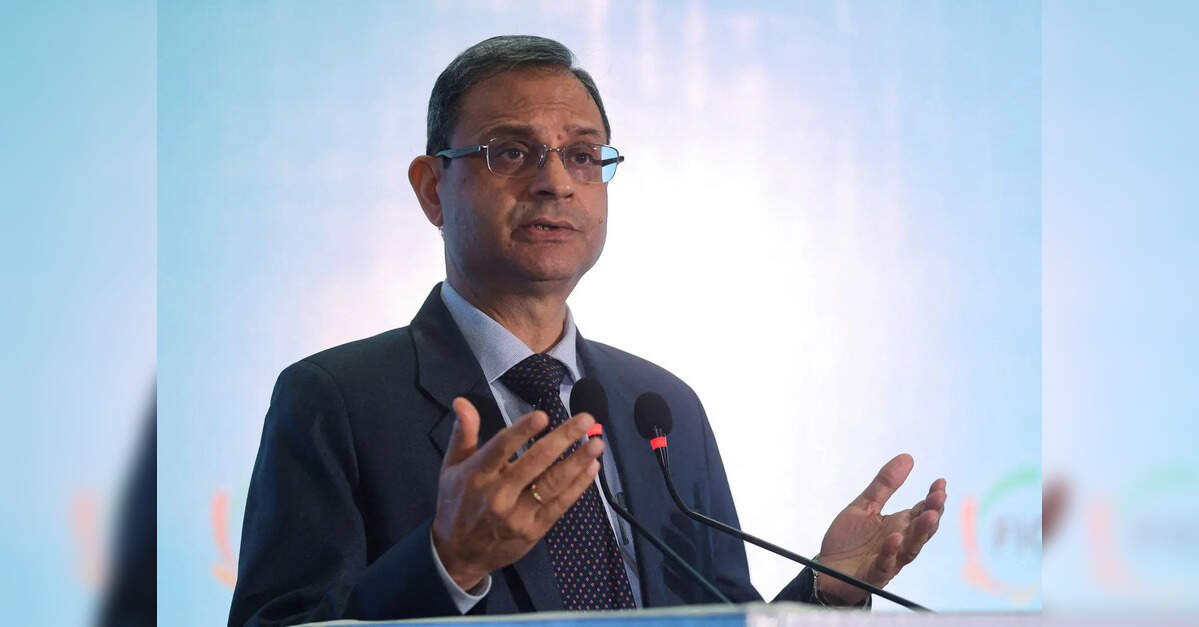
MUMBAI, – India’s curbs on banks’ foreign‑exchange positions and restrictions barring lenders from offering non‑deliverable forwards to clients, aimed at reining in rupee volatility, will not remain in place indefinitely, central bank chief Sanjay Malhotra said on Wednesday.
The Reserve Bank of India on March 27 imposed a $100 million limit on net open dollar-rupee positions of banks, forcing them to unwind arbitrage trades between the onshore forward and the NDF markets.
Malhotra said the central bank had observed heightened volatility in the foreign‑exchange market in recent weeks, with arbitrage trades by banks contributing to price swings.
The central bank subsequently barred banks from offering dollar-rupee NDFs to resident and non‑resident clients, seeking to counter trades by companies attempting to capitalise on position unwinding by banks.
The governor said that while the linkage between the onshore and non‑deliverable forward markets plays an important role in efficient price discovery under normal conditions, authorities need to step in when volatility and position build-up become excessive.
The measures by RBI have helped a struggling rupee, which has been under sustained pressure due to the Middle East conflict, pushing it to around 93 per U.S. dollar.
The currency strengthened more on Wednesday to about 92.50 after the U.S. and Iran announced a two-week ceasefire.
NOT FOREVER
Malhotra said the RBI measures were a reaction to specific market movements and did not signal any structural change, adding that the central bank remains committed to broadening and deepening these markets and to the internationalisation of the rupee.
“So obviously these measures are not going to remain in place forever,” the governor said.
(Reporting by Nimesh Vora; Editing by Sonia Cheema and Mrigank Dhaniwala)
