


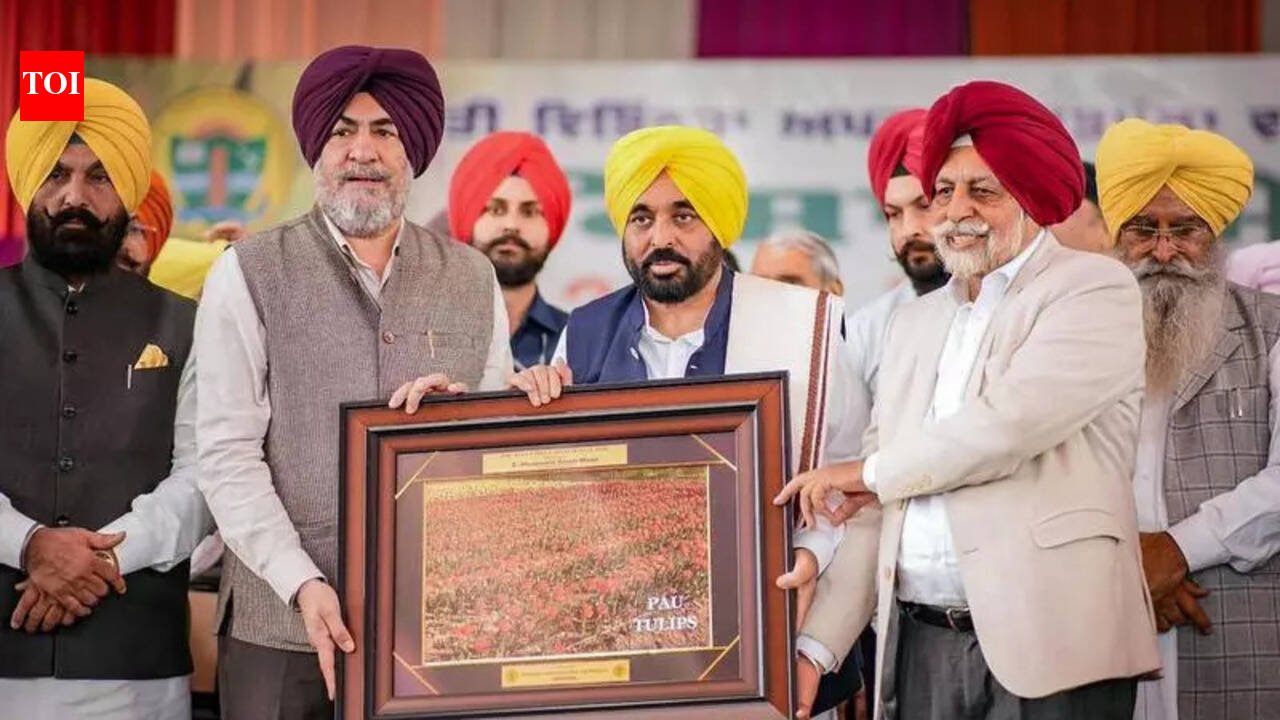
Chandigarh: After the Rajasthan govt labelled Punjab’s demand for Rs 1.44 lakh crore in water royalties as “unconstitutional”, chief minister Bhagwant Mann on Friday said his govt would now pursue the matter in a court of law.Mann dismissed the rejection by stating that the Rajasthan govt was free to present its arguments before a judicial authority.Replying to a question on Rajasthan’s rejection of the claim, Mann said initial opposition was expected. He remarked, much like a person caught in an act of theft, the Rajasthan govt would not easily admit to decades of unpaid usage. “We will fight our case in court, and they are welcome to present their arguments,” he said.On Friday, Rajasthan’s water resources minister Suresh Singh Rawat clarified that under the original agreement, charges were payable to the British govt, not to the Punjab province. Rawat further said three post-Independence agreements were reached in 1955, 1959, and 1981 regarding the use and distribution of water from the Ravi, Beas, and Sutlej rivers. None of these agreements include any provision for royalties or additional charges. Punjab’s demand is therefore factually unfounded and illegal, he added.As per an agreement signed in the 1920s between the state of Bikaner, the erstwhile Punjab, and the British, Rajasthan agreed to pay for water on a per-acre basis.On Wednesday, Mann announced that the Punjab govt would stake claim to Rs 1.44 lakh crore from the Rajasthan govt for decades of unpaid water usage, making it clear that Rajasthan must either release Punjab’s rightful dues or stop drawing water, while also calling for a review of the historic 1920 agreement governing this arrangement.Mann said: “The Rajasthan govt owes Rs 1.44 lakh crore to Punjab for the water drawn through the Ferozepur Feeder since 1960, for which not even a single penny has been paid. Rajasthan must either release Punjab’s rightful dues or stop taking water.”Highlighting a “contradiction” in Rajasthan’s stand, Mann said: “Even today, Rajasthan continues to draw water under the 1920 agreement, but when it comes to paying dues, it takes shelter under the 1960 arrangement.”MSID:: 129702601 413 |
