


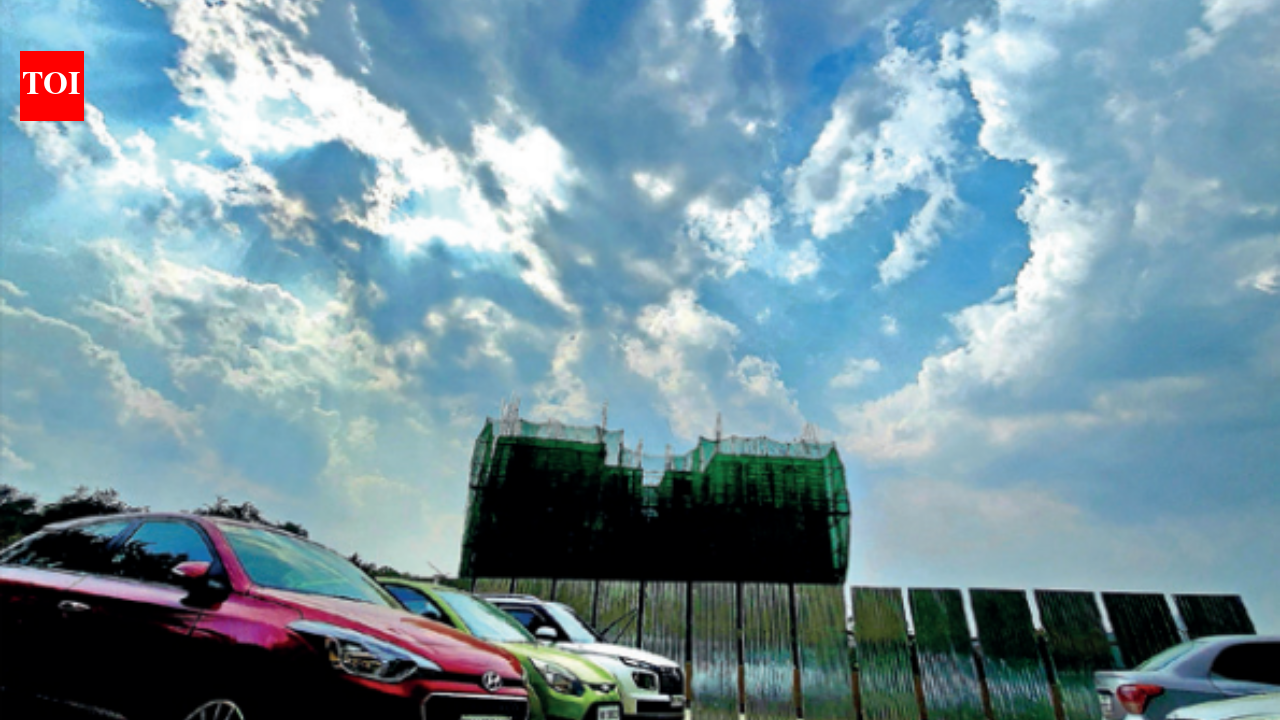
PUNE: Night temperatures have remained above normal across parts of Maharashtra in the past few days, leading to growing discomfort, particularly in Pune.Day temperatures have also been on the higher side over the last couple of days. On Feb 23, Shivajinagar recorded 34.5°C, while Lohegaon was hotter, at 36.3°C.Night temperatures, too, stayed elevated, with minimums ranging between 17°C and 18°C in Shivajinagar and touching 21°C in Lohegaon in the last few days.Though minimum temperatures dipped in parts of the state on Tuesday — with some Vidarbha and Madhya Maharashtra stations reporting lower readings — nights in several cities were warmer than usual, with some parts also reporting rainfall.The combined effect of high maximum temperatures, elevated minimum temperatures and relatively high humidity has made conditions uncomfortable, especially during late afternoons and early evenings. On Tuesday, relative humidity in Pune was as high as 63%-75% in the morning hours. Though Pune’s maximum temperature was 32°C as per a private forecaster on Tuesday, the “real feel” was around 34°C due to the combined effect of high humidity, light winds and strong solar radiation. High moisture levels reduce the body’s ability to cool itself through sweat evaporation. Direct sunlight further adds to the heat load, making conditions feel hotter than the actual air temperature.As per the India Meteorological Department (IMD), the day temperature in Shivajinagar on Tuesday was 33°C, while its minimum was 15°C. Lohegaon on the other hand recorded 19.8°C as its minimum temperature and 35.3°C as its day temperature.According to IMD’s latest forecast, there may be no significant change in maximum temperatures over Maharashtra during the next two days. Thereafter, a gradual rise of 2–3° is expected over the subsequent five days. However, some respite is likely on the night-time front, with minimum temperatures expected to fall after Wednesday.Independent weather forecaster Abhijit Modak said the current warmth in Feb is not unusual. He explained that temperatures typically begin rising in the second half of Feb, and in the absence of any active western disturbance affecting Maharashtra, maximum temperatures of 33–34°C are common. “While night temperatures are running above normal due to the absence of western disturbances since Jan, maximum temperatures are not significantly above average for this time of year. However, minimum temperatures are also above normal because of cloudy conditions and higher moisture content,” he added.Modak said a brief dip in temperatures is expected from Thursday to Saturday as the current easterly winds shift to northwesterlies following the passage of a feeble western disturbance in north India. “This change will bring drier winds and clearer skies. Maximum temperatures, currently around 33–34°C, may fall to 31–32°C, while minimum temperatures, now around 15°C, could drop to around 12°C in Pune. This cooling will be temporary, lasting three to four days, after which temperatures will rise again. Post-Holi, Pune could see temperatures touching 36°C, marking the onset of more typical summer conditions,” said Modak.An IMD official said Pune is likely to see partly cloudy skies over the next two days, followed by clearer conditions, which could lead to a drop in minimum temperatures by 1–2°. “The current cloudy weather is because of continuous moisture supply from southeasterly winds. Rainfall activity has mainly been recorded over south Madhya Maharashtra, Marathwada and Vidarbha. A trough in the upper-level westerlies is also contributing to rainfall over the Vidarbha region,” the official said.
