


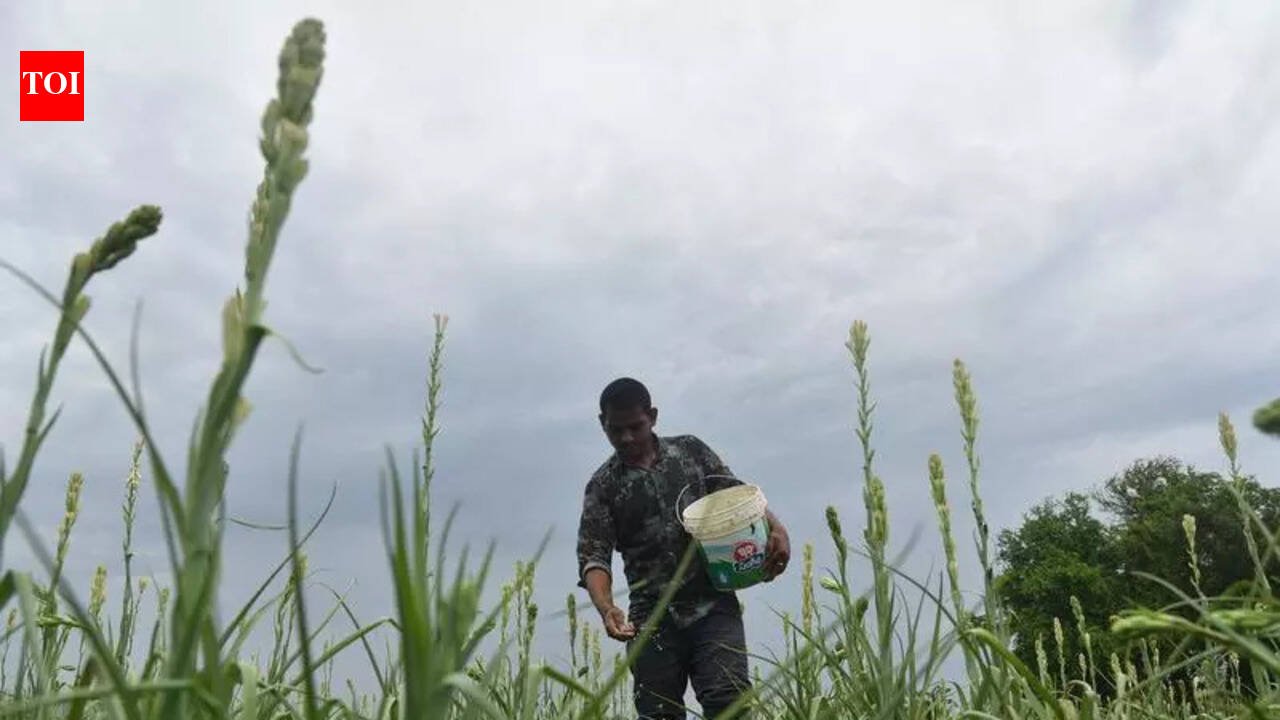
Pune: The Maharashtra govt’s budget announcement to bring five lakh hectares of farmland under natural farming has been welcomed by farmers and agricultural experts. They said the move is a vital step towards strengthening sustainable agriculture and restoring soil health but its success would depend on consistent policy support, long-term implementation, and heavy investment in soil and water conservation.Under the newly proposed Natural Farming Mission (NFM), the state aims to promote chemical-free agriculture to produce nutritious, sustainable crops. This initiative marks one of the most significant state-level pushes toward eco-friendly farming in recent years, coming at a time when farmers are grappling with soil degradation, skyrocketing input costs, and climate volatility.Experimental farmer and a Padma Shri awardee Subhash Sharma, from Yavatmal district, said, “The decision is welcome, but natural farming cannot be implemented overnight. It requires meticulous long-term planning and investment in the foundational elements of agriculture—soil, water, and the environment.” He emphasised that farmers need tangible support to restore soil fertility and secure water availability before they can successfully transition from chemical-heavy methods.Agricultural observers said natural farming can drastically reduce the financial burden on farmers by eliminating expensive chemical fertilizers and pesticides. However, the transition requires a shift in the entire ecosystem.Rajendra Bhat, an expert from Thane, noted that the budget aligns natural farming with broader agricultural modernisation. “The budget highlights the importance of strengthening value chains and integrating information technology. Natural farming is a piece of that larger vision,” Bhat said, adding that sustainable practices are essential for building climate resilience.On the ground, the appetite for change is growing, though challenges remain. Vasudev Gaikwad, a progressive farmer from Chale village in Solapur, described natural farming as a viable long-term alternative but stressed the need for institutional backing. “Awareness is increasing, and many are experimenting, but to scale this to five lakh hectares, we need continuous training and robust policy support. A one-time push won’t be enough,” Gaikwad said.Researchers further suggested that the NFM must be integrated with existing water conservation programs, such as watershed development. In drought-prone regions of Maharashtra, the success of chemical-free farming is inextricably linked to the land’s ability to retain moisture.“Schemes related to water conservation and soil management must be effectively executed at the farm level,” said a senior official from the state agriculture department. “Only then will the long-term benefits of natural farming truly reach the farmer.”
