


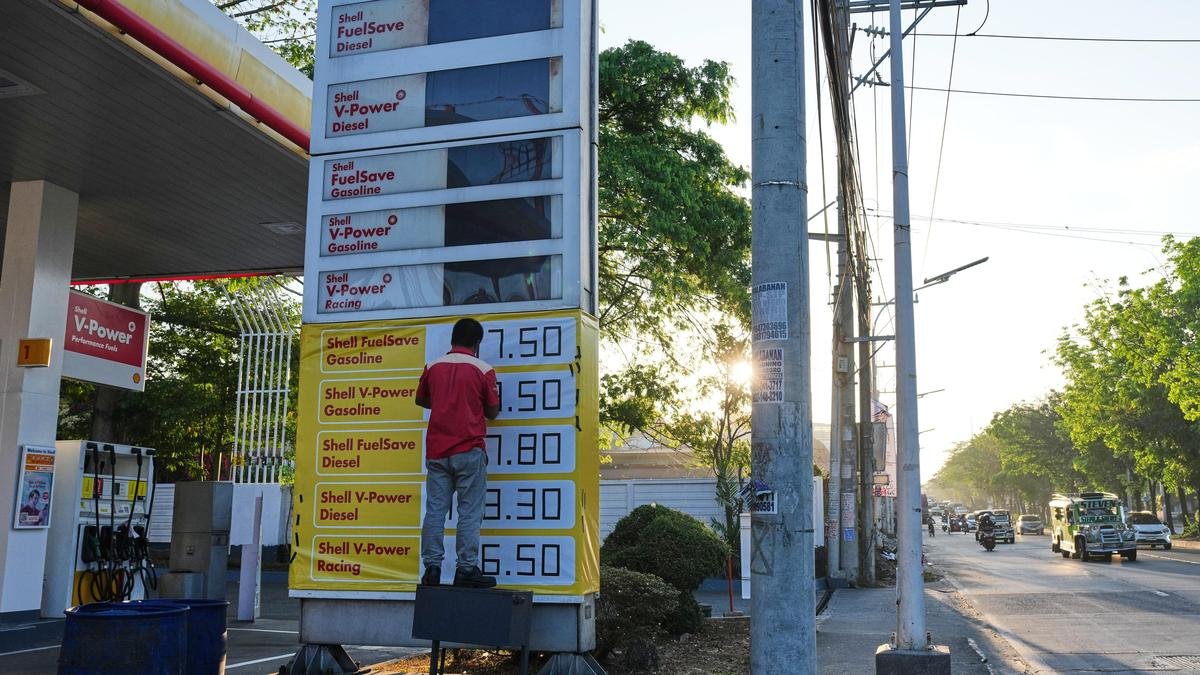
A worker uses black tape to adjust the prices of their sign as the digital board on top cannot accommodate the additional digits at a gasoline station as oil prices continue to rise, Tuesday, March 24, 2026, in Quezon city, Philippines.
| Photo Credit: AP
Philippine President Ferdinand Marcos Jr. on Tuesday (March 24, 2026) declared a state of national energy emergency in response to the West Asia conflict and what he called an “imminent danger” posed to the country’s energy supply.
Mr. Marcos said a Committee has been formed to ensure the orderly movement, supply, distribution and availability of fuel, food, medicines, agricultural products and other essential goods.
Iran-Israel war updates on March 24, 2026
In an executive order shared with media, Mr. Marcos said the conflict had created uncertainty in global energy markets, severe supply chain disruption and significant volatility and upward pressure on international oil prices “thereby posing a threat to the country’s energy security”.
“The declaration of a state of national energy emergency will enable the government … to implement responsive and coordinated measures under existing laws to address the risks posed by disruptions in the global energy supply and the domestic economy,” he said.
The declaration, which will remain in effect for one year, authorises the government to procure required fuel and petroleum products to ensure timely and sufficient supply and, if necessary, pay part of the contract amount in advance. Philippine Energy Secretary Sharon Garin earlier on Tuesday (March 24, 2026) told a news briefing the country had around 45 days of fuel supply based on current consumption levels.
She said the government was working to procure 1 million barrels of oil from countries within and outside Southeast Asia to build its buffer stock.
Published – March 24, 2026 06:27 pm IST
