


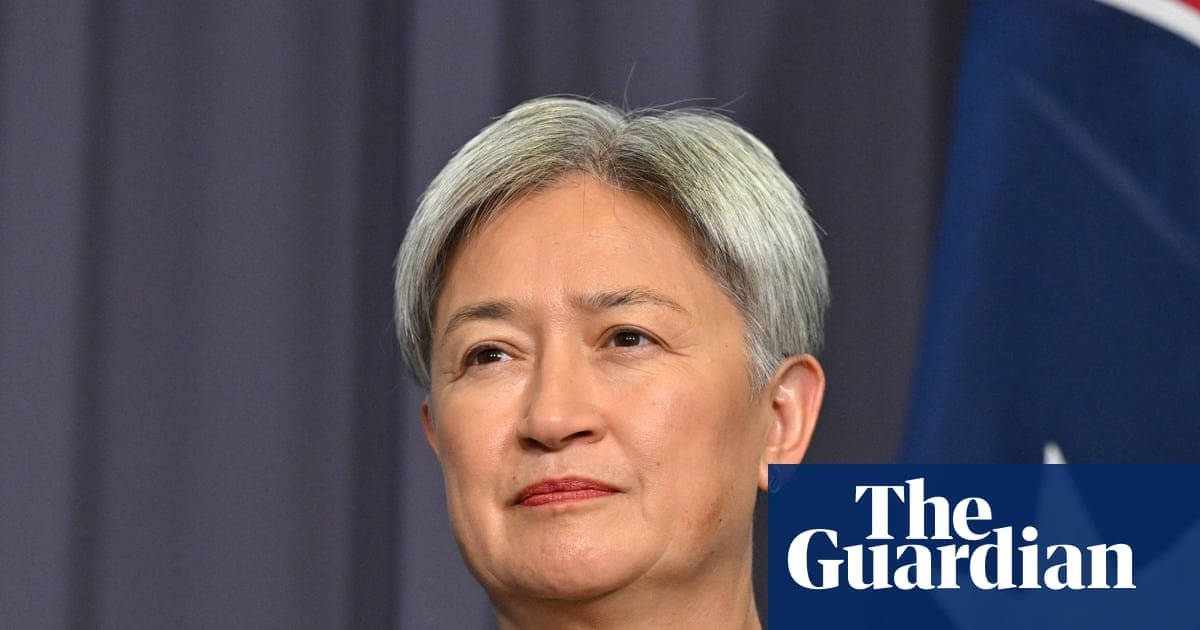
Australia’s foreign affairs minister, Penny Wong, has urged the US and Iran to continue the ceasefire and return to negotiations quickly, after peace talks failed to secure a deal or the re-opening of the strait of Hormuz.
Historic face-to-face meetings in Pakistan – marking the highest-level of direct engagement between Washington and Tehran in decades – seemingly broke down after a marathon 21-hour first day of talks.
Wong said it was “disappointing” the parties could not reach an agreement in Islamabad.
“The priority now must be to continue the ceasefire and return to negotiations. We continue to want to see a swift resolution to this conflict,” Wong said.
“Any escalation in the conflict would impose an even greater human cost and further impact the global economy.”
The US vice-president, JD Vance, departed Pakistan’s capital on Sunday afternoon AEST empty-handed, saying he did not receive assurances from Iran it would not seek to restore its capabilities for building a nuclear weapon before leaving.
“We’ve made very clear what our red lines are,” Vance said.
Iranian state media said that “excessive” US demands had hindered reaching an agreement and that negotiations had ended.
The conflict in the Middle East – and particularly the blockade of the strait of Hormuz – has been wreaking havoc on global trade supplies.
The Albanese government has repeatedly warned the impacts of war, even if or when the strait was reopened, would be felt for months.
On Sunday, the treasurer, Jim Chalmers, warned the pressure on households “won’t just disappear the moment the ceasefire sticks or the day the strait of Hormuz is properly opened”.
“Even after the drones stop it will take some time to get the global economic show back on the road, and that matters a lot for us as we put a budget together,” he said.
“The stakes are pretty high and so we approach this oil shock and its aftershocks with a lot of hard work and humility.”
The infrastructure minister, Catherine King, said the success of talks between the US and Iran was the “best chance” at bringing down fuel prices, but added the government would consider additional help for Australians in the lead up to the budget.
Iran has been considering a plan to charge fees of up to $US2m ($2.8m) a ship to pass through the strait, with Oman to share the proceeds.
The shadow defence minister, James Paterson, said he was worried the re-opening of the strait could become a revenue-raising tool for Iran’s regime.
“It is critically important that the end of this conflict does not begin with a new toll booth for the IRGC and the Islamic Republic of Iran, where they get to extort oil tankers as they pass through the strait of Hormuz,” he said.
“So we strongly support the United States efforts to end this conflict on favourable terms for all of us.”
