


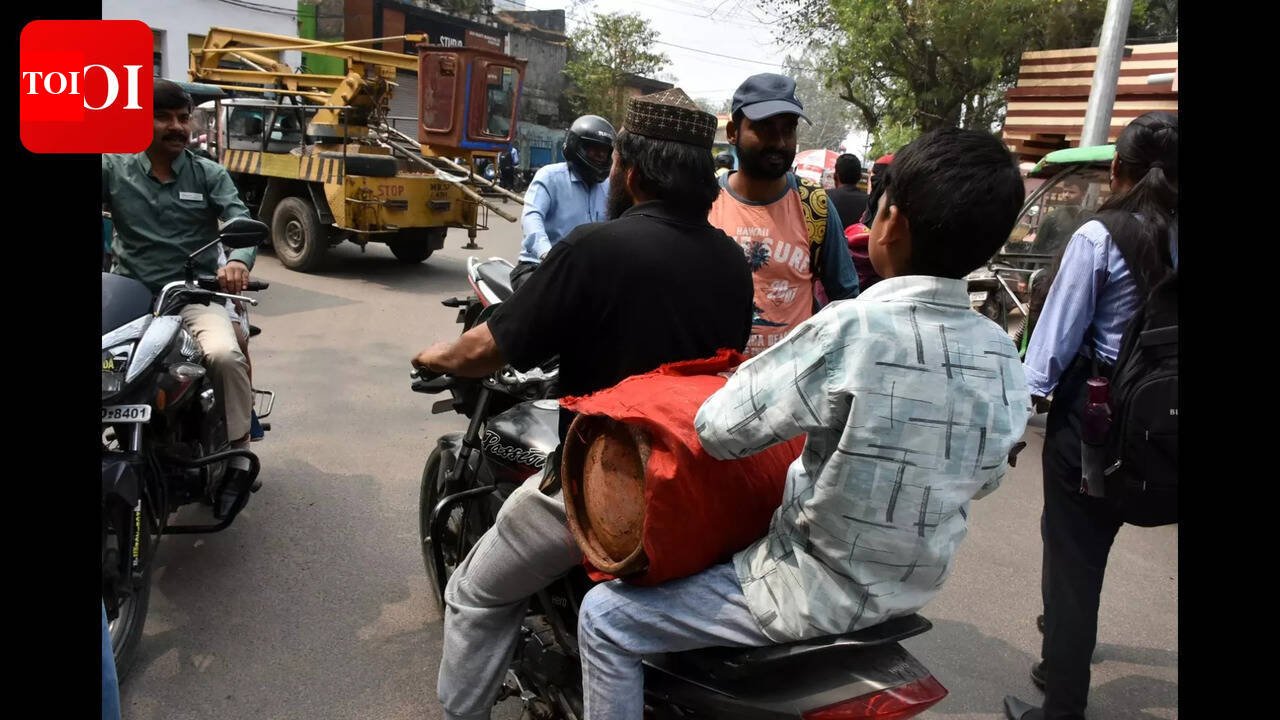
Ranchi: Fears of a possible disruption in fuel supply due to the ongoing West Asia conflict has triggered panic buying of cooking gas across the city, with many residents queuing up to refill their cylinders well before their scheduled dates.The rush has intensified ahead of Eid anticipating a potential shortage.Khaled Rahman, a Hindpiri resident, said, “Eid is just round the corner. My LPG cylinder is about to run out. With the festivities approaching, if I cannot manage to refill the cylinder, it will create an inconvenience. According to reports, the war is escalating and natural gas supply is yet to resume to India.”Sharda Devi, a homemaker from Kokar area, who queued up to purchase a cylinder on Tuesday, said that earlier they could book a refill cylinder after one or two days.“But after the war broke out, we were informed that a cylinder can be booked after 25 days. This has created fears about a possible LPG shortage among customers. It is almost a month since I purchased a cylinder, so I rushed to refill it,” she added.LPG dealers said the surge in demand was due to misleading information circulating on social media about the conflict situation.Kumar Rupesh, a dealer in the city’s Bariatu area, said that there was no shortage in supply of LPG cylinders.“Customers are unnecessarily panicking after watching news and social media. LPG supply is seamless in Ranchi. During Holi, the supply stopped for a day, but the next day, it resumed,” Rupesh added.He said that due to the increased rush for LPG bookings, booking platforms were also facing some technical issues, adding, “That issue is being resolved. Customers are tense as they are not able to book cylinders immediately.”The ministry of petroleum and natural gas, through a post on X, clarified that in light of current geopolitical disruptions to fuel supply and constraints on the supply of LPG, it has issued orders to oil refineries for higher LPG production and for prioritising domestic use.“Non-domestic supplies from imported LPG are being prioritised for essential non-domestic sectors such as hospitals and educational institutions,” the post added.
