
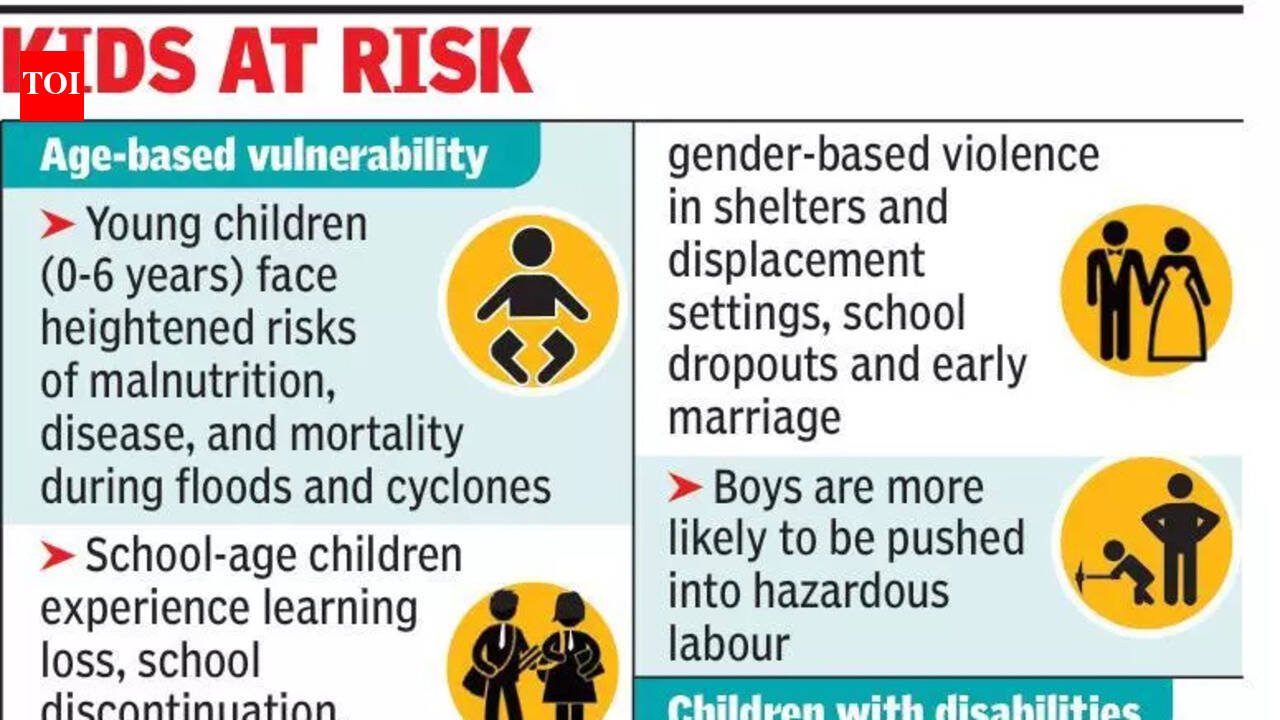
WBCPCR also created two more booklets on climate change and disaster management that specifically addressed challenges faced by children. It included a white paper with recommendations to make the state’s disaster management policy and framework sensitive to children’s needs, and to build community resilience to climate change through a child-centric disaster management policy.The projects and the white paper were developed in collaboration with Terre des Hommes (TDH) and Praajak.“In recent years, we recognised an inseparable reality: the climate change crisis is a child rights crisis. Children are disproportionately vulnerable to the floods, cyclones, and heatwaves that increasingly threaten our region. The Commission emphasises that disaster response must be child-centric, inclusive, and equitable. We must prioritise those in environmentally fragile areas, especially children facing displacement, poverty, or disability,” said WBCPCR chairperson Tulika Das.The Commission called for the setting up of a special unit to focus on developing risk training and disaster-related information tailored for students. This unit will design training modules aimed at educating students on disaster preparedness, response, and recovery, ensuring they are equipped with the knowledge and skills to contribute effectively during emergencies.”Our goal is to reposition children at the heart of climate-resilient governance, ensuring their meaningful participation in preparedness, recovery, and climate action,” said WBCPCR advisor Ananya Chatterjee Chakraborti.
