
Last Updated:
Former CJI BR Gavai said the legislation does not violate the basic structure of the Constitution, which safeguards India’s federal framework and democratic system
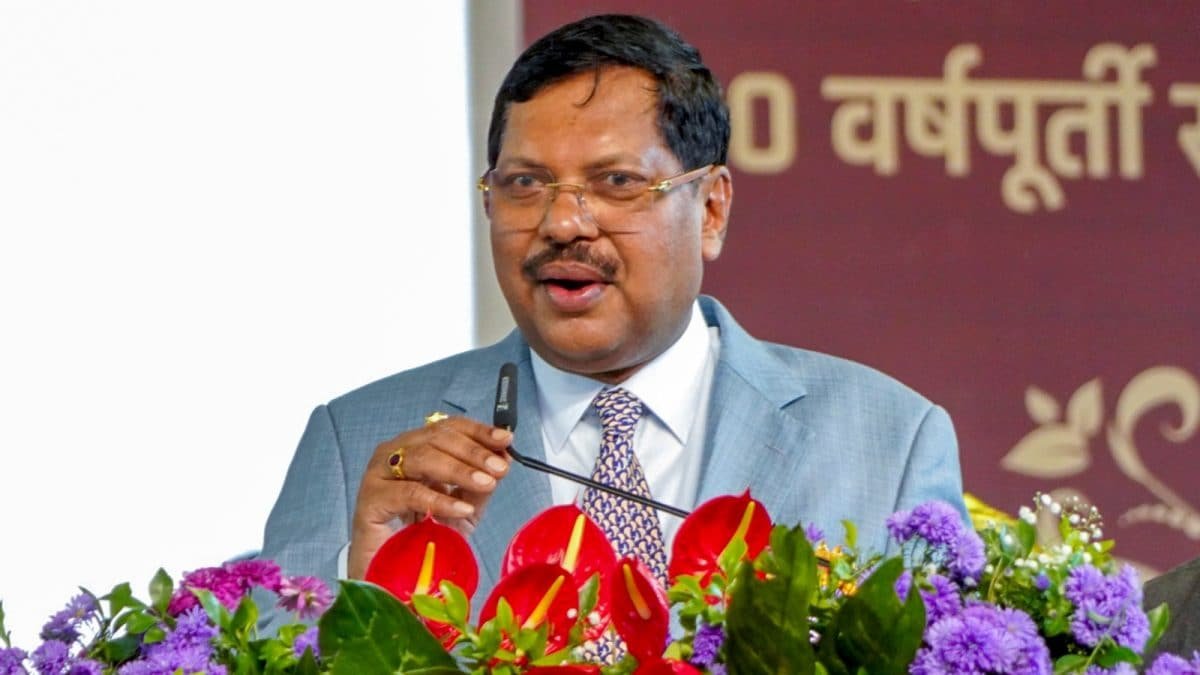
Former CJI BR Gavai made a detailed presentation supporting the proposed One Nation One Election Bill at the meeting of the joint parliamentary committee on February 12, 2026. (Image: PTI/File)
Former Chief Justice of India BR Gavai has told a parliamentary panel examining ‘One Nation One Election’ that it is constitutional and will not hurt federalism.
At the meeting of the joint parliamentary committee (JPC) on ‘One Nation One Election’ on Thursday, Justice Gavai made a detailed presentation supporting the proposed Bill.
He argued that the legislation does not violate the basic structure of the Constitution, which safeguards India’s federal framework and democratic system. He said the Bill does not alter either of these foundational principles and is, therefore, in conformity with constitutional norms.
Justice Gavai further said the proposal merely seeks to introduce a one-time change in the election cycle. The fundamental structure of elections and voter rights will remain untouched, ensuring that the amendment remains within constitutional limits, he said.
He also underlined that the Constitution empowers Parliament to enact such amendments. In his view, synchronising elections is well within Parliament’s legislative authority, he added.
Addressing concerns over government accountability under this framework, Justice Gavai noted that key democratic tools, including the no-confidence motion, will continue to exist. As a result, the accountability of both the Union and state governments will remain unaffected, he said.
On the broader question of constitutional viability, he pointed out that India had successfully conducted simultaneous elections until 1967. This historical precedent, he said, demonstrated that the concept is compatible with India’s constitutional system. He added that the JPC itself is a microcosm of India’s political mosaic.
From Supriya Sule (NCP) and Congress leaders Mukul Wasnik, Randeep Surjewala, and Priyanka Gandhi Vadra, to Anil Desai (Shiv Sena UBT) and Kalyan Banerjee (TMC), the opposition benches are well represented.
On the NDA side are BJP leaders Anurag Thakur, Sambit Patra, Baijayant Panda, Anil Baluni, and Shiv Sena’s Shrikant Shinde, along with TDP’s Harish Balayogi.
Formed during the winter session in 2023 after the Centre agreed to deeper scrutiny of the One Nation One Election proposal, the panel now has 39 members. It also includes legal voices such as Manish Tewari, P Wilson, and Kalyan Banerjee – experts who are expected to significantly shape the final contours of the report.
February 12, 2026, 22:33 IST
Read More
