


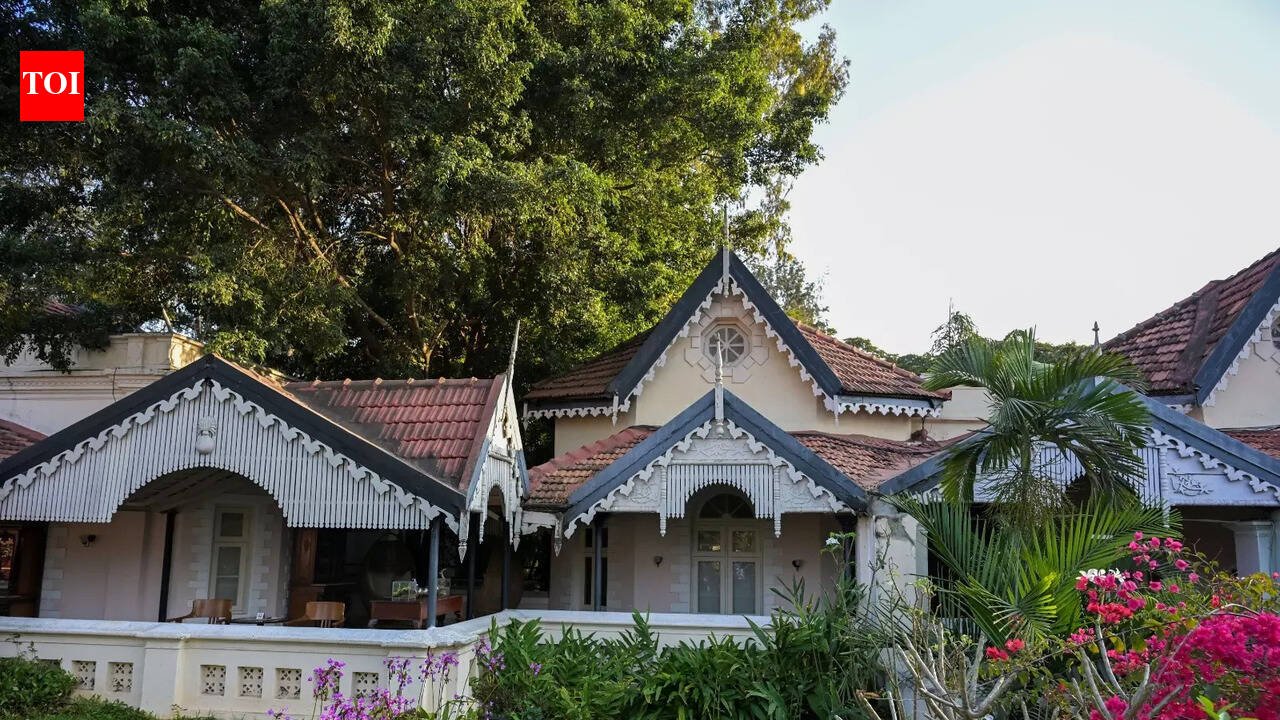
When Mrs Bronson began her modest 10-room boarding house in the Cantonment area for British officers and visitors in 1887, little could she have imagined that her small establishment would one day evolve into one of the city’s most celebrated heritage properties. Nor could she have imagined that her name would be etched on a marble plaque, with guests pausing more than a century later to marvel at her legacy in the city she came to call her second home.The property, the West End, is loved not just for its hospitality, but also for the layered history it carries within its leafy confines. Here’s a peek into the heritage walk at the property:The jamun tree and the ancient templeLong before the West End became a hotel, the land was marked by a grand old jamun tree, at the base of which stood a Muneswara shrine. One stormy night, the jamun tree split down its length — but somehow it did not destroy the shrine. As the property developed around it, both the tree and the tiny shrine were left untouched. Even today, a priest performs puja here daily.Betting from the balconyWith the racecourse located right across the property, in the days of the Raj, guests would sit on the balcony of the original boarding house and place their bets during derbies. There was no wall then, nor the wide road that exists today. “Today, so many trees on this property have been cut in the name of road widening, but I don’t see how it has helped,” says Priya. “Hearing the trees being cut here from my house, which is just a few yards away, was extremely painful,” she adds. A massive tree at the hotel gate, she says, was once on the verge of being felled too—until staff members formed a human ring around it in silent protest. The tree was eventually spared.Restoration with the architects’ familiesThe original boarding house remains one of the most sought-after sections of the hotel. With its high ceilings and fans dating back to the days of the Raj, the restoration here was carried out brick by brick, in consultation with the family of the building’s original architects. This section also features a rooftop garden and a sloping roof with to prevent monkeys from climbing onto the roof.The oldest rain tree in BengaluruThe West End is known for its emerald-green foliage and towering trees, but among them stands one that feels almost monument-like. Over a century old, the rain tree that watches over the original building is believed to have arrived as a seed carried by a migratory bird. “This is said to be Bengaluru’s oldest rain tree after a study was done on its ancestry,” shares founder of the Heritage Beku, Priya Chetty Rajagopal.Drumroll for the wall of fameUnsurprisingly, the property has hosted many legends over the decades. Among them are filmmaker David Lean, who stayed here for two years while filming A Passage to India; Amitabh Bachchan during the shoot of Coolie; Sir Ronald Ross, the Nobel Prize–winning physician who discovered the cause of malaria; and Prince Charles, who loved having tea on the lawns here and now has a section named after him. Also on the list is F1 champion Lewis Hamilton, among others.Drop a letter at Bengaluru’s oldest post boxStanding at the far end of the hotel entrance is a fiery red post box — one that has quietly witnessed decades go by. “There’s one at IISc too, and this post box was anointed as the oldest one in Bengaluru by a close whisker,” says Mohammad, the concierge who led the walk. “All letters and post are cleared by 4 pm, and it still functions with clockwork precision.”Did you know?The popular Sophia School and the West End share a common wall — and in the past, students were known to simply jump over it to indulge in a plate of chips and cola with friends at the hotel café.
