
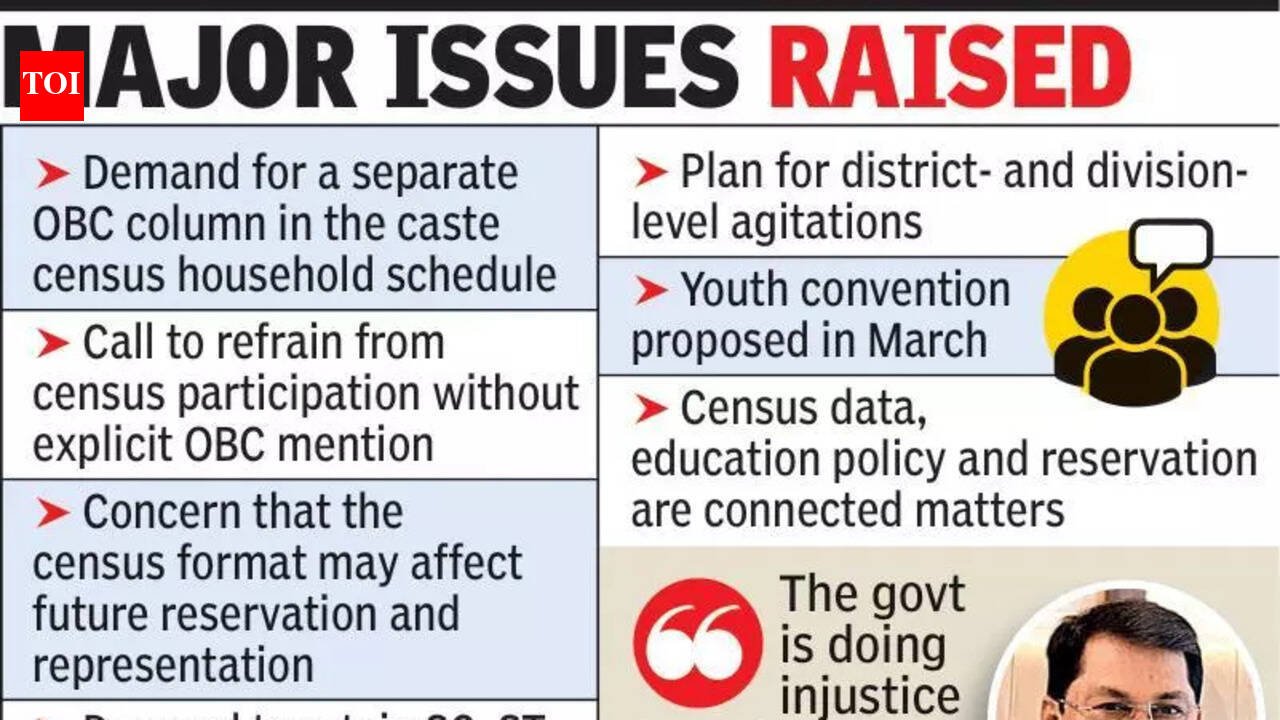
Nagpur: OBC organisations in Vidarbha on Monday announced a sit-in at Samvidhan Square in Nagpur on Feb 17, alleging that the current caste census format and recent University Grants Commission (UGC) regulations risk weakening constitutional protections for Other Backward Classes.The decision was taken at a meeting in Nagpur led by Congress Legislature Party leader Vijay Wadettiwar and former UGC chairman Sukhadeo Thorat, where representatives of several OBC groups from the region gathered to discuss what they termed “technical flaws” in the census format and concerns over higher education policy. Participants said the household schedule in the ongoing caste census placed OBCs in an “other” category without a distinct column, a move they feared could have long-term implications for reservation, representation, and data accuracy. “Until there is a separate column or clear mention of OBCs in the census, OBC citizens should not participate,” Wadettiwar said, urging households to display placards outside their homes stating they would cooperate only if OBCs were explicitly listed.Wadettiwar alleged that the omission could affect future reservation in local self-government bodies and broader policy planning that depends on caste-wise data. “The govt is doing injustice to OBCs,” he said, adding that the agitation would continue “until this injustice is removed.”Thorat expressed concern that new UGC regulations could create space for caste-based discrimination in higher education unless existing clauses safeguarding SC, ST, and OBC communities were retained. He called for these protections to remain intact in the regulatory framework.Organisers said the Feb 17 protest would be held without any political banner and invited all those “who wish to protect OBC interests” to participate. They also discussed plans to hold similar district- and division-level protests across Maharashtra and to organise a youth convention in March aimed at mobilising OBC students and young people.The leaders said the issue was not limited to Nagpur or Vidarbha but had statewide implications, linking census classification, educational safeguards, and reservation policies as interconnected concerns requiring immediate attention.
