


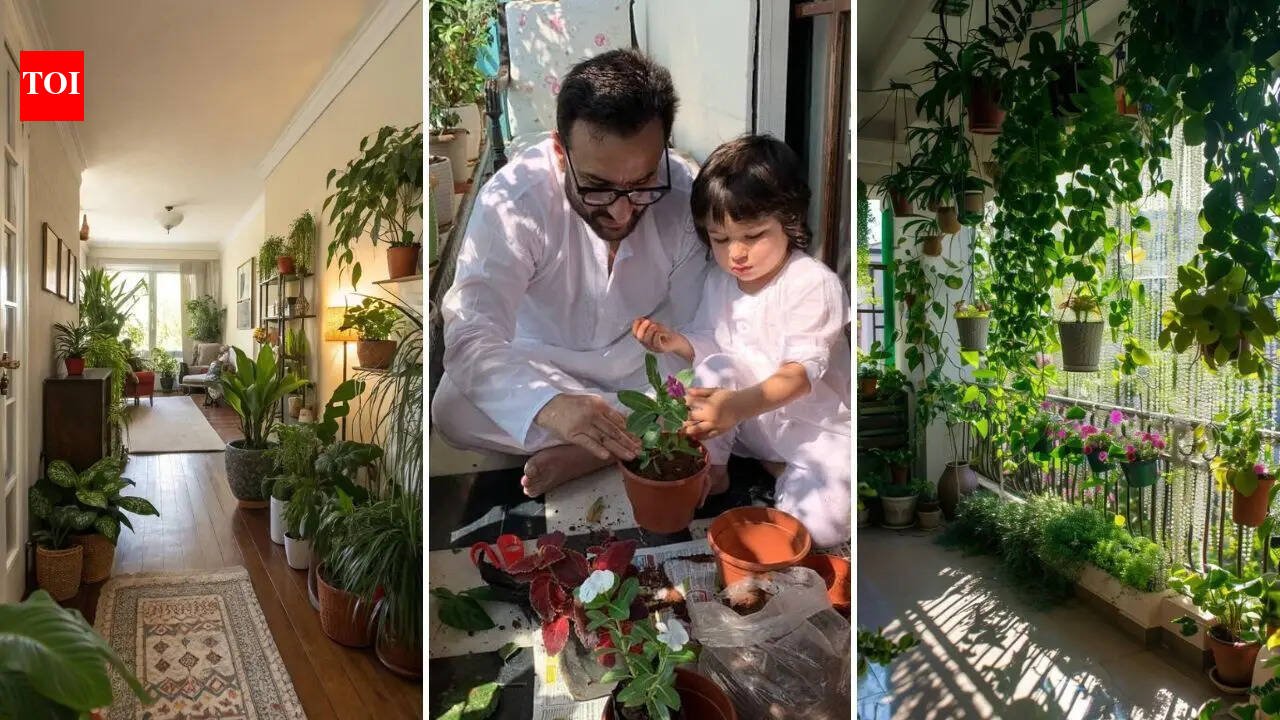
Over the last few years, indoor gardening has brought about a significant shift in urban living. What may have begun as a pandemic hobby has now taken firm root in everyday life. On National Gardening Day, we take a look at how indoor plants are among the fastest growing lifestyle choices today. Interior designer Punam Kalra believes that luxury is being refined through well-being. “Indoor plants improve the way people live today. They help chart rou tines, remind us to care, and constantly nudge us to pause and slow down amid the everyday hustle,” she says.Echoing this, clinical psychologist Suchita Srivastava adds, “Gardening has become a mindfulness practice where the mind is not dwelling on the past or worrying about the future, but is fully present. It slows down our nervous system, making us calmer.” ‘SOCIAL MEDIA HELPS CURATE ONE’S PLANT PARENT IDENTITY’ In an era where digital identity matters, plants have also become part of how people present themselves online. From minimalist interiors to dense balcony forests, curated green spaces are now widely shared, signalling a chosen lifestyle. “Plants are now part of Instagram and Pinterest culture. Sometimes, we begin to equate identity with how our homes look — adopting labels like ‘plant parent’ and showcasing curated spaces. Earlier, plants were grown with a functional purpose; that’s not entirely the case anymore,” notes Suchita. However, not everyone sees it as self-expression. “I don’t want my plants to represent me. I just want my space to feel alive,” says Mahak. For Surbhi, the connection is more personal. “Caring for plants helps me switch off. It brings me closer to myself,” she says. Shalini believes this shift is more than a passing trend. “Our relationship with nature is instinctive, and design is beginning to acknowledge that more consciously. It’s not an imposition, but a return to more enduring spatial values,” she adds.‘INDOOR PLANTS HAVE BECOME A LUXURY STATEMENT’“Plants started as an easy, affordable décor element, but today they’ve definitely entered the luxury space. It’s not just about the plant anymore — it’s about styling, planters, and overall placement,” says Punam. While plants can still be cost-effective in their simplest form, curated greenery is increasingly seen as an investment. Echoing this, Shalini notes, “The rise of rare species, designer planters, and styled indoor landscapes has elevated them into premium territory.”‘THERE’S AN INCLINATION TOWARDS PLANT-FIRST INTERIORS TODAY’Interior designers and architects note a growing demand for plant-inclusive layouts, with clients prioritising sunlight, ventilation, and green corners in their homes. “Much like materiality or furniture, plants contribute to layering texture, light, and sensory experience. They bring softness, movement, and even subtle fragrance that shapes the atmosphere of a space,” says architect Shalini Chandrashekhar. “With their psychological benefits and ability to enhance indoor air quality, plants sometimes feel more essential than furniture, especially in smaller homes that can easily feel crowded,” adds Punam. For many plant parents, greenery goes beyond aesthetics — it creates a sense of home. “When we moved to Bengaluru, everything in our rented apartment felt mismatched. Plants brought it all together and added life. You walk into a room and it doesn’t feel drab anymore — it feels fresh,” says Mahak Rajgarhia, a marcom professional.‘WITH PLANTS, WELLNESS CAN SHIFT INDOORS TOO’ With limited outdoor spaces in urban homes, indoor plants are increasingly replacing traditional gardens — and are far easier to maintain. Punam sees this as part of a broader lifestyle shift. “Choosing plants over excess storage or material possessions re ects a move beyond minimalism — towards a softer, more grounded version with earthy tones, tactile textures, and gentle silhouettes,” she explains. Shalini agrees, “Having greenery at home often signals an intention to prioritise calm, stillness, and a more mindful way of inhabiting space.” Plants also adapt easily to modern homes. “They don’t need a lot of space. From balconies to kitchens to living rooms, they can t anywhere. Rotating them can instantly refresh the look of a home,” says Surbhi Aggarwal, a social media consultant.‘PLANT BURNOUT IS VERY REAL TOO’“Indeed, the initial enthusiasm of nurturing plants often gives way to maintenance fatigue — especially when plants struggle due to low light or busy lifestyles,” says Punam as she stresses the need for practicality, recommending low-maintenance choices and a more restrained approach. “Burnout often happens when aspiration outpaces practicality,” adds Shalini. Limited light, inconsistent care routines, and unfamiliarity with plant needs can quickly lead to neglect. She emphasises thoughtful selection and incorporating low-maintenance systems to ensure plants stay alive.
