


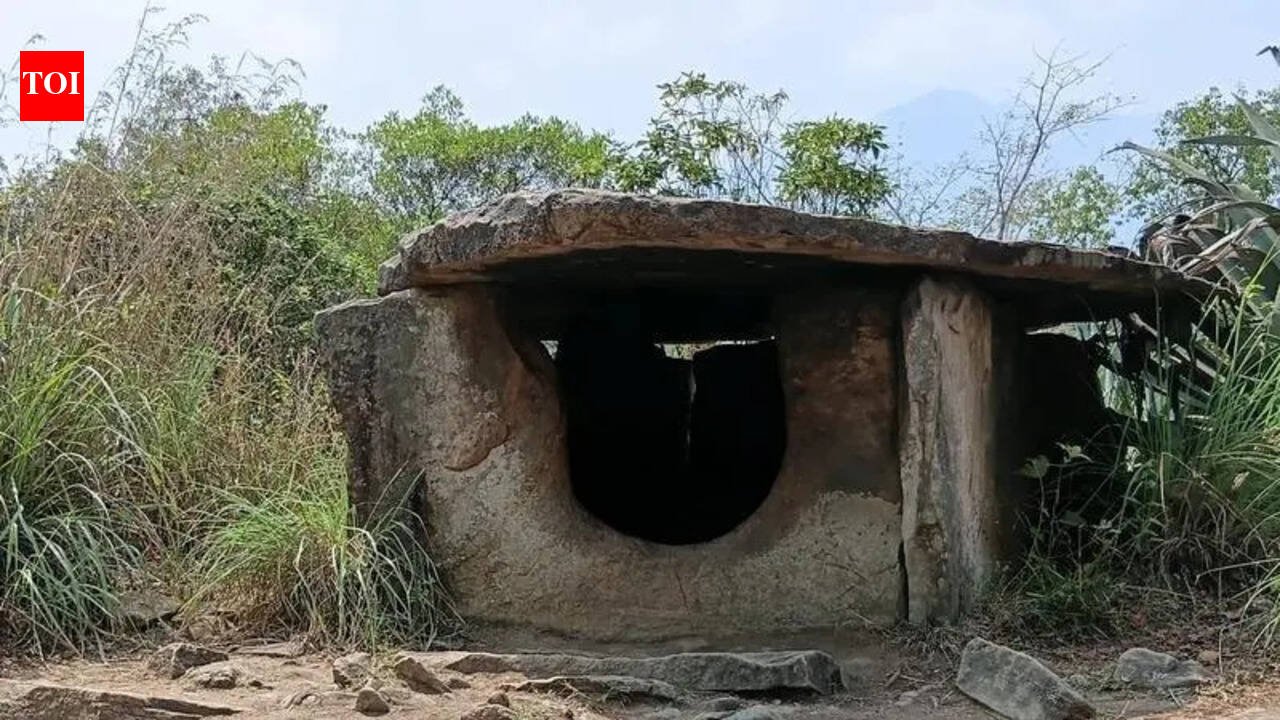
Thiruvananthapuram: The Neolithic Age Muniyara dolmens are lying unprotected at Marayoor in Idukki. Of the burial sites around a large tabletop rock, only a handful remain. A few of them have been vandalised.A board installed at the site says Muniyara dolmens are prehistoric and the above-ground burial chambers are built with large stone slabs known as megaliths. There are 15 types of dolmens in the area and belong to the Neolithic Age between 3,000BC and 14,000BC, says the information displayed at the site managed by forest department.Neither state govt’s archaeology department nor Archaeological Survey of India has taken an active step to preserve the remains of the ancient people who lived in the Western Ghats.Forest department, which controls the land, has set up a kiosk to collect entry fees and posted a watcher as a guide to explain about the dolmens to visitors.However, the giant flat rock has been encroached upon. A tall cross has been established and a temple has been built.A dolmen lies destroyed and painted behind the temple as it has been constructed close to the ancient monument. Other relics lie damaged and covered in shrubs. Though entry fee is being collected, there are no attempts to clean the place.A retired archaeology official said the department monitors the dolmens but the land has not been taken over. “There are several dolmens in the area, including inside a school campus. These have been documented and are being protected with the help of the local community,” he said.Writer and historian M G Sasibhooshan said the dolmens are being destroyed by people who look for gold. “These are Iron Age relics and it is very rare to find gold in these sites. But people continue to search for them,” he said.The dolmens are at risk from such vandals and expanding agriculture, he added. “The state department protects the monuments but it doesn’t have the necessary funds,” he said.“A K Antony govt planned a housing scheme and started constructions there without realising the importance of the relics. A case was filed and later the construction was stopped,” said Sasibhooshan.Though the dolmens were saved from major interference, there has been no attempt to preserve them. The dolmens assumed more importance after the Keeladi excavation unearthed remains of ancient habitation.
