
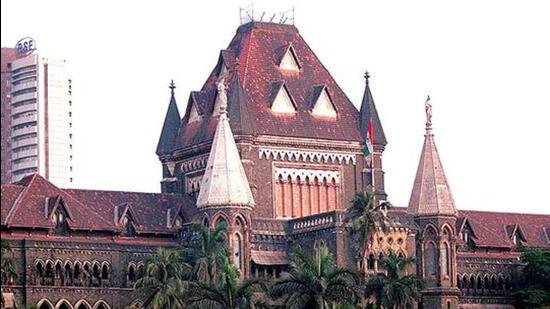
MUMBAI: The Bombay High Court on Friday rapped the government and the Navy for failing to raise objections when Jadhavji Mansion – a high-rise building close to the naval air station in Colaba, INS Shikra – breached height restrictions applicable in the area.

A division bench of justices Ravindra Ghuge and Abhay J Mantri allowed work at the site to continue, but warned that any construction beyond the permissible height of 53.07 meters would be at the “risk and consequences” of the developer, subject to demolition if found violating statutory norms.
The court had on February 16 halted work at the site, ahead of Prime Minister Narendra Modi’s visit to the city, citing security concerns.
According to the petition filed by the local military authority through its Commanding Officer in the first week of February, Jadhavji Mansion was situated within approximately 246 metres of INS Shikra, a highly sensitive naval air station and VVIP heliport.
Guidelines issued by the ministry of defence on May 18, 2011 mandate that any construction within 500 metres of a defence establishment must secure clearance from the local military authority, the petition said. But in this case, Brihanmumbai Municipal Corporation (BMC) – the planning authority – had granted permissions for the building without obtaining any No Objection Certificate (NOC) from the Navy. Multiple amendments after 2011 unlawfully increased the height and number of floors of the building without obtaining such NOC, the petition alleged.
During the hearing on Friday, senior advocate Janak Dwarkadas, appearing for the developer, argued that the naval authorities had not made any effort in explaining why they had raised the issue after 15 years. He submitted photographs of the area, and contended that the line of sight from Jadhavji Mansion to INS Shikra was completely covered, and the naval helipad was not visible from the building.
Dwarkadas further pointed out the existence of a cluster of slums adjacent to the compound wall of the naval installation, and questioned how the height of his building was a security threat, but proximity to the slum clusters and other buildings was not.
Advocate Mihir Rajshekhar Govilkar, appearing for the naval authorities, said the surrounding buildings were more than 30-40 years old and they had taken required security measures. In the case of Jadhavji Mansion, though construction was allowed in 2010 for only up to 53.07 metres or 15 floors subject to final orders, a report from the Indian Institute of Technology report stated that the building now stood 76 metres tall, Govilkar said.
The court, however, noted that the naval base appeared to be “curtailed” from the line of sight from Jadhavji Mansion, and questioned the authorities’ failure to approach the court earlier “if it perceived security threats”.
Any construction in the building beyond 53.07 meters would be at the “risk and consequences” of the developer, and subject to demolition if it is found violating statutory norms, the court said.
The judges clarified that if the developer sells or creates third party interests on floors above the 15th, purchasers must be notified about the pendency of the petition and the risk of demolition.
They also cautioned the BMC, saying, “If we finally come to a conclusion that the municipal corporation has either been complicit or there is laxity on its part, or if the circumstances indicate that they have committed a blunder by granting permission (OC) without taking the NOC of the petitioner, and if circumstances so indicate, we would not hesitate to direct prosecution of the officers of the municipal corporation.”
The court directed the developer to file an affidavit by March 19, and the Navy to file a rejoinder by March 23. The matter is scheduled for final hearing from March 30.
