


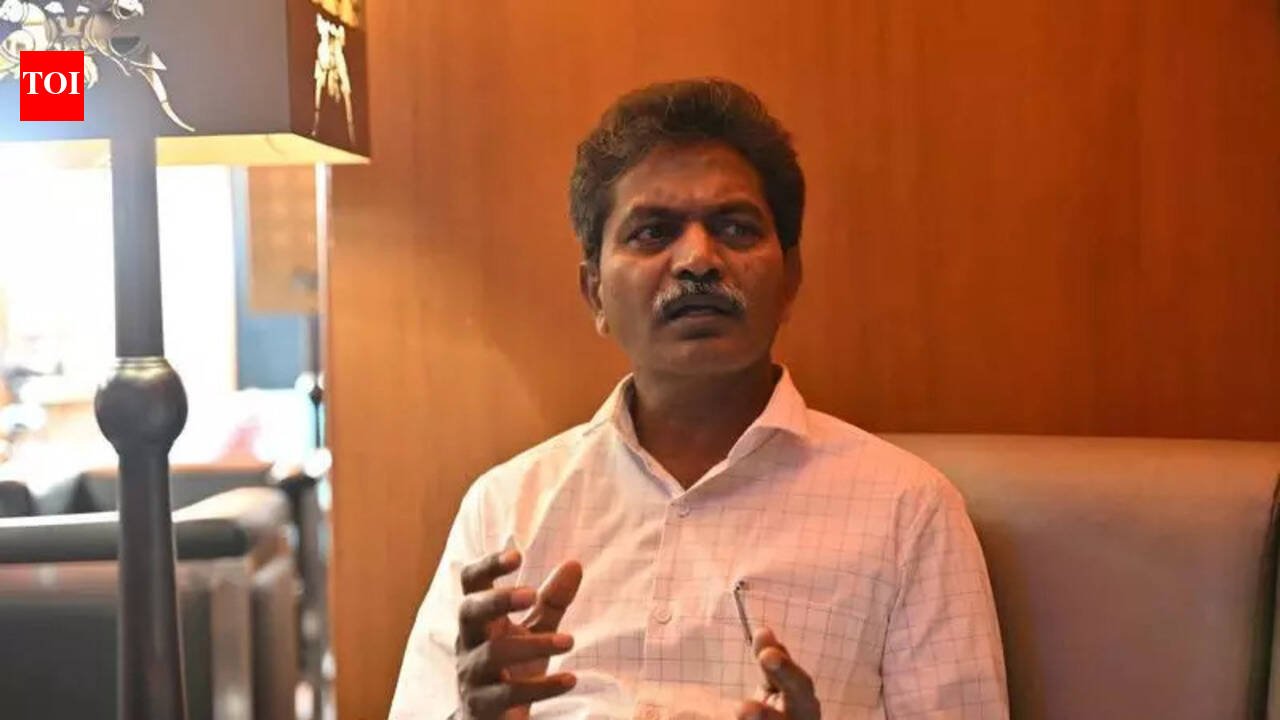
Hyderabad: Elaborating on what weakened the Maoist movement, senior ex-Maoist leader Thippiri Tirupathi alias Devji pointed to delayed political adaptation, internal rifts, betrayal by ‘coverts’ and an expanding intelligence network that allowed security forces to penetrate the organisation.He said his arrest by Telangana cops created a political and moral dilemma. “As a party leader, I should go to jail,” he said, but added that jail would leave him unable to communicate with the leadership, cadre or the public.Devji insisted the decision to give up arms was not driven by fear. “If we were really afraid of death, we would come and surrender earlier like Sonu and Ashanna,” he said. Referring to recent operations, he added: “We resisted until the end in the big Karreguttalu operation. We were living with death every day… Death followed us like a shadow. So it’s not out of fear of death.” Rift in leadership Devji blamed senior leaders Mallaojula Venugopal alias Sonu and Takkellapalli Vasudeva Rao alias Ashanna for deepening divisions within the party. According to him, the split was neither a power struggle nor a caste issue. He alleged that the rift widened after the launch of Operation Kagar, when some leaders lost confidence in continuing the armed struggle. “When Operation Kagar began, Sonu developed a fear of death and lost confidence. He proposed surrendering, saying we cannot stand against the intensification of the war. He claims this was discussed in the central committee, but that is a distortion and a falsehood,” Devji said. He said the party leadership opposed such a move. “If you want to go as individuals, go. But do not split the party. Weapons belong to the people and the party; do not hand them over to the enemy,” he recalled, alleging that the leaders nevertheless “split the party and handed over weapons”. Devji also rejected claims that former general secretary Nambala Keshava Rao alias Basavaraj had agreed to lay down arms. “Sonu and Ashanna are saying that Basavaraj had also agreed to lay down arms. They are telling falsehoods,” he said. He added that after Basavaraj became a ‘martyr’, the central committee and politburo did not meet and no new secretary was chosen. Devji said he and several others were relocating during intensified anti-Maoist operations when they were arrested by Telangana police. “We discussed relocating to different regions for some time to take shelter and coordinate the party. While we were moving, the Telangana police arrested us,” he said. Ganapathi’s whereaboutsOn the whereabouts of veteran Maoist leader Muppalla Lakshmana Rao alias Ganapathi, Devji said even the party does not know where he is. “Whether he is inside or outside is something even we don’t know. In Aug 2024 politburo meeting, we decided that security measures for certain individuals must be extremely secret, limited only to the general secretary. Therefore, no one knows where he is—not me, not Sonu, no one,” he said. He said the party had failed to adapt to changing social realities and aspirations, particularly outside its traditional rural base. “In a 2020 review, we admitted that we failed to design programmes that matched the changing social aspirations of different sections,” he said. “While society, production relations, and aspirations change, we couldn’t mobilise urban people, employees, students, or intellectuals. We became limited to the forests and the Adivasis.” The party attempted to rethink both political and military strategies, including expanding legal and public forms of mobilisation, he claimed.In Dandakaranya, where he said about 2.2 lakh police and paramilitary forces were deployed, the party planned to decentralise into smaller ‘civil teams’ across wider areas. “However, we failed to implement these decisions correctly,” he said, comparing the scale of operations against the organisation to “using a Brahmasthra on a sparrow”. Intelligence penetration Devji said long-term intelligence penetration was another major factor behind setbacks, including the killing of Basavaraj. He alleged that rising consumerism and financial incentives led some individuals to become informers. According to him, members of the 7th company responsible for Basavaraj’s protection “got scared and told the enemy about his location and movements” and later guided security forces during the attack. At the same time, he distinguished between informers and what he described as ‘coverts’. “Anyone working with the enemy from within the party is called a covert,” he said. Coverts’ hand in BR killing“We didn’t say in the past, nor are we saying now, that these people (read coverts) gave information to kill BR (Basavaraj),” Devji said.Devji said the movement’s decline was not the result of a single battle or operation but of delayed political decisions, organisational splits, loss of wider social support and sustained state pressure. “Society changes constantly. If we don’t provide a matching programme and slogans to mobilise millions, the movement regresses. This, combined with constant, relentless repression, led to this state,” he added.
