


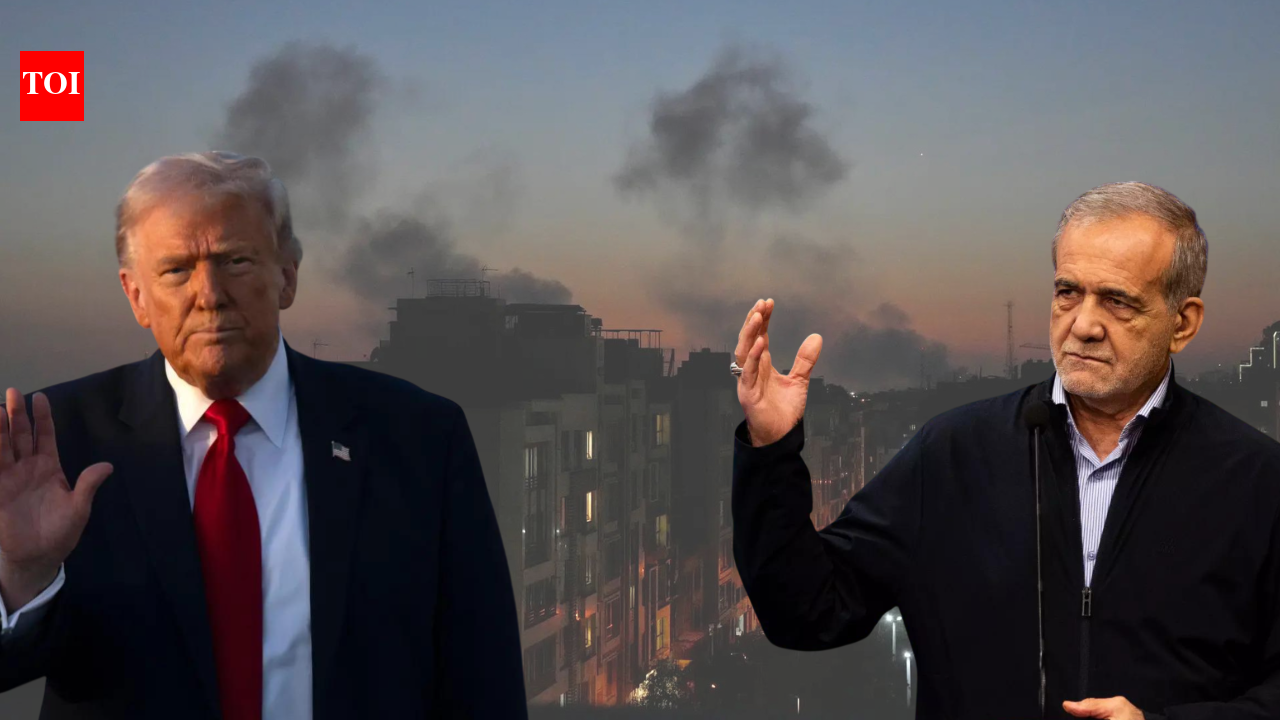
The war between the United States, Israel and Iran entered its ninth day on Sunday with fresh strikes, drone attacks and widening regional fallout. Fighting that began with joint US and Israeli strikes on Iranian territory on February 28 has rapidly expanded into a broader confrontation stretching across the Gulf, Iraq and Lebanon.Over the past 24 hours, missile and drone attacks have been reported across several countries including Saudi Arabia, Bahrain, Iraq and Kuwait. Israel has also intensified its campaign inside Iran, striking fuel storage facilities in Tehran and conducting new operations in Lebanon, while Iran and its allied groups continue attacks on US assets and regional allies.
US-Israel-Iran war – follow live updatesPolitical tensions have also deepened. US President Donald Trump has rejected the possibility of negotiating with Iran’s leadership while claiming American and Israeli strikes have severely weakened Tehran’s military capabilities. Meanwhile, Iranian officials have delivered mixed messages about their strategy, with some calling for diplomacy while others promise continued attacks on regional targets.
Here are the key developments so far:
Israeli strike targets Iranian commanders in Beirut
Israel said it carried out a precise strike in Beirut on Sunday targeting commanders from Iran’s Revolutionary Guards operating in Lebanon. The Israeli military said the operation focused on senior figures in the Quds Force, the Guards’ foreign operations arm.According to the Israeli statement, the commanders were involved in planning attacks against Israel and its civilians. The military did not disclose their identities or confirm whether they had been killed in the strike.The operation marks another escalation in Israel’s expanding campaign against Iranian-linked forces across the region. Lebanon has already witnessed heavy fighting after Hezbollah launched rockets and drones towards northern Israel earlier in the conflict.Israeli air strikes across Lebanon in response have killed hundreds since the fighting resumed earlier in the week.
Israeli drone strike hits Beirut hotel
A separate Israeli drone strike struck a room in the Ramada Hotel in Beirut’s Raouche district early Sunday, according to Lebanese media reports. The area is a major seaside tourist district and is not known for a Hezbollah presence.Lebanon’s health ministry said the attack killed four people and injured ten others. Residents reported hearing a loud explosion from the hotel building.Israel did not immediately confirm who or what the strike targeted. The attack follows another earlier strike this week on the Comfort Hotel in the Hazmieh suburb of Beirut.The hotel strikes illustrate how the conflict has begun affecting civilian locations in Lebanon’s capital as Israel expands its operations against Iranian-linked networks.
War continues in Middle East
The conflict continued to spill across the Gulf region as several countries reported missile and drone attacks. Saudi Arabia, Qatar and Kuwait confirmed new incidents linked to Iranian operations.Saudi Arabia’s defence ministry said it intercepted and destroyed fifteen drones that entered the kingdom’s airspace, including one heading towards Riyadh’s diplomatic quarter where the US embassy is located.Qatar said it had been targeted by ten ballistic missiles and two cruise missiles fired from Iran a day earlier. Most were intercepted and there were no reported casualties.Kuwait reported a wave of hostile drones entering its airspace. Authorities said fuel tanks at Kuwait International Airport were among the targets, prompting a precautionary reduction in crude oil production.
Drone attack hits Riyadh diplomatic quarter
Saudi authorities said a drone attack aimed at Riyadh’s diplomatic quarter was successfully intercepted late Saturday. The area houses several foreign embassies including the US mission.The Saudi defence ministry said the drone was shot down before reaching its target and confirmed there were no injuries or damage.The attempted strike comes amid a broader wave of drone attacks across the region believed to be linked to Iranian forces or allied militias.Saudi Arabia also said it intercepted ballistic missiles heading towards Prince Sultan Air Base, which hosts US troops, as well as drones over the Shaybah oil field.The incidents highlight growing concerns that critical infrastructure and diplomatic zones in the Gulf are increasingly becoming targets.
Explosions and drone strikes reported in Iraq
Multiple drone strikes were reported in Iraq’s northern Kurdish region, including an attack on Irbil International Airport that killed one security personnel and injured another.Authorities said explosions were heard at the airport as air defence systems attempted to intercept incoming drones. Smoke was seen rising from inside the facility.In Sulaymaniyah, several drones struck three separate locations, including buildings in the city centre and positions linked to Kurdish forces.One attack targeted a base used by the Komala Party of Iranian Kurdistan, killing one person. Additional drones struck facilities connected to Kurdish Peshmerga units.The attacks come amid increasing drone activity across northern Iraq linked to Iranian-backed militias.
Missile lands inside US embassy complex in Baghdad
A missile landed inside the US embassy compound in Baghdad on Saturday, hitting the helicopter landing pad in the heavily fortified Green Zone.Iraqi security officials confirmed the strike but said there were no casualties. The embassy did not immediately comment.It is the first reported strike inside the Green Zone since the war began, although US military bases and facilities across Iraq have faced repeated attacks.Iraqi Prime Minister Mohammed Shia al-Sudani condemned the strike as a terrorist act carried out by rogue groups and ordered security agencies to pursue those responsible.Iran and allied Iraqi militias have launched dozens of attacks on US facilities in Iraq since the war began.
Israeli strike sets Tehran fuel facility ablaze
Large fires lit up the Tehran skyline after Israeli strikes targeted fuel storage facilities in the Iranian capital on Saturday night.Also read: Israel strikes several oil depots in Iran; towering smoke, massive blaze light up skylineVideo footage showed pillars of flame and thick smoke rising from the site as Iranian state media confirmed that an oil storage facility had been hit.It is one of the first times a civilian industrial facility has been struck during the war.Israel said the fuel complexes were being used to supply Iran’s military operations. Iranian media blamed the attack on the United States and Israel.Iranian officials later warned that oil refineries in the Israeli city of Haifa could become future targets in response.
Trump rejects negotiations with Iran
US President Donald Trump said Washington is not interested in negotiating with Iran despite ongoing hostilities.“We’re not looking to settle,” Trump told reporters aboard Air Force One. “They’d like to settle. We’re not looking to settle.”Trump claimed the United States and Israel had severely weakened Iran’s military capabilities, including its navy, air force and missile infrastructure.He said Iranian missile launches had sharply declined because of damage to launch systems and manufacturing facilities.Trump described the US military operations inside Iran as an “excursion” and said issues such as rising energy prices and regional security would improve once the conflict ends.
Iran leadership sends mixed signals on war
Iranian leaders delivered conflicting messages about the direction of the war.President Masoud Pezeshkian apologised to neighbouring Gulf countries for earlier missile strikes and suggested Tehran should pursue diplomacy if those states did not assist attacks against Iran.However, other Iranian officials insisted the war strategy would continue. Judiciary chief Gholam Hossein Mohseni-Ejei warned that attacks would persist against locations in the region used by US forces.Iran’s parliament speaker Mohammad Bagher Ghalibaf said regional countries hosting American bases would not enjoy peace as long as those facilities remain.Despite the differing statements, senior security official Ali Larijani later insisted that Iran’s leadership remained united in confronting Israel and the United States.
Search begins for Iran’s next supreme leader
Iran’s leadership council has begun preparations for selecting a new supreme leader following the death of Ayatollah Ali Khamenei during the opening strikes of the war.Ali Larijani said the council had asked for arrangements to convene the Assembly of Experts, the body responsible for choosing the country’s top religious authority.He did not provide a timeline for the meeting.The leadership council currently overseeing Iran includes President Pezeshkian and other senior figures. Their authority remains limited compared to the powers previously held by the supreme leader.
