


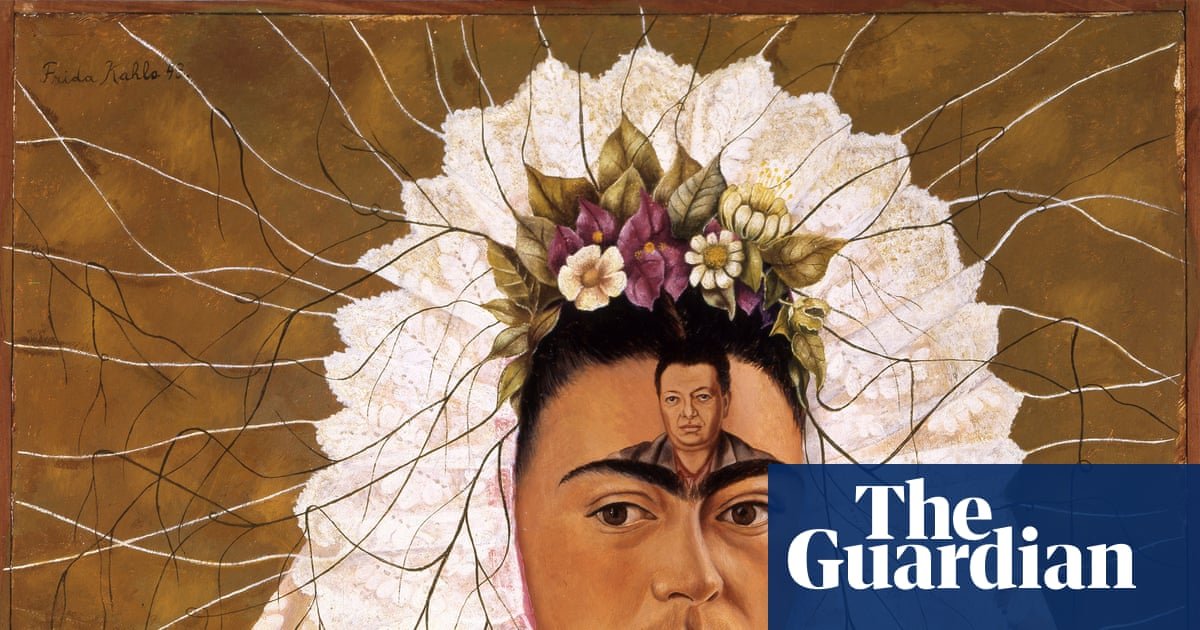
One of the world’s most important collections of 20th-century Mexican art, including works by Frida Kahlo and Diego Rivera, is set to be exported to Spain under an agreement with Banco Santander, sparking outrage among Mexico’s cultural community.
Nearly 400 cultural professionals have signed an open letter calling on the Mexican government to offer greater clarity on what the deal means for the masterpieces, particularly the works by Kahlo, which the Mexican state has declared an “artistic monument”.
“It’s a very serious issue,” said Francisco Berzunza, a historian and one of eight people who published the open letter. “She [Kahlo] is the most important artist in the history of our country and it’s easier to see her work outside of Mexico than in Mexico itself.”
The row centres on a collection of 160 works from the Gelman collection, rebranded as the Gelman Santander collection. Originally owned by the collectors Jacques and Natasha Gelman, the paintings, sketches and photographs were bought by the Mexican Zambrano family in 2023.
As well as Kahlo and Rivera, the collection includes works by Rufino Tamayo, José Clemente Orozco, María Izquierdo, and David Alfaro Siqueiros, and a selection of Mexican photography.
Under the Santander deal, the collection, currently on display in Mexico for the first time in nearly 20 years, will return to Spain this summer where it will become a cornerstone of the bank’s new cultural centre, the Faro Santander.
In announcing the agreement in January, Santander said it would be “responsible for the conservation, research and exhibition” of the collection. But the ambiguity of the announcement, which did not say how long the works would remain in Spain, sparked concern.
The concern turned to indignation when Faro Santander’s director, Daniel Vega Pérez de Arlucea, told El País that legislation governing the works was “flexible” and that the collection would have a “permanent presence” at the new cultural centre.
Members of Mexico’s cultural community fear the deal means the works may never return to Mexico and say the law is unambiguous when it comes to these national treasures.
Gabriela Mosqueda, a curator and another one of the letter’s initial signatories, said: “Current legislation is very protective of these works, specifically those designated as national artistic monuments. It deems them to be of significant value to Mexican identity and to the history of Mexican art.”
The dispute is particularly pertinent to Kahlo’s works, which received the “artistic monument” status in 1984: the presidential decree states clearly that her oeuvre may leave Mexico only temporarily and that the country’s National Institute of Fine Arts and Literature (Inbal) is responsible for “repatriating” any works held in private collections overseas.
Artists, curators and others in Mexico’s cultural scene say that with the Santander deal, Inbal, which owns only four of Kahlo’s 150 or so pieces, has done just the opposite.
Berzunza said: “This decree was specifically intended to put a lock on private collections. To ensure they would not leave the country or be dispersed. That’s why we’re defending it so vigorously.”
In response to the uproar, Mexico’s president, Claudia Sheinbaum said: “Our desire is for [the collection] to remain in Mexico.”
The minister of culture, Claudia Curiel de Icaza, said: “The collection is Mexican; it wasn’t sold – it’s only leaving temporarily.” She said the artworks would return to Mexico in 2028.
Santander issued a statement emphasising that the deal “does not imply, under any circumstances, either the acquisition of the collection or its permanent removal from Mexico” and that the works “will return to Mexico at the end of the temporary export period”.
But cultural figures in Mexico remain up in arms. They say the deal signed between Inbal and Santander is ambiguous and overly favourable to the Spanish bank.
The contract between the two institutions, seen by the Guardian, states that although the export is “temporary”, Faro Santander will have charge over the collection “at any point” between June 2026 and 30 September 2030, “a term that may be extended by mutual agreement through the extension of the present contract”.
Berzunza said: “If the works were not to return, a fundamental part of this artist’s body of work – and her history – would be lost. She is, after all, the most important female Mexican artist in history. These pieces are fundamental to telling her story, and they are fundamental to understanding our identity as Mexicans.”
