


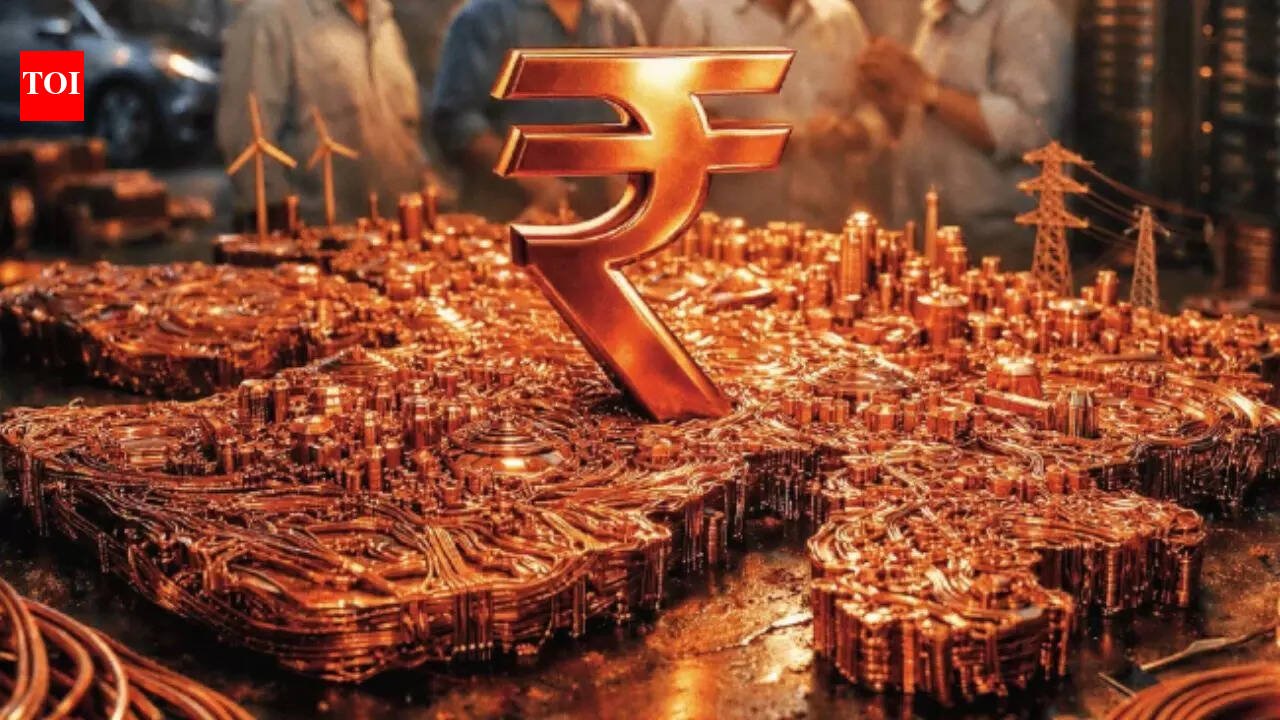
Every day, somewhere in India and other countries, cops embark on a hunt for copper thieves – some thefts becoming so rampant that the thefts of copper wires carrying electricity have caused blackouts in the US.But it’s not just law enforcers — even investors are now chasing the red metal, which has quietly joined the price frenzy of gold and silver.This growing rush for copper is tightening supply and worsening shortages in the market. The impact is now being felt most sharply by industries, ranging from engineering units and cable makers to submersible pump manufacturers and brass parts producers in Gujarat, where copper is a crucial raw material.
Copper conducts electricity efficiently, and resists corrosion, making it indispensable in electric vehicles and in clean energy era. An electric vehicle uses nearly four times more copper than a petrol or diesel car. Data centres, wind turbines, solar panels, and power transmission networks also consume large quantities of the metal. As demand has outpaced supply, copper prices have surged nearly 48% over thepast year.The London Metal Exchange (LME), the global benchmark, saw copper prices rise from around $8,900 per tonne a year ago to nearly $13,000 per tonne in Jan.“The rising price is not the only problem. Copper prices are highly volatile, which reflects in the final product cost and discourages buyers,” said Jasmat Santoki, promoter of PMC Wires in Rajkot, which manufactures copper strips, rods, pump cables and industrial cables. He added that higher prices require greater working capital investment, and cre- ate challenges in exports while domestic customers delay purchases.
In the engineering sector, submersible pumps, especially for agriculture, account for the highest copper consumption. Industry players say they can absorb price increases temporarily, but frequent fluctuations disrupt business operations. Copper constitutes nearly 30% of the raw material used in these pumps, which are widely used by farmers as well as real estate developers.“The skyrocketing copper price has raised our production costs significantly. Customers are unwilling to accept higher prices, which directly are affecting profit margins,” said Kamal Sojitra, executive director of Falcon Pumps, Rajkot.Another major consumer is the brass parts industry centred in Jamnagar, which has over 8,000 units. Brass parts use about 60% copper and 40% zinc. Jamnagar produces around 3,500 tonnes of brass parts annually, but demand has dropped sharply due tohigh raw material costs, a weak rupee against the dollar, and a slowdown in European markets.AN INDUSTRY THAT’S CAPITAL-INTENSIVECopper mining is among the most capital-intensive and time-consuming industries. From discovery to first production, the process can take up to 20 years and requires massive investment. Companies spend billions on surveys, approvals, land acquisition, drilling, and infrastructure. Global copper reserves are concentrated in countries such as Chile, Peru, Congo, China, and the US. As ore grades decline and mining goes deeper, waste rock increases significantly. After extraction, ore is processed using waterintensive flotation to produce copper concentrate, which is then sent to smelters for refining.With gold and silver prices climbing sharply, retail investors in Ahmedabad are turning to copper bars in growing numbers, betting the industrial metal could witness a similar bull run.Some jewellers and bullion traders have begun offering copper bars to walk-in customers who find silver prices too high and are reluctant to invest in silver amid volatile market conditions. However, the trade comes with a caveat: most sellers are not offering buyback, leaving investors uncertain about exit options.According to market sources, several jewellers and bullion traders have been selling copper bars for about a month. However, resale for customers could become a major challenge because copper is primarily an industrial commodity and there is no established mechanism of selling copper back to jewellers,” he said.Unlike gold and silver, which attract 3% GST, copper is taxed at 18%, raising the effective acquisition cost for retail buyers. Traders said the higher tax rate, combined with the lack of a buyback channel, makes copper bullion a very different proposition from precious metals despite the recent surge in interest.Nishant Dholakia, a city-based jeweller, said copper bars are being sold in both bullion-grade and commercial-grade categories, typically priced between Rs 1,600 and Rs 2,000 per kg depending on grade and taxes. He said enquiries have risen sharply, with around 600kg sold in the last 20 days at his shop alone.“Retail customers are buying with an investment motive, and the average purchase per buyer is around 20kg,” Dholakia said, adding that supply is being sourced from Mumbai, with some local availability as well.He said jewellers are clearly communicating the lack of liquidity. “We clearly say that we will not take this back for at least two years,” he said, even as he expects industrial demand and investor buying to tighten supply and eventually scrap traders to offer better rates. “Scrap traders are currently offering buyback at Rs 1,300 for a kilogram but investors who have bought at higher prices for the long-term will not sell at a l o w price,” he added.The inquiries for 1kg copper bars are high, with customers viewing it as an investment opportunity in place of silver. Investments are ranging from Rs 5,000 to Rs 20,000.
