


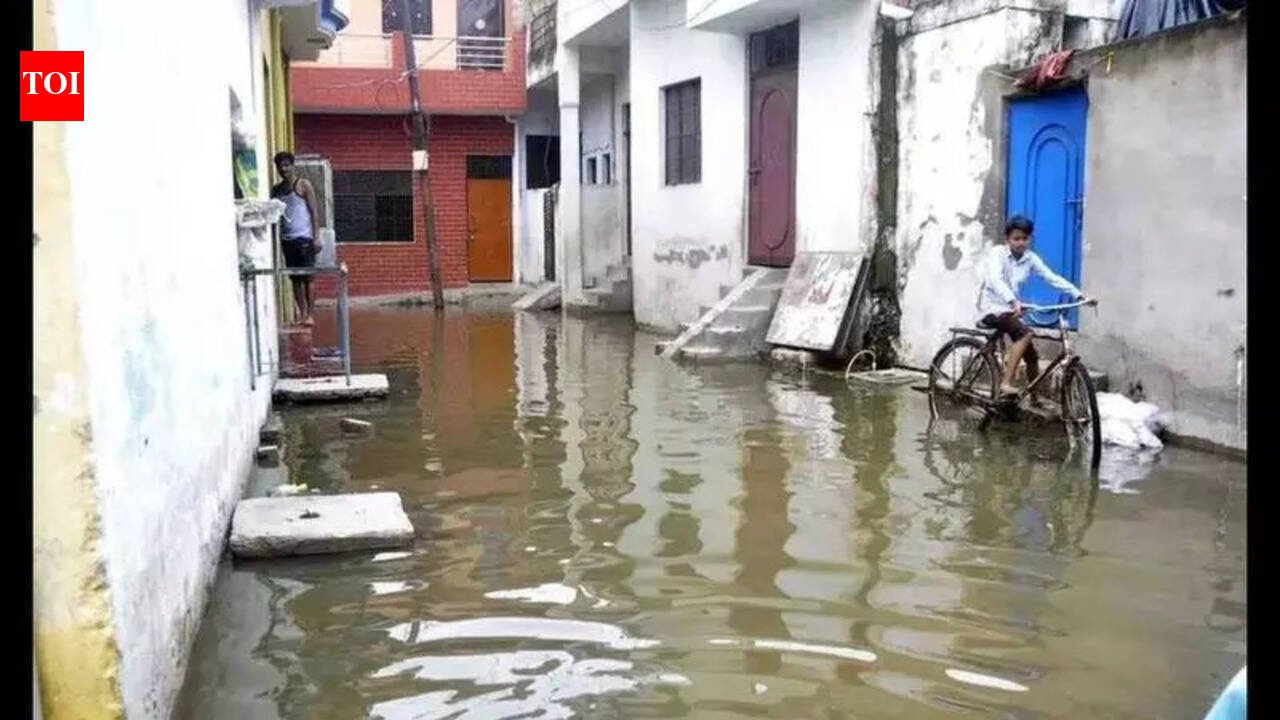
Prayagraj: The problem of waterlogging becomes a recurring concern in several low-lying areas of the Sangam city during the rainy season. Against this backdrop, the district administration has approved a comprehensive flood and stormwater drainage plan aimed at providing long-term relief to residents of low-lying areas.The decision was taken at a divisional-level administrative coordination committee meeting chaired by divisional commissioner Soumya Agarwal recently. District magistrate Manish Verma, Prayagraj Development Authority vice-chairman Rishiraj and municipal commissioner Sai Teja were among the senior officials present.The meeting concluded with approval for a plan to install dams, control gates and pumping stations on major drains in areas that face severe waterlogging during the rainy season. The system will help channel excess rainwater out of the city more efficiently particularly from low-lying areas.Officials said the project was prepared by Uttar Pradesh Jal Nigam (urban) in coordination with CD&D and the Prayagraj Municipal Corporation. The proposal includes not only construction but also five years of operation and maintenance costs, ensuring the drainage system remains functional and effective over the long term. The administration noted that rapid urbanization, rising population and blocked natural drainage channels have worsened the waterlogging problem in recent years. The project is expected to bring relief by reducing flooding on roads, preventing water from entering homes and improving overall urban mobility during the monsoon season. Waterlogging often disrupts traffic, damages property and increases the risk of disease outbreaks, making effective drainage a key civic concern.Divisional commissioner directed that joint inspection of proposed sites be conducted by senior officials before the launch of the project. She also asked authorities to inform local residents about the proposed designs and collect their feedback to avoid practical issues during execution.The committee further decided that all works will comply with National Green Tribunal’s guidelines. To ensure efficient operation, the pumping stations will be equipped with flow meters to measure water discharge. Besides, a central control room would be set up to strengthen the monitoring system. This will allow officials to track the system in real time and respond quickly during heavy rainfall.
