
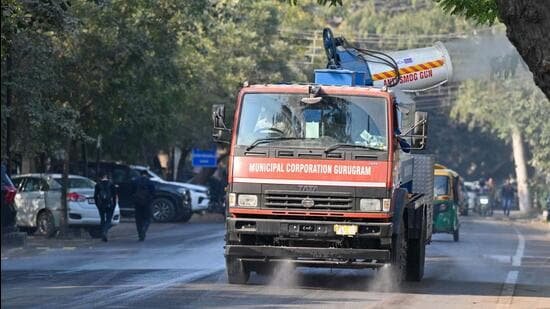
The Municipal Corporation Gurugram (MCG) has decided to procure nine new anti-smog gun machines, shifting focus toward CNG-operated technology.
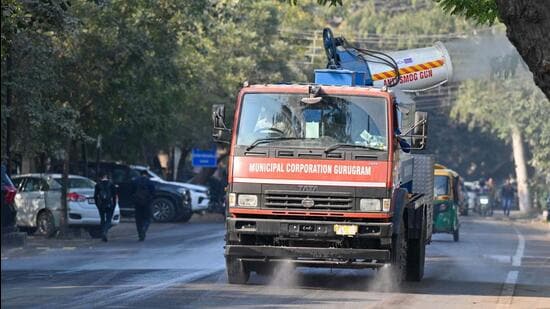
The initiative is part of a broader plan to improve air quality and control dust pollution on major city roads, officials said.
According to civic officials, the primary task of these machines will be sprinkling water on major roads to prevent dust from rising due to vehicular movement. The proposal, prepared by MCG, will be sent to headquarters for approval, following which the procurement process will begin.
The Commission for Air Quality Management (CAQM) released ₹34 crore fund to strengthen Gurugram’s pollution-control measures. Of this, ₹10 crore has been earmarked for purchasing anti-smog gun machines, officials said, adding that ₹5 crore has already been allocated.
Another ₹5 crore will be spent on improving road infrastructure, they added.
Officials said MCG had purchased five diesel-operated anti-smog guns, however, the new strategy prioritises CNG-based machines due to their lower emissions and operational efficiency. “CNG-powered machines do not add to pollution and are more cost-effective,” said Pradeep Dahiya, municipal commissioner.
MCG officials said that road dust is a major source of air pollution which significantly increases PM10 levels, particularly during dry months. Anti-smog guns help bind dust particles and prevent them from becoming airborne.
“Anti-smog guns can bring down dust-related pollution by 10–15% on busy stretches. These machines are especially effective on arterial roads, intersections and traffic-heavy corridors,” said Dhaiya, adding that regular water sprinkling also improves visibility and driving conditions.
Officials said this new approach aligns with Gurugram’s broader clean-air strategy and reduces dependence on diesel-powered equipment.
MCG is also preparing additional proposals to control pollution due to construction activities and debris dumping, which often worsens dust levels.
Officials said the proposal will be finalised soon. Once sanctioned, procurement will be carried out in phases, with priority given to deploying machines on high-traffic roads and pollution hotspots.
“With this, we expect visible improvement in air quality on major roads. The aim is to make dust control a regular, and citywide operation,” added Dahiya.
