


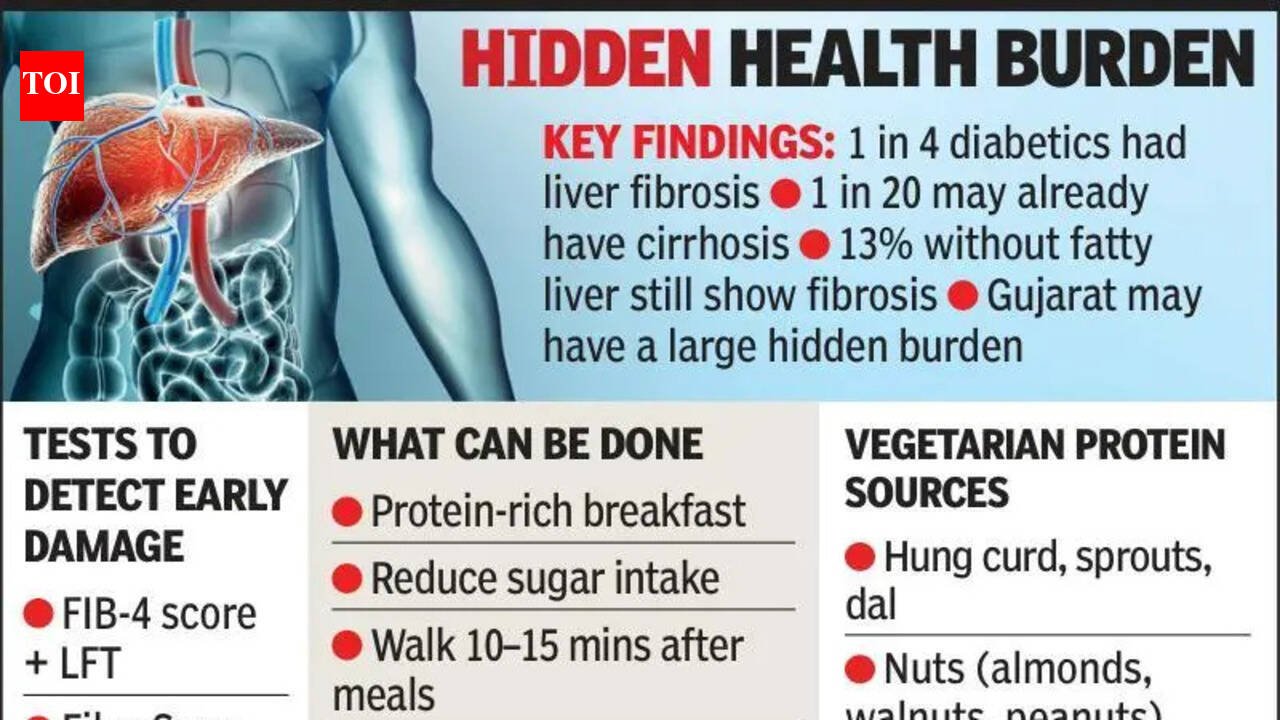
Vadodara: A large number of diabetics in Gujarat could be silently living with undiagnosed liver damage, with a national study now identifying liver disease as the “fourth major complication” of diabetes — alongside damage to the eyes, kidneys and nerves.Published in The Lancet Regional Health – Southeast Asia (April 2026), the study found that one in four diabetics has significant liver fibrosis, while one in 20 may already have cirrhosis, often without any symptoms. For Gujarat, often dubbed India’s diabetes capital, the findings point to a potentially large but hidden burden of advanced liver disease.The data comes from the DiaFib-Liver Study, which analysed over 9,000 patients across India at 27 hospitals and clinics nationwide, including leading centres such as Sir Ganga Ram Hospital (Delhi), Medanta (Gurugram), PGIMER (Chandigarh) and the Madras Diabetes Research Foundation (Chennai), along with contributions from Gujarat-based centres in Vadodara, Ahmedabad and Himmatnagar. Researchers found that 26% of patients had clinically significant fibrosis, 14% had advanced fibrosis, and 5% met thresholds consistent with cirrhosis — despite most being asymptomatic and not under the care of liver specialists.What makes the findings particularly concerning is that liver damage was not confined to those with fatty liver. Nearly 13% of patients without detectable liver fat still showed fibrosis, including 4% in the cirrhosis range, suggesting that current screening approaches may be missing high-risk individuals.Experts say this could change the way diabetes is managed. Until now, routine care largely focused on complications affecting the eyes, nerves and kidneys. However, doctors now say the liver needs equal attention, especially in high-burden states like Gujarat.“This is a significant shift in our understanding of diabetes complications. Liver disease is emerging as a parallel and often silent threat, and many patients may already have advanced damage without knowing it,” said Dr Parag Rana, a Vadodara-based diabetologist and a contributor to the study.“There is a clear need to integrate liver fibrosis screening into routine diabetes care so that cases can be detected early,” Rana added.The study also identified obesity, high cholesterol, long-standing diabetes and reduced kidney function as key risk factors linked to liver fibrosis.Conducted over seven months in community clinics, the research excluded patients already undergoing liver treatment, making it reflective of real-world conditions.For Gujarat, the warning is clear: a silent liver disease epidemic may already be unfolding among diabetics — and it risks going unnoticed without urgent changes in screening practices.“Diabetes is essentially a metabolic disorder driven by insulin resistance. Since insulin is a fat-storage hormone, it leads to fat accumulation in multiple organs, especially the liver. The problem is that liver damage is silent — there is no pain or early warning — so most patients ignore it until the disease has already advanced,” said Dr Niraj Chawda, MD (medicine).“In Gujarat, where diets are typically high in carbohydrates and fats but low in protein, and junk food consumption is rising even among children, we are seeing increasing cases of fatty liver. If not addressed early, this can progress to inflammation, fibrosis and even cirrhosis,” he added.
