
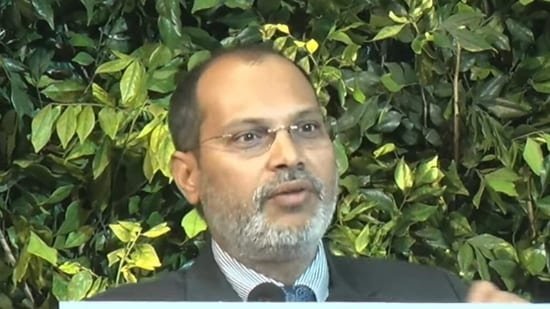
The country’s real estate regulatory architecture must shift towards artificial intelligence-led insights and machine-to-machine digital integration, even as the country prepares for an urban expansion with the population expected to touch 80 crore by 2050, Kuldip Narayan, Joint Secretary, MoHUA, said at the recently concluded National Urban and Real Estate Development Conclave organised by Naredco.

Referring to the Real Estate Regulation and Development Act, he said the law marked a historic reform by institutionalising registration, escrow safeguards, and grievance redressal, but now requires further digitalisation.
The strength of the regulation lies in the trust it commands among stakeholders. Information about any project, anywhere in the country, should be easily accessible to the public, he said at the two-day Naredco held on Feb 13-14 in the national capital.
He said that RERA’s quarterly progress reports (QTRs) must be machine-readable and digitally integrated, enabling AI tools to analyse project updates and generate intelligent insights.
“Quarterly progress reports should not be limited to experts; the information derived from these QTRs must also be easily understood by ordinary homebuyers. These reports need to be machine-readable, digitally integrated and capable of being analysed by AI tools to generate meaningful insights,” he said.
He also pointed out that standards and processes vary widely across different RERAs, even though each authority has best practices that could be replicated by others.
“We need to adopt digital technologies and systems so that, sitting here, we can track any project in any part of the country,” he said.
“Most RERA websites currently provide information in PDF format. That limits the intelligence we can derive from the data, as it is not being converted into actionable insights,” he said.
Regulatory platforms, he said, should adopt machine-to-machine communication. Interoperability across state RERAs would allow authorities to track developers’ activities across jurisdictions and improve supervisory effectiveness, he said.
“All RERAs should be able to communicate with each other, both in human and machine-readable formats,” he added.
To achieve this, he said standard operating procedures (SOPs), procedural reforms and possibly amendments may be required. “But first and foremost, we need to build trust,” he emphasised.
RERA Quarterly Progress Reports (QPR) are mandatory filings for registered real estate developers, submitted to state RERA authorities within 15-20 days after each quarter ends (March, June, Sept, Dec). They ensure transparency by updating project construction status, inventory, sales, and finances, failure of which can lead to penalties.
He said the country’s urban population is expected to cross 80 crore by 2050. “Whether we like it or not, our urban population will cross 80 crore by 2050. We have to adapt, and we have to carefully align our actions,” he said, underscoring that more than half of the built-up space required by 2050 is yet to be constructed
Over the next 20-25 years, India will have to significantly expand housing supply while simultaneously undertaking large-scale brownfield redevelopment, he said. However, housing cannot be treated in isolation. Urban planning, public transport, and housing must function as an integrated framework.
Also Read: Govt initiates pan-India study to review building height restrictions around airports
“Talking about them separately is an urban policy error,” he said.
Efficient use of land important
Narayan said efficient land markets are central to this transition. A substantial portion of urban land remains locked due to regulatory constraints, litigation and market inefficiencies. In several cities, land accounts for over 50 per cent of total project cost, making housing unaffordable and constraining supply.
“We need efficient land markets and a strong institutional regulatory framework that promotes development rather than merely controls it,” he said. Access to long-term capital will also be critical to finance large-scale housing and infrastructure creation.
Also Read: Union housing minister Manohar Lal proposes dedicated fund to revive pre-RERA stalled projects
“If we want to achieve Viksit Bharat by 2047, urban development and real estate must be structurally prepared. Society, government and the industry must move together,” he said.
The two-day Naredco conclave was attended by Manohar Lal Khattar, the Union Minister of Housing and Urban Affairs; Kinjarapu Ram Mohan Naidu, the Civil Aviation Minister; Tokhan Sahu, the Minister of State for Housing; RERA chiefs from several states and real estate developers.
