


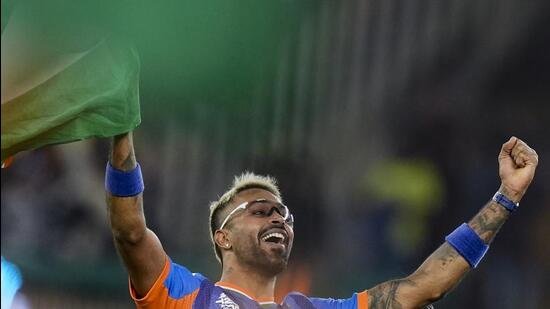
Kolkata: The timing couldn’t have been better—weeks after winning the T20 World Cup, Suryakumar Yadav is set to return to Mumbai Indians, but not as captain. Not many IPL franchises can claim to have a World Cup winning captain in their ranks, Mumbai Indians now have two. For a dynasty searching for its next act, this could be one return worth remembering. But only if they play it right.

For nearly two decades, Mumbai Indians defined the rhythm of the IPL. Titles came in clusters, and a culture of calm authority developed under Rohit Sharma. The franchise mastered the art of identifying young talent and pairing it with global stars. But the last few seasons have felt oddly transitional, their gears stuck in uncertainty as many wins were frittered away as close defeats. It hurt their pride, but that has yet to manifest into a lasting riposte.
Mumbai Indians came close last year, only to be bested by a match-winning 41-ball 87 from Shreyas Iyer in the second Qualifier. The problem certainly isn’t batting, at least not for a side that scored 228/5 and 203/6 in their last two matches in the previous IPL. Bowling too shouldn’t be a worry, especially when you have Jasprit Bumrah spearheading it. Yet they haven’t won the IPL since 2020.
Bowling needs rethink
Part of the problem has been a strategy that Mumbai Indians thought didn’t need any tinkering. Like making Trent Boult open the bowling as the left-arm seamer. Till the league phase, it worked fine as Boult pulled down the run rate before capping the death overs with his accurate yorkers. In the knockouts however, Boult conceded 94 runs in nine overs, taking just the wicket of Prabhsimran Singh.
For Mumbai to retain Boult (at ₹12.5 crore) for this season was natural, because two failures shouldn’t undo the good work throughout the league. But Mumbai Indians are also slowly inching towards a point where only a trophy will validate their process and philosophy. Unfortunately, those title ambitions still hinge heavily on their bowlers, including Hardik Pandya who chose not to bowl much once Jasprit Bumrah was declared fit for the campaign.
Three overs in the Eliminator, two in the Qualifier, this was pretty much how Pandya chose to not exert himself once it was clear he didn’t need to bowl his full quota. That was last year though. With the bowling roster largely unchanged, Mumbai Indians need him to bowl more slower bouncers, maybe even open the bowling too if they want to translate the heft of a franchise studded with World Cup winners.
At the heart of that attack remains Bumrah, arguably the most complete T20 fast bowler of the modern era. Bumrah’s ability to control both the Powerplay and the death overs provides captains with strategic flexibility. And as has been underscored in this T20 World Cup, that weapon could be again used creatively — in shorter bursts, in smaller middle-over spells to break partnerships.
But in comparison to other teams, Mumbai’s spin options haven’t always been dominant match-winners. Sure they have Mitchell Santner, a proven customer in these conditions, but on slower IPL pitches—particularly at Chennai or Lucknow in the previous season—Mumbai’s spin bowlers have often looked underprepared and inexperienced. They had a chance to address that in the auction but Mumbai retained almost all their key players to go in with the lowest purse, targeting some base-price players, with Quinton de Kock being one of them.
Batting looks settled
Not that they needed de Kock, especially with Ryan Rickleton looking in fine fettle. But the onus will again expectedly fall on Sharma who has steadily evolved into the early architect, absorbing the new ball, identifying match-ups, and allowing younger partners to play freely. His presence also carries symbolic weight. For a franchise that built its identity around his leadership, the transition to Pandya with Yadav in the core may work best if it feels collaborative rather than abrupt.
This is crucial because the middle overs belong unmistakably to Yadav while Pandya has come down the order. Batting at No. 3 or No. 4, Yadav becomes the pivot around which everything spins. If the openers start quickly, he accelerates. If early wickets fall, he reconstructs while keeping the scoring rate alive. Few players in world cricket possess that duality. With him on strike, bowlers are forced to reimagine lengths because a good delivery can be turned into a scoring opportunity by a flick of the wrists or a sudden shuffle across the crease. In the World Cup triumph, that fearless elasticity became India’s middle-overs engine.
Around him, Mumbai’s strategy will be to pack the lineup with boundary-hitting options—the sort of hitters who can maintain the tempo Yadav prefers. Ring in Tilak Varma, Sherfane Rutherford, Will Jacks—who had a strike rate of 176.56 and hit 14 sixes in this T20 World Cup—and Naman Dhir to this line-up and there is very little Mumbai Indians would want to change this time. The real test though would be whether Mumbai Indians can turn their individual brilliance into collective momentum—the same formula that once made them the league’s most formidable team.
