


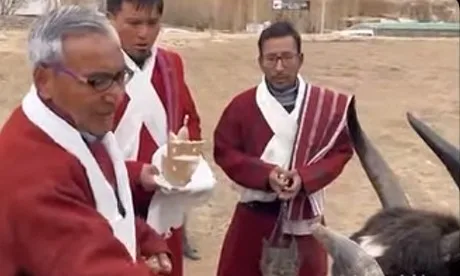
Leh: The traditional agricultural festival of Laya/Saka was celebrated with enthusiasm at Sakti village in Kharu block of Leh district, where local representatives, including the Sarpanch, members and villagers gathered to mark the beginning of the 2026 farming season.
Observed annually in March, Laya/Saka signifies the commencement of ploughing and sowing after the harsh winter months in Ladakh. The festival is rooted in age-old customs, where rituals and prayers are offered to seek blessings for a fruitful harvest.
A striking feature of the celebration remains the continued use of yak in farming practices. Despite the increasing use of tractors and modern machinery in many parts of the region, villagers in Sakti upheld tradition by employing yak to plough fields, symbolically marking the official start of agricultural activities. The yak, an integral part of Ladakhi life, not only supports farming but also reflects the region’s deep connection with its natural and cultural heritage.
Ladakh’s short agricultural window makes the timely observance of Laya/Saka crucial for farmers, as it sets the pace for cultivating essential crops such as barley and wheat. The festival also carries strong spiritual significance, with locals performing traditional rituals to invoke blessings from deities and ensure prosperity in the coming season.
Beyond its agricultural importance, the festival fosters a spirit of unity and cooperation among villagers, who come together to prepare fields and assist one another. It stands as a symbol of renewal and resilience, highlighting how traditional practices continue to thrive alongside modern advancements in Ladakh’s unique landscape.
