


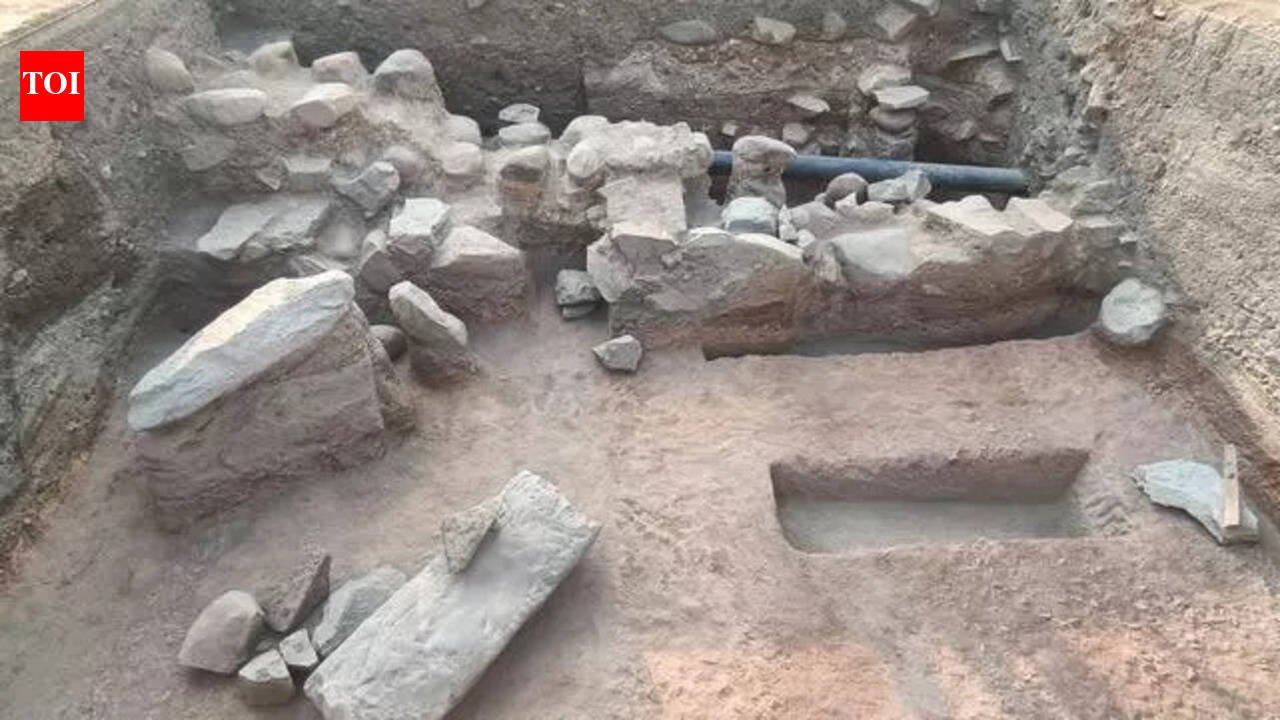
Hubballi: The excavation taken up by state archaeological department, in collaboration with the district administration and the Lakkundi Heritage Area Development Authority, concluded Wednesday with all digging halted at the site.Meanwhile, a treasure-expert team set up by the state govt after antique jewellery was found during house construction in Lakkundi on Jan 9 is expected to submit its final report to the district administration in the next 2–3 days.Sources said the 462g of antique jewellery recovered in Lakkundi was used to adorn temple deities. Initial reports suggested it was 500 years old, while some estimates placed it at 800 years old. The expert team is expected to determine its exact period in the next couple of days, sources said.Lakkundi drew widespread attention after the discovery of jewellery. Coincidentally, the state archaeological department resumed its excavation—halted last year due to rain—on Jan 9, around the same time the jewellery surfaced. The dig made national headlines after the gold find. Departments maintained the excavation had nothing to do with the discovery, though some people and officials hoped for more gold or precious metals. None were found.Shejeshwara R, director of the archaeological department, told TOI the excavation began at a 10×10-metre site opposite Kote Veerabhadreshwar temple. The site was divided into four 2.5-metre blocks. Over more than two months, the team unearthed an Adishesha with seven hoods, stone inscriptions, a donor (daanashastra) slab, Dwarapalaka sculptures, decorative stone fragments and distinctive sculptural patterns, including rare carvings of dance poses and ornamental designs.A donor inscription is estimated to date to around the 12th century. Based on stylistic analysis, the findings are believed to belong to the Kalyana Chalukya, Hoysala and Badami Chalukya periods. Human skeletal remains were also recovered. Most artefacts belonged to these three periods, he said.“We completed the excavation on Wednesday. We dug up 9–10 ft and reached the natural soil level. We also dismantled the remaining 50cm path between the four blocks, where we discovered a fort wall between the Veerabhadra temple and Pushkarni. We think the fort wall was built during the Rashtrakuta–Badami period, but we need to study it to confirm,” he said. “We will submit the final report on the excavation to the department soon.“Around 36 labourers and two supervisors worked on the excavation, he added.
