


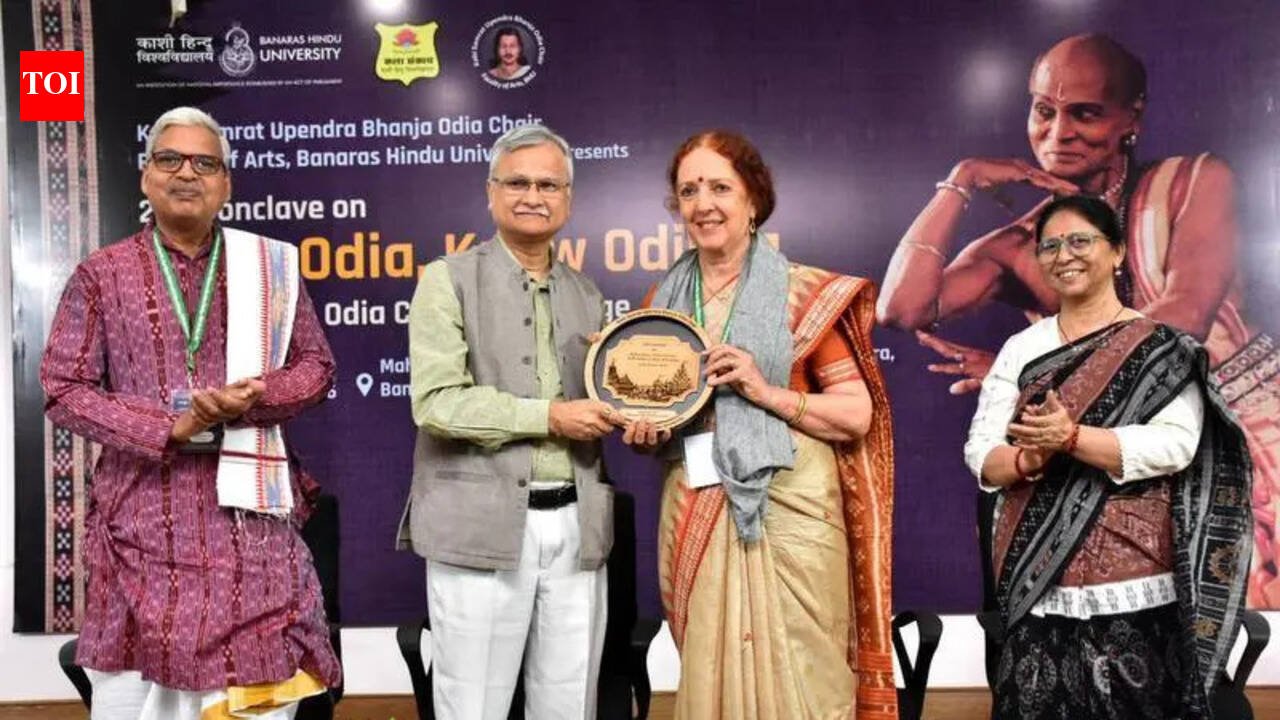
Varanasi: The second edition of the ‘Know Odia, Know Odisha: A Window to Odia Cultural Heritage’ conclave, organised by the Kabi Samrat Upendra Bhanja Odia Chair, was inaugurated at Malaviya Moolya Anusheelan Kendra in Banaras Hindu University on Wednesday, also the Foundation Day of Odisha. The inaugural session began with the garlanding of Lord Jagannatha and the bust of Mahamana Madan Mohan Malaviya, followed by the soulful rendition of the Kulgeet and ‘Bande Utkal Janani’.Addressing the inaugural session, vice-chancellor prof Ajit Kumar Chaturvedi emphasised the importance of learning more about Kavya Samrat Upendra Bhanja, and suggested introducing academic and research programmes on Odia language studies. He also pointed out the significance of Odia as a classical language and stressed the need to bring its rich literary heritage to the forefront. He further highlighted the need for greater student engagement, especially among those familiar with the Odia language and culture, and encouraged stronger outreach within the campus to increase participation.Padma Shri awardee Ileana Citaristi spoke about how she connects with the idea of ‘Know Odia, Know Odisha’ and how it shaped her identity. She highlighted her learning of Chhau dance, which allowed her to experience another dimension of Odisha’s culture. Presiding over the inaugural function, dean, faculty of Arts, prof Shushma Ghildyal, spoke about Odisha’s rich textile traditions and highlighted upcoming academic initiatives such as excursions and study programmes aimed at promoting cultural learning. She reaffirmed the faculty’s continued support for the Odia Chair and said that it was an collective effort of students and faculty across departments.Delivering the welcome address, coordinator prof Gopabandhu Mishra highlighted the role of the Odia Chair in promoting the holistic aspects of Odisha’s culture, including language, literature, dance, music and heritage, with support from the govt of Odisha. . Prof Pradosh Mishra highlighted the objectives of the conclave, emphasising its role in situating Odisha’s cultural traditions within contemporary academic discourse and reinforcing its relevance in the broader cultural landscape of India. Dr Amiya Kumar Samal proposed the vote of thanks of the inaugural session.In the first academic session, Prof Satyabrata Rout, an expert in Odia theatre scenography and direction, delivered an insightful lecture on ‘Odia Theatre: Tradition, Transition and Contemporary Possibilities,’ highlighting the evolution and contemporary relevance of Odia theatre. Prof Rout elaborated on the emergence of dedicated theatre groups. A major milestone was achieved in 1975 with the institutionalisation of theatre through the establishment of the theatre department at Sangeet Mahavidyalaya in Bhubaneswar, influenced significantly by the pedagogical approaches of the National School of Drama and theatre professionals trained in acting and stagecraft.In the second thematic session, eminent Odissi exponent and Padma Shri awardee Ileana Citaristi spoke on “Odissi and the Gita Govinda,” highlighting the deep cultural heritage of Odisha through the enduring legacy of the Lord Jagannatha Temple and Jayadeva’s Gita Govinda. She emphasised how the poem became integral to temple rituals and inspired Odisha’s rich artistic traditions, particularly the Mahari dance heritage and its evolution into Odissi. The lecture underlined the importance of Radha as a central spiritual and literary figure. Citaristi also brought attention to the role of Odia language, medieval Odia poetry and folk traditions in shaping the expressive depth of Odissi, especially through the evolution of Ashtapadi compositions and solo dance interpretations.Day one of the conclave concluded with a cultural programme featuring Gotipua dance performed by the Murchhana Dance Academy, Bhubaneswar.The two-day conclave will include sessions on ‘Odia Theatre: Tradition, Transition and Contemporary Possibilities,’ ‘Odissi and Geeta Govinda,’ ‘The Vanishing Pata Textile Tradition of Kotpad,’ ‘Locating Gender in Odisha’s Development Discourse,’ and ‘Sacred Kitchens to Social Scrolls: The Rise of Odia Culinary Culture.’
