
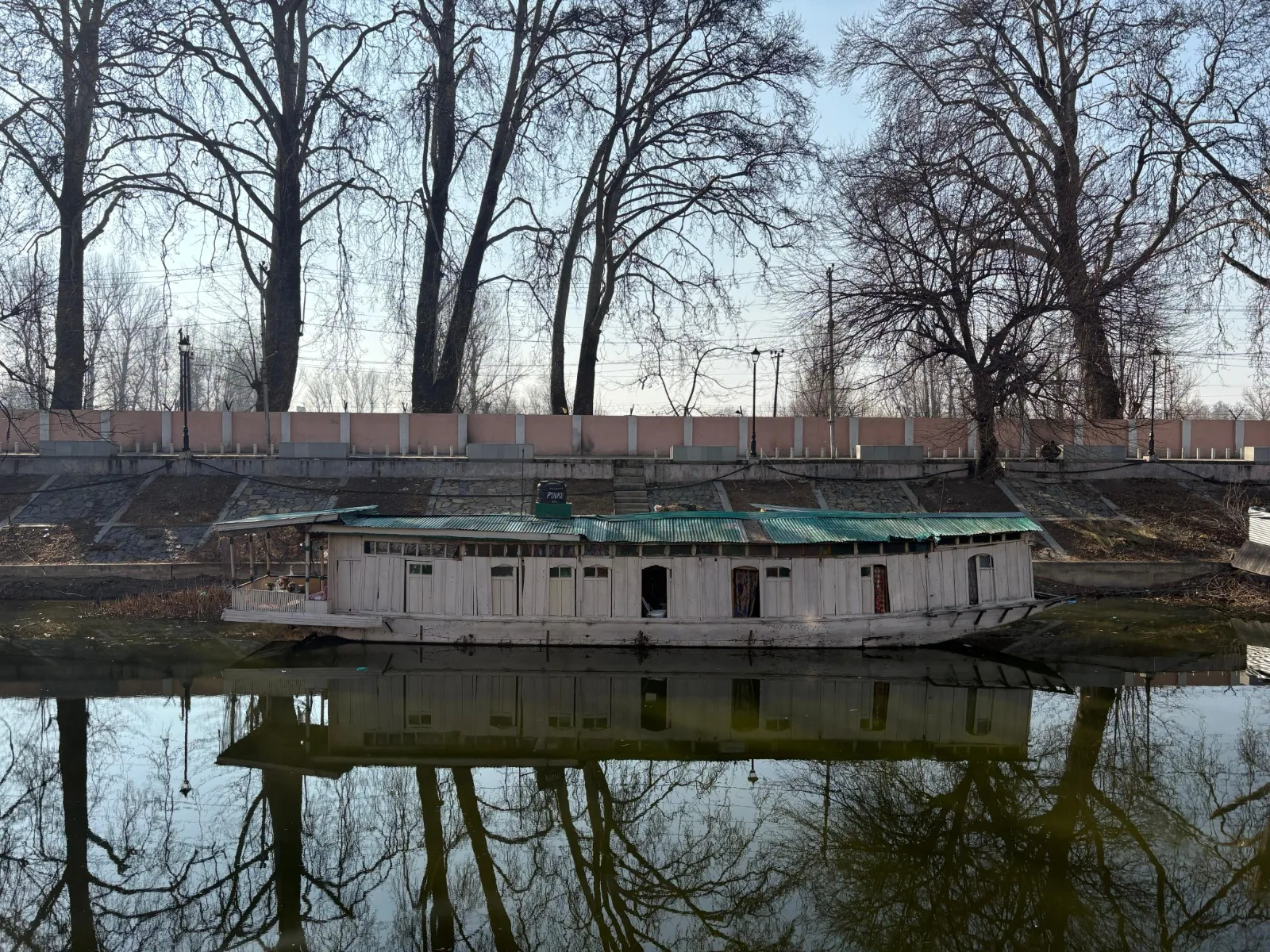
Drifting gently on Dal and Nigeen lakes, Kashmir’s houseboats remain the Valley’s most enduring postcard. Their cedar façades, hand-carved walnut panels, and lotus motifs whisper of Dogra maharajas and British memsahibs. Beneath this timeless veneer, however, unfolds a quiet revolution, a transformation driven not by sentiment but by survival.
Farooq Ahmed of Best View Group gestures toward his fleet. “Look at the roofs,” he says. “Once entirely wooden shingles, beautiful but leaking through monsoons and rotting within years. Now tin sheets over timber frames, waterproof and durable, costing a fraction to maintain.” The shikara owners nod knowingly. Modernisation is not a betrayal of heritage. It is the only path to continuity.
The lake itself demands reinvention. Hafeez Ahmed Ratta’s Fairy Land, built by his great-grandfather in the British era, carries nearly 80 years of family stewardship. Renovated in 1996 and then comprehensively in 2023, its evolution reflects environmental realities.
“The 1996 refit restored traditional woodwork and added basic bukharis,” Ratta explains. “In 2023, modern heating, superior insulation, and upgraded plumbing were required. Changes in water quality accelerated wear, while cleaner lakes meant longer intervals between major work.”
Houseboat waste, once discharged directly into Dal’s waters, now flows through regulated networks to Brari Nambal’s sewage treatment plant. “No more direct discharge,” Ahmed confirms. “It is pumped to shore and treated properly.” Heritage owners embrace regulation not out of bureaucratic compulsion but self-interest. Polluted waters corrode cedar hulls, deter tourism, and destroy livelihoods. Lake health equals houseboat longevity.
At Rajbagh’s Jhelum Bund, carpenter Sanaullah Khan from Kokernag shapes the new aesthetic, working on a houseboat currently under construction. “Old boats were floating palaces, heavy ceilings, deep walnut reliefs, solid furniture,” he says. “Guests still demand Kashmiri identity, but lighter panels, cleaner lines, and contemporary lighting create brighter spaces. Traditional carving survives, blended with modern sensibility.”
Specialisation has sharpened the craft. Hull specialists handle base structures, while interior artisans focus exclusively on detailing. “Once one team did everything,” Khan notes. “Now distinct skills produce superior outcomes.” The result marries authenticity with livability, making heritage legible and comfort undeniable.
Queen of Heaven at Ghat No. 4, operational since the 1980s, undergoes triennial renewal under strict oversight. “Permissions, structural surveys, technical clearances, two years minimum,” says Rouf Ahmed Khuroo. “Earlier, simpler. Now systematic.”
No new construction has been permitted since 2000. “What tourists call ‘new’ houseboats are 20–25 years old, extensively renovated.”
Comfort has evolved dramatically. Bukharis yield to air-conditioners. Table fans give way to ceiling fans. Walnut’s scarcity drives alternative materials. “Two-bedroom boats once served maharajas’ guests,” Khuroo says with a laugh. “Modern tourists expect four or five.” The investments reflect the stakes. Shikara landing rights fetch ₹70–80 lakh. Construction demands ₹3–3.5 crore and at least a year to complete.
These transformations reveal more than architectural evolution. They expose the fragile ecosystem sustaining it. Polluted lakes, volatile tourism, scarce timber, specialised labour, and rigorous regulation shape the new reality. Houseboat owners, stewards of 19th-century cedar masterpieces, confront 21st-century pressures: climate change eroding lake edges, younger tourists demanding Instagram-ready interiors, and global supply chains dictating walnut prices.
Yet adaptation prevails. Shikara rowers install solar panels. Owners fund lake clean-ups. Carpenters apprentice youth in hybrid craftsmanship. Heritage survives not through stasis but evolution, traditional cedar hulls carrying modern HVAC systems, hand-carved panels framing LED lighting, 80-year-old beams supporting waterproof tin roofs.
Kashmir’s houseboats drift forward, literally and figuratively. They carry Dogra-era artistry into uncertain waters, proving that heritage thrives through pragmatic reinvention, not romantic preservation. When the next British diplomat or American influencer steps aboard, they will sleep beneath tin roofs on cleaner waters, surrounded by carvings begun before their grandparents were born.
The floating palaces endure, upgraded, regulated, resilient.
