


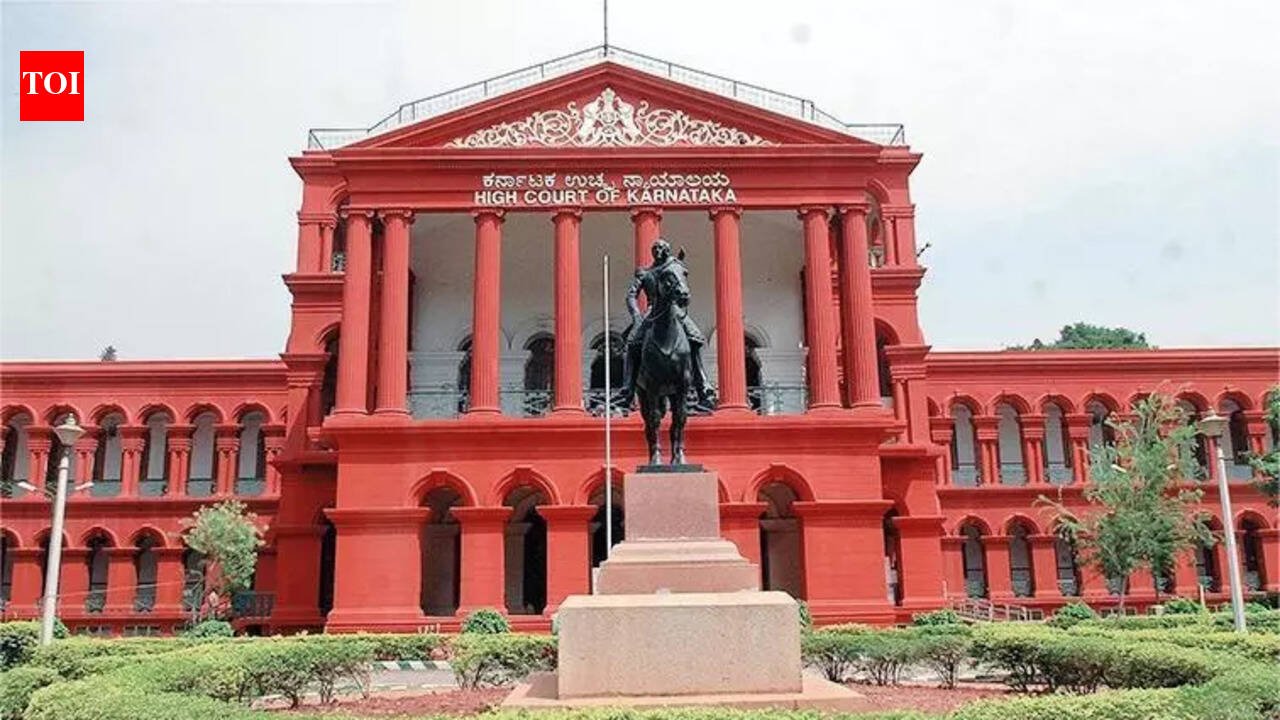
Bengaluru: Karnataka high court has directed the state govt to consider introducing mandatory police verification — similar to tenant checks — for workers hired within private premises, to strengthen safety and ensure migrant labourers are not unfairly targeted in crime incidents.The court made the observation while overturning the acquittal of four persons in a 2009 triple murder case. All have been sentenced to life imprisonment.A division bench comprising Justice HP Sandesh and Justice Venkatesh Naik T directed the govt to examine the feasibility of creating a verification mechanism supported by online registration portals that allow homeowners to enter details of domestic helpers, caretakers, drivers, and construction workers.The court noted that in several cases across the state, workers hired without background checks have later been linked to serious crimes committed on the premises where they were employed. It stressed that preventive mechanisms must not lead to stigmatisation of migrant workers, reminding authorities that criminal responsibility is individual — not collective — and that constitutional protections under Articles 14 and 21 guarantee equality and dignity for all persons.The bench recommended large-scale public awareness campaigns through print, television, and digital platforms to educate citizens about safe hiring practices.The court’s remarks came while hearing an appeal related to a 2009 RT Nagar case. On Feb 15, 2009, professor Purushotham Lal Sachidev, wife Rita Sachidev, and son Munna Sachidev were found murdered inside their home. The culprits fled with gold jewellery, cash, silk saris, and silver items, and attempted to conceal the bodies.The investigation led police to Suchitra Haldar, a domestic worker with the Sachidevs, and her husband Dipak Haldar, both from West Bengal. They were arrested along with Mohammad Sarbal alias Raj and Bidan Shikari, from Bengaluru. Police arrested the four suspects nearly 20 months after the crime. A fifth accused, Pradeep Naskar, is still missing.In 2016, a trial court acquitted the four accused, citing insufficient evidence. Police challenged the verdict. After reviewing the evidence, the high court found that the circumstantial chain pointed to the guilt of the accused, noting that the Haldar couple had absconded immediately after the murders and failed to offer a credible explanation.The court convicted them of murder, criminal conspiracy, and destruction of evidence, sentencing them to life imprisonment and a fine of Rs 30,000 each. Of the total penalty amount, 80% will be paid as compensation to Anurag Sachidev, the adopted son of the deceased professor.
