



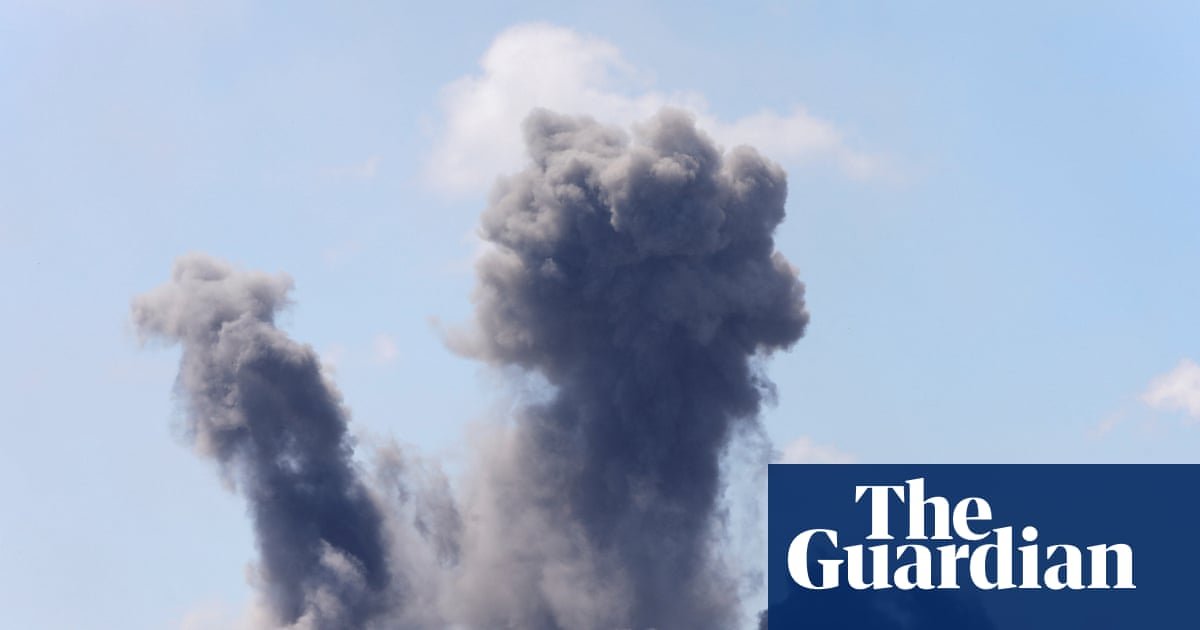
Israeli strikes have hit southern and eastern Lebanon, a day after 11 people were killed in a single raid on the south despite a ceasefire in the Israel-Hezbollah war and claims that the US and Iran are about to reach a peace deal.
Saturday’s strike in Sir al-Gharbiyeh “resulted in a massacre whose final toll is 11 dead including a child and six women, and nine wounded including four children and a woman,” Lebanon’s health ministry said.
Israel’s military has continued to strike what it says are Hezbollah targets in Lebanon despite a ceasefire that began on 17 April and that was recently extended for several weeks.
The Iran-backed group has also maintained attacks on Israeli targets in southern Lebanon and across the border, including firing rockets on Sunday at Israeli troops operating on Lebanese territory.
Lebanon’s official National News Agency reported Israeli strikes on multiple locations in southern and eastern Lebanon on Sunday, in some cases causing casualties.
Some of the raids came before the Israeli military issued two evacuation warnings covering more than a dozen villages in Lebanon’s south and the eastern Bekaa valley.
An AFP correspondent saw large clouds of smoke rising after strikes on Nabatieh and Zawtar al-Sharqiyah in the south.
Lebanon’s civil defence agency said early on Sunday that its regional facility in Nabatieh had been destroyed by an overnight Israeli strike.
An AFP photographer saw civil defence personnel recovering equipment and using a stretcher to remove oxygen bottles from the rubble.
Hassan Fadlallah, a Hezbollah lawmaker who was put under US sanctions this week, said on Sunday that “major transformations are taking place in the region”, amid anticipation that a US-Iranian agreement to end the Middle East war was close.
Iran “has made its agreement with the United States conditional on stopping the war in Lebanon”, he said, according to a statement.
On Saturday, Hezbollah said its chief, Naim Qassem, had received a message from Iran’s foreign minister, Abbas Araghchi, saying Iran’s latest proposal through Pakistani mediators emphasised “the demand to include Lebanon” in the broader ceasefire.
Fadlallah said “the war will not just stop in Iran, but across the whole region, particularly in Lebanon”, and urged Lebanese authorities to “take advantage of this regional umbrella … which will have repercussions on us”.
Lebanese authorities recently began direct talks with Israel under US auspices, and have insisted the discussions must be independent from the Iran-US negotiations.
Hezbollah drew Lebanon into the Middle East war on 2 March with rocket fire at Israel in retaliation for the killing of Iran’s supreme leader.
Under the terms of the ceasefire published by Washington, Israel reserves the right to act against “planned, imminent or ongoing attacks”.
Israeli troops who invaded Lebanon are also operating inside an Israeli-announced “yellow line” running aroundsix-miles (10-km) deep along Lebanon’s southern border.


