


Early Thursday morning, Qatar Energy issued a statement that sent shockwaves through already-rattled global energy markets. As tensions in the US–Israel–Iran conflict escalated, the war took a dramatic turn on March 19 when Iran targeted Qatar’s key energy infrastructure.

Qatar Energy, the country’s largest energy company, confirmed that Ras Laffan Industrial City, which is home to the world’s biggest LNG facilities and the Pearl Gas-to-Liquids (GTL) plant, was hit by Iranian missiles.
“In addition to the previous attack on Ras Laffan Industrial City on Wednesday, 18 March 2026, which caused extensive damage to the Pearl GTL facility, QatarEnergy confirms that in the early hours of Thursday, 19 March 2026, several LNG facilities were also targeted,” the company said in a statement on X.
Qatar condemned the attacks, calling it a blatant violation of international law and a serious threat to global energy security, navigation, and the environment.
The strikes triggered major fires and caused significant damage, though authorities said emergency teams were deployed quickly and no casualties have been reported so far.
Why did Iran attack Ras Laffan?
According to reports, Iran launched the attack in retaliation for Israeli strikes on its South Pars and Asaluyeh gas fields, a critical part of its energy infrastructure. The strike targeting the world’s largest LNG plant also comes after Israel killed three top Iranian officials in two days this week. Iran confirmed on March 18 that it lost Intelligence Minister Esmail Khatib in an overnight attack by Israel. Ali Larijani, Iran’s security chief and and Gholamreza Soleimani, head of the Basij paramilitary force, were also killed on Tuesday in the Israeli air strikes.
The conflict has increasingly shifted toward targeting economic lifelines, particularly energy hubs, in an effort to weaken each other’s economies.
Iran had earlier warned that it could target not only US military bases in the Gulf but also energy facilities in countries such as Saudi Arabia, Qatar, and the UAE. The strike on Ras Laffan appears to be a direct follow-up to Israel’s attack on South Pars.
South Pars is the world’s largest natural gas field, with an estimated 1,800 trillion cubic feet of recoverable gas, enough to meet global demand for more than a decade. It accounts for nearly three-fourths of Iran’s gas production and plays a crucial role in supplying feedstock for petrochemicals and gasoline.
The field is also shared with Qatar, where it is known as the North Field, making any attack on it particularly sensitive for regional stability.
Trump dials down his stance
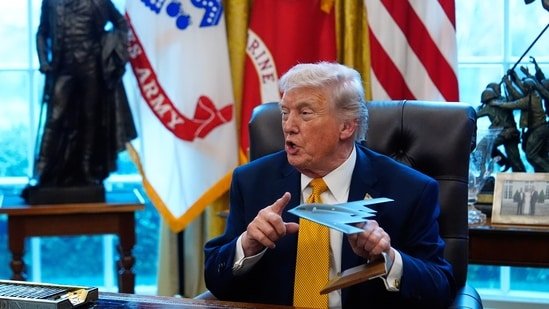
In the aftermath of the attacks, former US President Donald Trump appeared to soften his tone, distancing the United States from the Israeli strike on South Pars. He has also asked Israel to avoid such strikes in future, promising that no more attacks will be made by Israel on this facility.
Qatar is a key US ally in the Gulf, and any direct threat to its energy infrastructure carries serious geopolitical and economic consequences. Following the Israeli attack, Qatar’s foreign ministry had strongly condemned the targeting of energy facilities, warning that such actions threaten global energy security and regional stability. Its spokesperson, Majed al-Ansari, called on all sides to exercise restraint, adhere to international law, and avoid targeting vital infrastructure.
Trump, posting on Truth Social, claimed the US had no prior knowledge of Israel’s attack on South Pars and stressed that Qatar was not involved.
He suggested that Iran’s strike on Ras Laffan was based on a misunderstanding, calling it “unjustified and unfair.”
At the same time, Trump issued a warning to Tehran. While promising that no further Israeli attacks on South Pars would take place, he said any future Iranian strike on Qatar would trigger a massive US response.
“No more attacks will be made by Israel on this extremely important facility unless Iran unwisely decides to attack a very innocent country — Qatar,” he wrote, adding that in such a case, the US would respond with overwhelming force against Iran’s gas infrastructure.
Any further escalation on the LNG facility can lead to a global natural gas crisis as Ras Laffan is the world’s second-largest exporter of the fuel used in power generation and industries.
