


The safety of nearly one crore Indian citizens in the West Asian region is of “utmost priority” to India, the Ministry of External Affairs said on Tuesday (March 3, 2026), expressing “grave anxiety” about the unfolding conflict between Israel-U.S. and Iran.
Also Read: Israel-Iran war LIVE
Given its “critical stakes” in the region, India cannot remain “impervious” if Indian nationals in the region are “negatively” affected, the MEA said in a statement, also warning of the impact on trade and energy supply chains.
The MEA’s comments, conveying a sense of urgency about the situation, came alongside the telephone diplomacy that Prime Minister Narendra Modi and External Affairs Minister S. Jaishankar conducted on Tuesday (March 3, 2026), with Mr. Modi speaking to Qatar’s ruler Sheikh Tamim bin Hamad Al Thani and Kuwait’s Crown Prince Sheikh Sabah Al-Khaled Al-Hamad Al-Mubarak Al-Sabah.
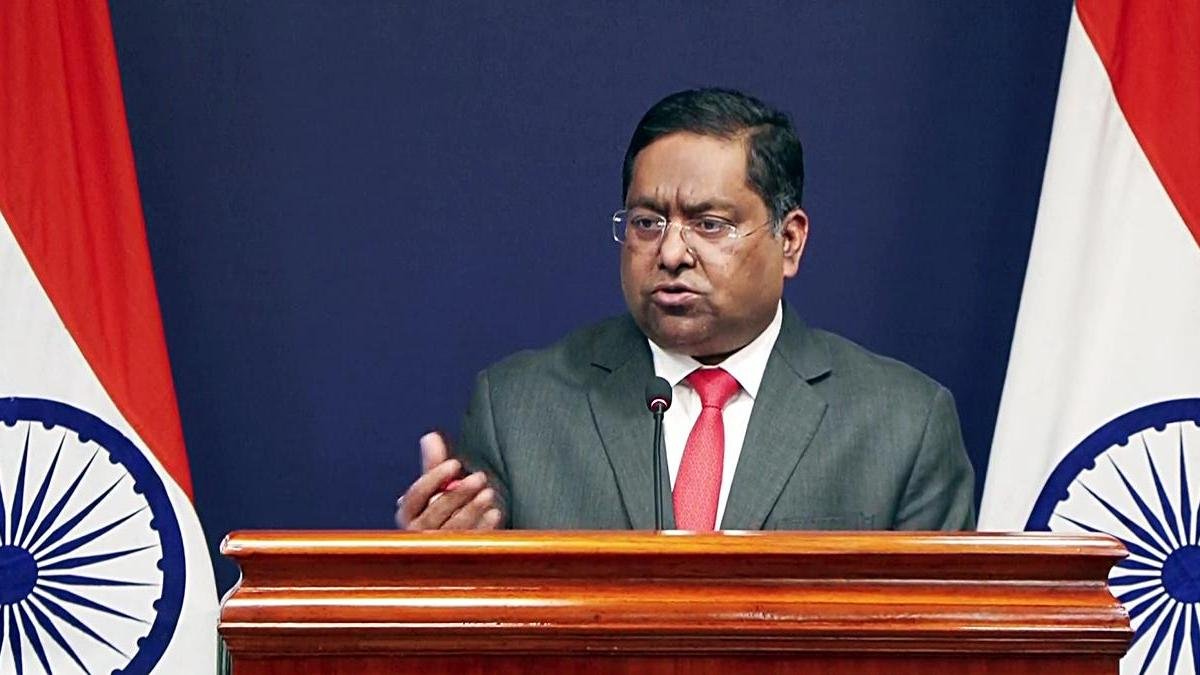
“There are almost one crore Indian citizens who live and work in the Gulf region. Their safety and well-being are of utmost priority. We cannot be impervious to any development that negatively affects them. Our trade and energy supply chains also traverse this geography. Any major disruption has serious consequences for the Indian economy,” said MEA spokesperson Randhir Jaiswal.
Telephone diplomacy
The Prime Minister has spoken to the leaders of the United Arab Emirates, Israel, Saudi Arabia, Jordan, Bahrain, Oman, Kuwait, and Qatar over Monday (March 2, 2026) and Tuesday (March 3, 2026).
During his phone call with the ruler of Qatar, Mr. Modi “condemned the attacks on Qatar and thanked the Amir for support and care of the Indian community in his country”. He also spoke with Sultan Haitham bin Tariq of Oman and condemned the “violation of sovereignty of Oman and the unity of its territories”.
On Tuesday (March 3, 2026), External Affairs Minister S. Jaishankar also discussed the conflict over a phone call with the European Union’s High Representative for Foreign Affairs and Security Policy, Kaja Kallas. A day earlier, Ms. Kallas had described Iran’s retaliatory attacks across targets in the Gulf Arab states as “inexcusable” and cautioned against “further escalation that could threaten the region, Europe and beyond, with unpredictable consequences.” Mr. Jaishankar also spoke with his Cypriot counterpart Constantinos Kombos and exchanged views on the conflict in the Gulf.
Three Indian sailors killed
Calling for “dialogue and diplomacy”, Mr. Jaiswal said, “India is firmly opposed to attacks on merchant shipping. Already, some Indian nationals have lost their lives or are missing as a result of such attacks in the last few days.”
Official sources told The Hindu that at least three Indian sailors died in the attacks on three oil tankers — MT Skylight, MT Vyom, and LCT ALYH — near the Strait of Hormuz on Sunday (March 1, 2026) and Monday (March 2, 2026). Another 15 to 20 Indian sailors were injured, including one with critical injuries, officials said, adding that they are closely monitoring Iran’s attacks on oil tankers.
“Most of the ships that operate in this region have Indian men and by targeting them, Iran has created a problem for us,” an official source said.
Energy security concerns
Against the backdrop of rising concern about the impact of the conflict on India’s energy security, Union Minister for Petroleum and Natural Gas Hardeep Singh Puri told journalists that “India has sufficient energy reserves” to deal with the ongoing situation.
Mr. Puri also held a consultation with the Minister of State for External Affairs, Kirti Vardhan Singh, on Tuesday (March 3, 2026), even as Union Minister for Ports, Shipping and Waterways, Sarbananda Sonowal, chaired a review meeting to assess the prevailing security environment in the Persian Gulf and examine its implications for Indian vessels and personnel.
“The Government will continue to monitor the evolving situation and take relevant decisions in the national interest,” the MEA said.
Embassy evacuates students from Tehran
Across the West Asian region, Indian missions stayed engaged with the Indian community as many are still stuck in the UAE, Qatar, Saudi Arabia, and other locations due to flight disruptions.
The Indian embassy in Tehran announced on Tuesday (March 3, 2026) that in view of the “heightened risk perception” in the city, the embassy has “relocated most Indian students who were in Tehran to safer locations outside Tehran”. Adequate arrangements have been made for accommodation, transportation, and food has been made, it added. The mission has advised Indian nationals to remain indoors and “stay away from windows”.
Published – March 03, 2026 05:26 pm IST
