



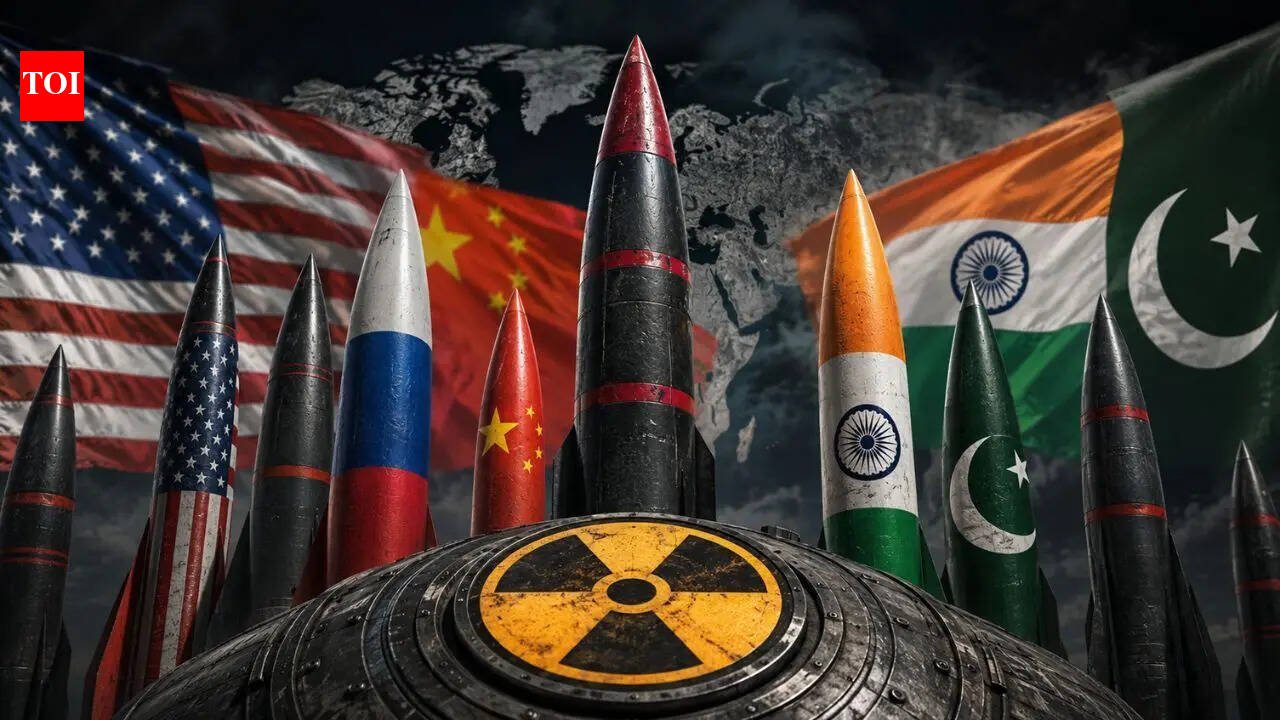
Global spending on nuclear weapons surged to a record high in 2025, with all nine nuclear-armed states increasing investments in their arsenals amid growing geopolitical tensions, according to a report released by the International Campaign to Abolish Nuclear Weapons (ICAN). The findings come as India also increased its expenditure on nuclear weapons, though it remained well behind China and far below the United States in overall spending.The ICAN report said nuclear-armed countries collectively spent nearly $119 billion on their arsenals in 2025, marking a 19 per cent increase from 2024. The report warned that “a new nuclear arms race is upon us” as nations modernise their nuclear forces and deploy more warheads from storage onto operational delivery systems.Also read – India now has 190 nuclear warheads: What’s driving New Delhi’s atomic buildup?The spending surge coincides with concerns raised in a separate report by the Stockholm International Peace Research Institute (SIPRI), which noted that while the total number of nuclear warheads worldwide has continued to decline, the number of weapons available for immediate use is increasing.
How India compares with China and Pakistan
According to ICAN’s latest assessment, India spent an estimated $2.5 billion on its nuclear weapons programme in 2025. While India’s spending remains modest compared to the world’s largest nuclear powers, it exceeded Pakistan’s estimated expenditure of $1.1 billion.China, meanwhile, emerged as the second-largest spender after the United States, allocating an estimated $13.5 billion towards its nuclear arsenal in 2025, more than five times India’s expenditure. China has also been identified as the fastest-growing nuclear power in terms of arsenal expansion.The United States remained by far the largest spender, investing $69.2 billion in nuclear weapons last year, more than all other nuclear-armed countries combined. Britain spent an estimated $12.6 billion, while Russia allocated $9.5 billion.The figures underscore the widening gap between India’s nuclear spending and that of China, which is rapidly expanding both the size and sophistication of its strategic forces.
China expanding fastest
SIPRI’s annual assessment found that China now possesses an estimated 620 nuclear warheads and is expanding its arsenal faster than any other country.“Intensifying geopolitical competition means a very strong incentive on the part of China to increase its reliance on nuclear weapons,” SIPRI director Karim Haggag told AFP.India and Pakistan have also continued to modernise their respective nuclear forces, although at a slower pace than China. Both South Asian rivals have been developing new delivery systems and improving the survivability of their deterrent capabilities.SIPRI warned that the decades-long decline in global nuclear stockpiles may soon reverse as dismantlement slows and deployment of new weapons accelerates.At the start of 2026, the world possessed an estimated 12,187 nuclear warheads, down from previous years. However, the number of warheads available for potential use increased to 9,745, raising concerns among arms control experts.
‘Risks are rising’
“Even though we have lower numbers of nuclear weapons, the level of nuclear dangers and nuclear risks are rising,” Haggag told AFP.He pointed to the erosion of strategic arms control agreements and increasing competition among major powers as key drivers of the trend.The reports also raised concerns about the role emerging technologies such as artificial intelligence could play in increasing the risks associated with nuclear weapons.Susi Snyder, ICAN’s director of programmes and co-author of the report, described the developments as alarming.“To be perfectly honest, I’m terrified,” she told AFP.
Massive long-term investments planned
ICAN noted that nuclear-armed states are committing to weapons programmes that could remain operational well into the next century.The report highlighted plans in the United States, Britain and France to spend hundreds of billions of dollars on maintaining and upgrading their nuclear arsenals over coming decades.The United States’ new Sentinel intercontinental ballistic missile programme is expected to remain in service beyond 2100, while expanded plutonium pit production could keep American warheads operational until at least 2120.US nuclear weapons spending alone between 2025 and 2034 is projected to approach $1 trillion, according to the report.Over the past five years, the world’s nine nuclear-armed countries have collectively spent more than $470 billion on their nuclear arsenals.
Humanitarian concerns
Researchers argued that the growing expenditure comes at a time when humanitarian agencies worldwide face funding shortages and aid cuts.According to ICAN, a single day’s global spending on nuclear weapons in 2025 could have provided food security for more than two million people.Instead of providing aid or healthcare for their populations, nuclear-armed states were investing in “an arsenal that they themselves know they cannot use without committing a war crime”, Snyder said.“There seems to be a total disconnect from reality.”The latest findings suggest that despite decades of arms control efforts, nuclear modernisation programmes are accelerating across the world, with China driving the fastest expansion and countries such as India and Pakistan continuing to strengthen their strategic deterrence capabilities amid an increasingly uncertain security environment.


