


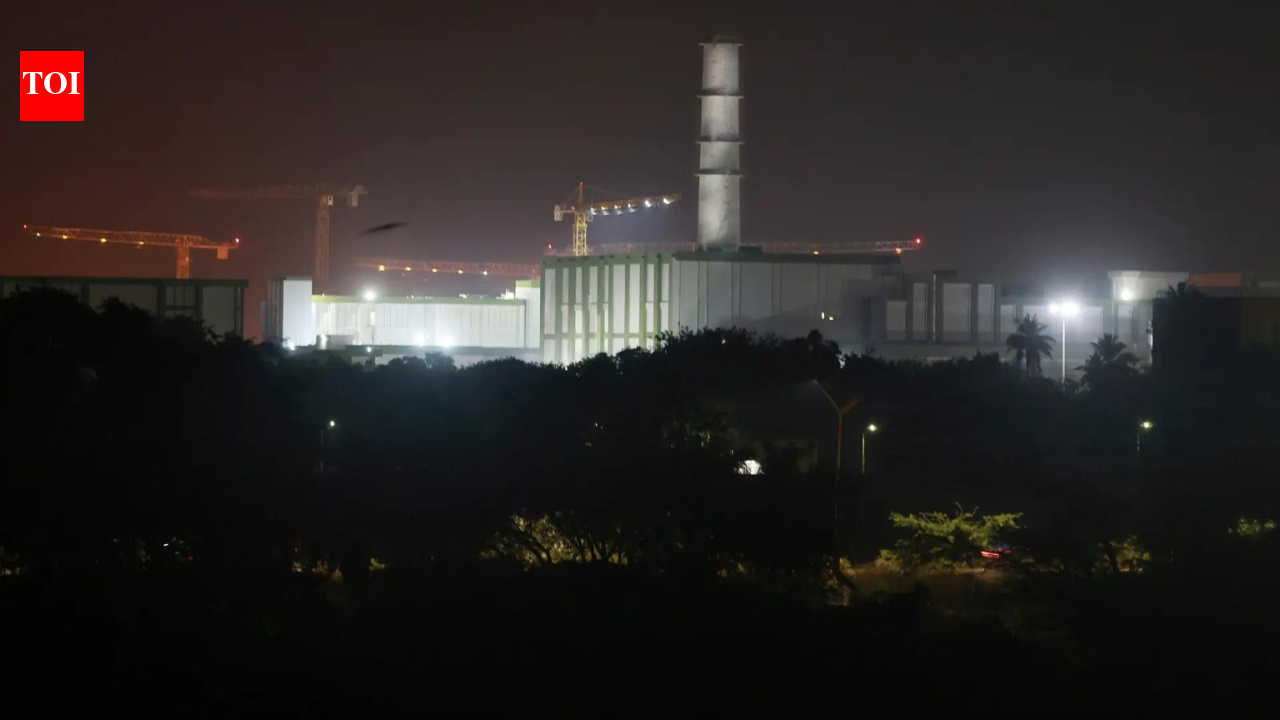
Reactor that makes more fuel than it burns has just come to life on India’s southeastern coast, and it could help reshape the country’s energy futureSix decades after physicist Homi Bhabha sketched out an audacious three‑stage nuclear roadmap for a newly independent India, the country has quietly crossed the threshold into Stage II. Not with fanfare, but with a controlled, self‑sustaining reaction igniting inside a reactor on the Tamil Nadu coast.On April 6, 2026, India’s Prototype Fast Breeder Reactor (PFBR) at Kalpakkam attained criticality, the point at which a nuclear reactor sustains a continuous chain reaction on its own, a defining step in the country’s civil nuclear journey. What’s “criticality”?In everyday speech, “going critical” sounds alarming. In nuclear engineering, it is the goal. Criticality marks the point at which a nuclear reactor achieves a self‑sustaining chain reaction, a key milestone before full power generation, confirming that the reactor core is functioning exactly as designed.Think of it as the moment an engine first turns over under its own power after years on the drawing board.What makes this reactor different?Most nuclear plants in India — and around the world — run on uranium fuel, consume it, and stop. The PFBR does something far more unusual: it produces more nuclear fuel than it burns. That is precisely what earns it the name “breeder” reactor.The PFBR has a capacity of 500 megawatts of electricity and uses liquid sodium as a coolant. It runs on a uranium‑plutonium mixed oxide fuel loaded into the reactor core, surrounded by a blanket of uranium‑238. The fission process reacts with this blanket and converts, or “transmutes”, the uranium‑238, producing more plutonium than the reactor consumes. Designed by Indira Gandhi Centre for Atomic Research (IGCAR), built and operated by Bharatiya Nabhikiya Vidyut Nigam Limited (BHAVINI), the PFBR represents a key component of India’s long‑term nuclear strategy, with major contributions from over 200 Indian industries, including small and medium enterprises.Why it was always about thoriumTo grasp why this moment matters, you need to understand the long game India has been playing since the 1960s.India adopted a three‑stage nuclear fuel programme and has been pursuing it ever since. In the first stage, Pressurised Heavy Water Reactors fuelled by natural uranium generate electricity and produce plutonium as a by‑product. That plutonium is then used to make the mixed oxide fuel for a Fast Breeder Reactor in the second stage — the PFBR. This second stage also uses thorium to “breed” a fissile material called Uranium‑233, which becomes the fuel for the third and final stage of reactors. The endgame has always been thorium. India possesses one of the world’s largest thorium reserves, estimated at well over 8,00,000 tonnes, concentrated mostly in the monazite sands of Odisha, Tamil Nadu, Andhra Pradesh, and Kerala. Thorium cannot be used directly as nuclear fuel, but the PFBR is the machine that begins converting it into something that can.India imports much of its uranium; thorium is already sitting under Indian soil in vast quantities. The strategic logic writes itself.Journey plagued by delaysThe road to this milestone was long and expensive. Though construction was originally supposed to be completed by 2010, the project was delayed multiple times, and costs ballooned from an initial Rs 3,492 crore to more than double the initial estimate.Prime Minister Narendra Modi visited Kalpakkam on March 4, 2024 to witness the commencement of “core loading” — the process of inserting fuel into the reactor for the first time. Regulatory clearance came in careful stages. The Atomic Energy Regulatory Board granted permission for the “First Approach to Criticality” only after a thorough multi‑tier safety review, regular inspections by a resident site observer team, and extensive evaluation of detailed safety submissions. Criticality was finally achieved on April 6, 2026.What comes next?Reaching criticality does not mean the lights in Tamil Nadu will brighten tomorrow. Once a sustained nuclear chain reaction is achieved, a series of low‑power physics experiments will be conducted to further assess and understand reactor behaviour. After that, power levels will be raised gradually, with each step requiring regulatory sign‑off. The next milestone will be connecting the reactor to the electrical grid to produce power on a commercial basis, pending approval from the AERB. Two more fast breeder reactors are planned at Kalpakkam in the next phase, contingent on the Department of Atomic Energy’s satisfaction with the PFBR’s performance. India’s Place in HistoryOnce successfully commercialised, India could become one of the few countries in the world to operate fast breeder reactors at a commercial scale, joining Russia as a leader in this niche but strategically important technology. The achievement is significant, but analysts are measured about what remains. Commercialising this technology at scale, reprocessing thorium‑based spent fuel, and building out many more such reactors are all tasks that still lie ahead — likely spanning decades. But the machine is alive, the chain reaction is running, and a vision conceived in the early years of Indian independence has taken its most consequential step forward.
