


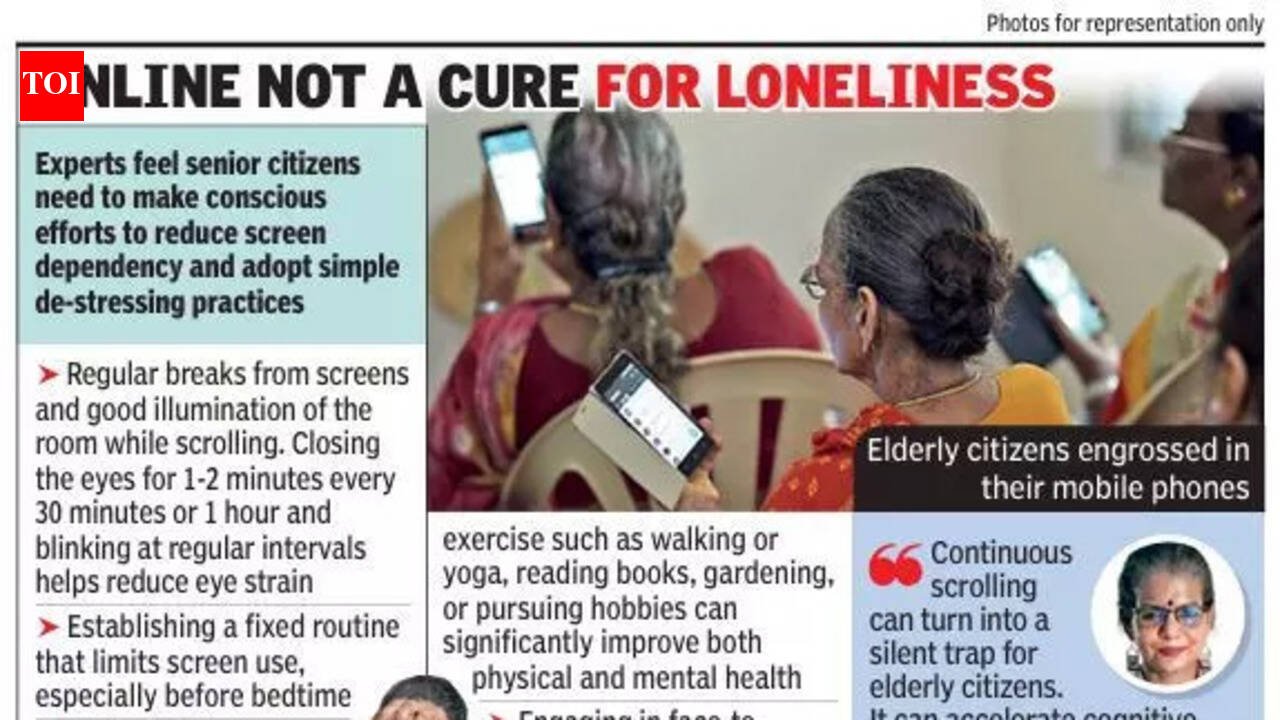
Bhubaneswar: In the city and other urban pockets across the state, silence has become a constant companion for many elderly residents. For those living alone or with caretakers, the stillness of their homes is interrupted only by the ping of a smartphone notification.Cut off from the daily presence of family, many seniors have turned to their phones as a lifeline, scrolling through messages, watching videos, or waiting for a call that briefly fills the void. But what begins as a way to stay connected with children and relatives has slowly turned into a habit they are now struggling to step away from.“I keep checking my phone even when there’s nothing new,” said Brahmananda Sahoo, a 72-year-old Bhubaneswar resident, who lives alone while his children work outside the state. “It feels like someone is around, even when they are not.”With limited social interactions and shrinking physical mobility, smartphones are offering comfort to the elderly like Sahoo, but is also quietly deepening dependence.Kenny Mahapatra, a city-based geriatric social worker who conducts engagement sessions that address the digital, emotional, social and physical needs of senior citizens, said their screen dependency begins as a mechanism to cope with loneliness. “Children, who mostly stay away from their parents these days, teach them the use of smartphones and introduce them to social media. Also, due to mobility issues, they are forced to remain confined to one location and find the connection to the outside world only through smartphones,” Mahapatra said.The shift, medical practitioners said, is being noticed post the Covid pandemic. They point to rising cases of digital eye strain, headache, and disturbed sleep cycles among the elderly. Extended screen exposure, especially late into the night, affects the body’s natural sleep rhythm, leading to insomnia and fatigue. In addition, poor posture while using mobile devices for long hours has been linked to neck pain, back problems, and reduced mobility, doctors said.Dr Tarun Kumar Panda, professor of ophthalmology at SCB Medical College and Hospital, said eyes are affected the most in senior citizens due to prolonged scrolling. “It leads to extreme dryness, eye fatigue, and certain eye diseases like glaucoma are triggered further where there is pressure on the eyes due to constant scrolling. Besides, the blue light from the screens can lead to delayed onset of sleep and fragmented sleep in them,” Dr Panda said.Experts highlight that the side effects do not just end with health concerns, and have deeper psychological effects. Mental health counsellor Anuradha Mahapatra said continuous scrolling of social media platforms can lead to emotional withdrawal and increased anxiety, particularly when seniors consume unverified or distressing information.This results in withdrawal from regular social interaction and, as a result of increased virtual engagement, real-world connections are often snapped, intensifying feelings of isolation rather than reducing them.“Senior citizens feel that they are staying connected through social media, but in reality, they are becoming more detached from their immediate surroundings. What’s worse is that it makes them highly vulnerable to virtual sexual escapades and scams,” she added.There are behavioural changes too. The common changes noticed are irritability, reduced attention span, and a reluctance to engage in outdoor or any kind of social activities, experts said.
