


After three combat deployments in Afghanistan, during which he suffered traumatic brain injuries from concussive blasts, army ranger Jesse Gould developed post-traumatic stress disorder and said he “drank almost every night to cope”.
In times of hardship, veterans sometimes turn to “medication and talk therapy, but it tends to be more of a maintenance program than actually overcoming it”, Gould said, but added that at age 38, “I was still very young. I didn’t want to be on medication the rest of my life.”
So, in February 2017, after hearing a podcast about ayahuasca, Gould traveled to Peru, where he tried the drug.
“The PTSD, the depression, the hyper vigilance no longer affected me to the same degree,” said Gould, who says he lost more than a dozen people he served alongside to suicide.
He thought psychedelics could help prevent more deaths, and just months later, he launched Heroic Hearts Project, a non-profit that hosts retreats where veterans can take ayahuasca or psilocybin and perhaps find relief from their trauma.
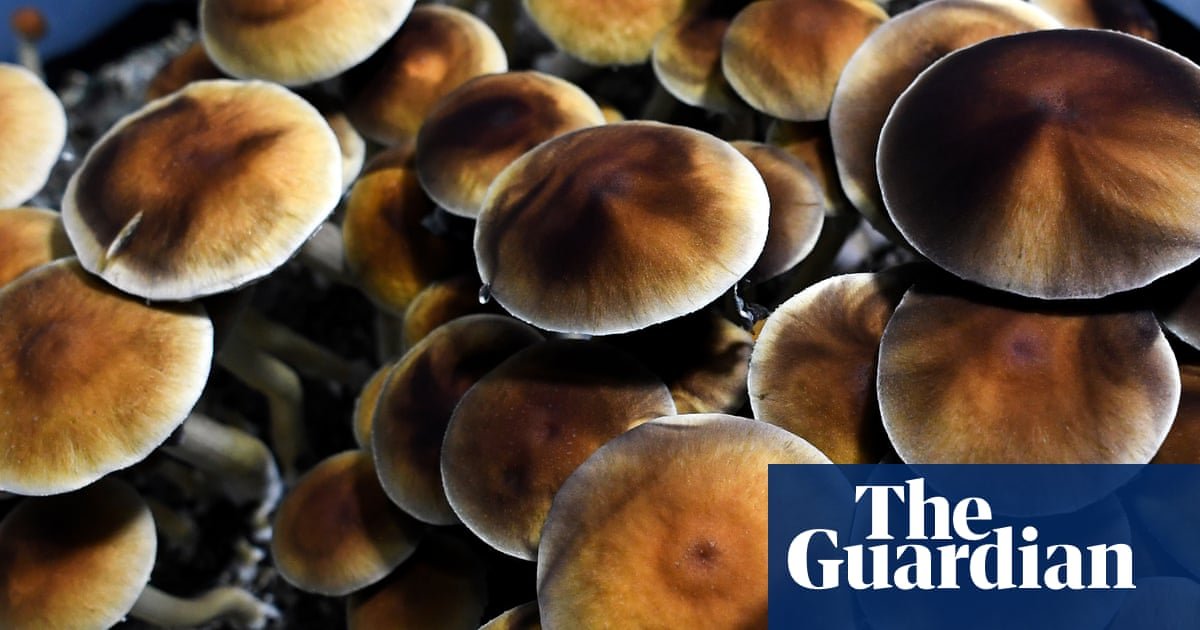
State lawmakers have begun paying attention to the potential health benefits of psilocybin, or “magic mushrooms”. Colorado, New Mexico and Oregon have legalized it for therapeutic use and at least eight states are now considering similar legislation. (Notably, in Colorado, it’s also legal for personal use.)
While people have taken mushrooms for centuries, and many researchers have concluded they are safe under certain conditions, even some who think the fungus has medicinal benefits argue that states should wait for Food and Drug Administration approval before legalizing it.
“I have always heard the argument of, ‘Well, just wait because otherwise, if something bad happens, then it’s going to mess up the whole system,’” Gould said. “I haven’t seen that. I think something bad is already happening with veterans because they are taking their own lives.”
Ingesting magic mushrooms can cause a “heightened state of learning” and disrupt the brain’s default mode network, allowing people to “become detached from their sense of self and their sense of identity”, said Joseph Zamaria, a clinical psychologist at the school of medicine at the University of California, San Francisco, who researches psychedelic-assisted therapy.
“If there is this repetitive groove in one’s mind that is self-referential and damaging and harmful – it’s abusive – we would want to disrupt that,” Zamaria said. “People who have experienced trauma [often] internalize the trauma. So they will say, ‘I am this person. I’m ashamed of this thing.’”
He continued: “If we can loosen the hold of those narratives on somebody’s mind, they may be able to work through the trauma more easily.”
A study published in 2025 in the Journal of Psychopharmacology following 22 adults with PTSD found that psilocybin “administered with psychological support may be safe, well-tolerated and associated with symptomatic improvement in adults with PTSD”.
Andy Smith, a Democrat and a Minnesota state representative, recently co-sponsored legislation with a Republican to allow residents 21 and over with conditions, such as PTSD and depression, to use psilocybin with a licensed facilitator. Lawmakers in both parties have introduced similar bills in Iowa, Massachusetts, Missouri, New Hampshire, New Jersey and New York.
“I grew up in the era of the Iraq war, where a lot of my friends went off to war and came back very much changed,” Smith said. “We don’t have a lot of tools to help in those areas” but psychedelic medicine shows “great potential to help those struggling with PTSD, depression and substance use disorder”.
Still, Albert Garcia-Romeu, associate director of Center for Psychedelic and Consciousness Research at Johns Hopkins University, said there was “limited data to support using psilocybin to treat PTSD, and there could be unknown risks”.
“It’s a pretty safe substance,” Garcia-Romeu said. “People have taken [psilocybin] for thousands of years, but there are some small subsets of people that if they take it – or if they take it at the wrong time – they can become psychotic or manic or even violent.”
He is skeptical of the state bills because “each one is going to be slightly different”.
Garcia-Romeu said: “I think it would make sense to do the FDA-approved medication route because that is going to come with a set of authoritative guidelines from major medical and regulatory bodies.”
Gould noted that his Heroic Hearts Project avoided bad outcomes with a “robust” intake process, which meant, for example, that people with schizophrenia and certain bipolar or personality disorders would not be allowed to attend a retreat. The organization has hosted more than 1,500 veterans and their spouses, none of whom had a psychotic episode, he said.
“These experiences absolutely carry risk, and I don’t take that lightly. That is exactly why screening, preparation and integration matter so much and why we have built our programs around that,” said Gould, whose organization has a wait list of more than 2,000 veterans.
When asked whether people who offer psilocybin to those struggling with PTSD should wait for federal approval, as some governors have argued, Gould pointed to the number of deaths by suicide among veterans. In 2023, the suicide rate among veterans in the US was 35 per 100,000 people, more than double the general population’s rate, according to the Centers for Disease Control and Prevention.
“I don’t want to repeat that cycle,” Gould said. “So even if it’s states figuring it out and it’s a little bit clunky, I prefer that than just saying, ‘Hey, there is no other option.’”
