


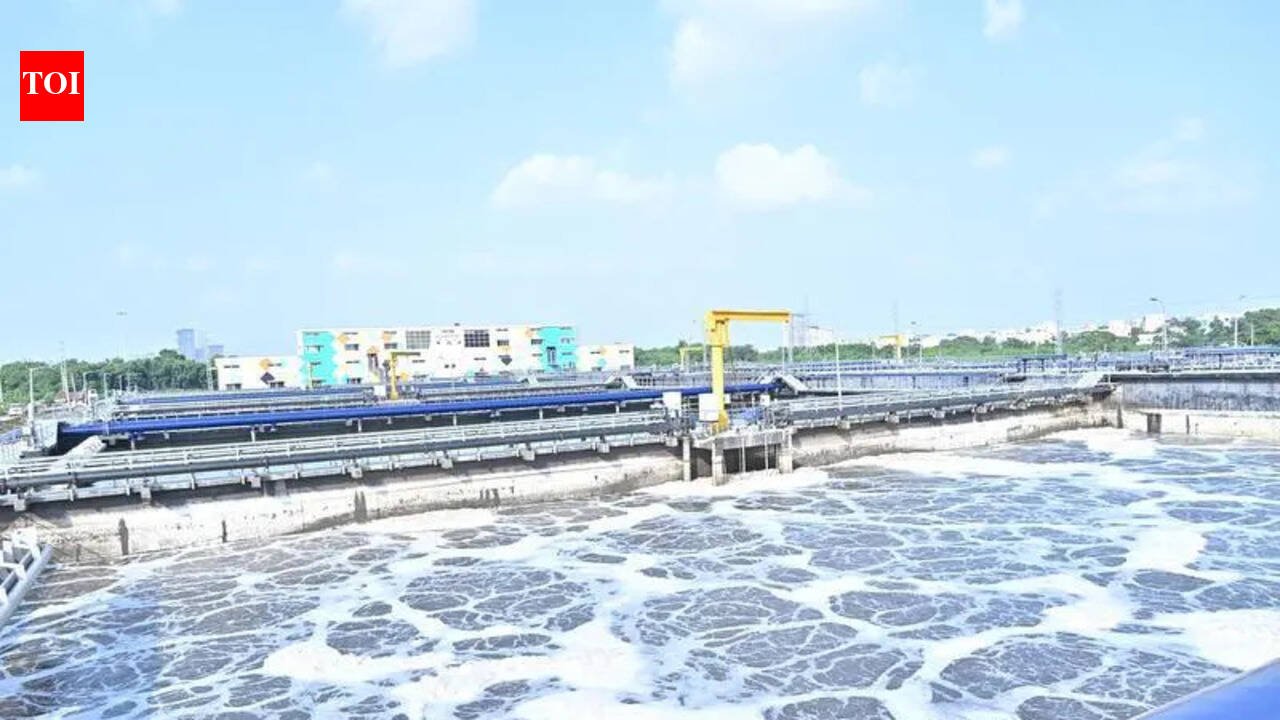
Hyderabad: Soon, Hyderabad might become the first city in India with its own ‘greywater bank’. According to water board officials, the bank will have the capacity to hold 2,000 million litres of water per day (MLD) — the amount of wastewater currently generated by the city daily — and be distributed among large chemical and pharmaceutical industries, and data centres, to cater to their non-potable needs. It will also be used for construction and landscaping activities, officials said.“The primary objective of the project is to reduce misuse of drinking water and curb excessive groundwater extraction,” said K Ashok Reddy, managing director, Hyderabad Metropolitan Water Supply and Sewerage Board (HMWSSB). He added, “This recycled water will be made available to industries at a nominal cost. We will mandate its use in construction.”The treated water would be priced at less than half the cost of potable water supplied by the board, which currently charges about Rs 500 for 5,000 litres for domestic use.The project is currently in the planning phase. A Delhi-based agency has been appointed to prepare the detailed project report. The entire project, including infrastructure, would be ready by 2027, Reddy said.Practice in other citiesWhile many Indian cities do have a system of distributing grey water, reportedly, none have a dedicated water bank. In Mumbai, for instance, the bulk of treated sewage is released into the Arabian Sea via marine outfalls and only a small share is reused for non-potable purposes such as gardening and construction. Similarly, in Delhi, treated wastewater is largely discharged into the Yamuna for rejuvenation, with a portion diverted for industrial use. Bengaluru follows a different approach. There, the treated water is partly used to replenish lakes for groundwater recharge and partly used by residential communities for gardening, cleaning and use in toilets.In Hyderabad currently, less than 2% of greywater — treated by HMWSSB through advanced secondary and tertiary processes for non-drinking purposes— is utilised in the city, with the majority discharged into rivers.Supply network plannedUnder the HMWSSB’s new plan, treated greywater from sewage treatment plants (STPs) at Nagole and Amberpet will be supplied to industries and data centres across Greater Hyderabad through a dedicated pipeline network.“A large quantity of the recycled water will be used for maintaining the green cover along the 150 km stretch of the Outer Ring Road,” said an official explaining how a drip irrigation system will be installed along road medians. “This will cut down the current reliance on water tankers,” he added.The board will also build mini reservoirs to ensure a steady supply for the landscaping needs of medians and public spaces across the city.Going forward, the water board is exploring the possibility of supplying treated greywater to the upcoming Future City, which is expected to require around 500 MLD of water. It will lay a 60 km-long pipeline from Nagole to meet this demand.“Apart from this, the project will also explore generating electricity for streetlights and producing compressed natural gas (CNG), using small turbines, using the processed wastewater,” the official added.
