


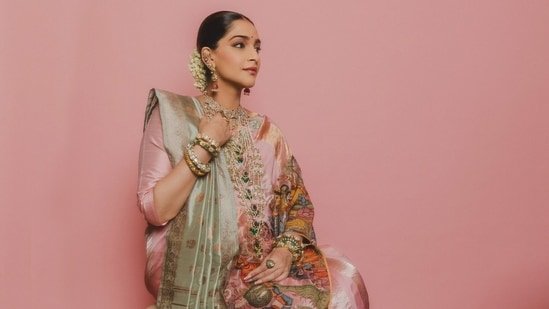
When actor Rashmika Mandanna stepped out in a lehenga with divine motifs for her mehendi, Sonam Kapoor chose a Kalamkari sari inspired by Ajanta frescoes for her Godh Bharai, and Bhumi Pednekar wore a Paithani with real gold zari, it wasn’t just about striking visuals.
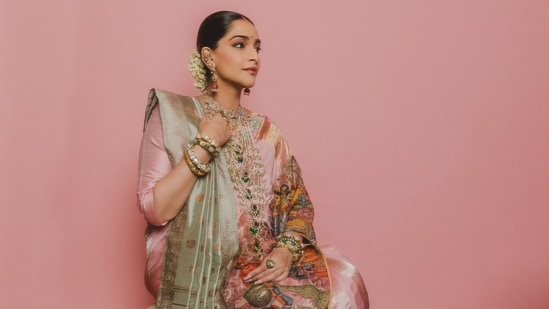
It signalled a shift in Indian couture, where fashion is moving beyond surface glamour to storytelling rooted in heritage. Designers say garments today are no longer defined only by fabric or silhouette. They carry narratives of art, history and identity, turning clothing into something far more personal and enduring.
“The awareness towards true luxury has increased manifold with the democratisation of information. People now understand the process, the craft and the artisans behind each piece. You can no longer claim couture without showing its impact,” says designer Gautam Gupta.
This shift is visible across bridal and occasion wear, where ensembles are increasingly layered with cultural references, from goddess motifs and Tanjore-inspired detailing to silhouettes drawn from regional traditions. Couture, designers note, is becoming narrative-driven, where every element reflects meaning rather than mere trend. “The time involved, the rarity of skill and the human touch are what make something truly valuable,” Gupta adds.
For many designers, this resurgence of craft-led storytelling is also deeply emotional. “These pieces spark a certain vibration because they are made by hand. The energy of the artisan reflects in the garment,” says Anju Modi.
At the heart of this movement is a new-age bride who is looking inward. “After years of exposure to global aesthetics, brides today want garments that reflect their roots, upbringing and family histories,” says Karan Torani, recalling a recent bride who chose to reinterpret a traditional Haryana daman ghagra inspired by her mum’s photograph.
Wedding stylist Juhi Sachedeva agrees, noting that global exposure has paradoxically led to a return to the local: “When everything external has been seen and consumed, the search becomes more personal.”
Craft as storytelling
Kalamkari: A narrative textile tradition, Kalamkari uses hand-painting and block printing to depict epics like the Ramayana and Mahabharata, each panel unfolding like a visual story.
Pichwai: Originating in Nathdwara, these intricate textiles portray tales of Lord Krishna through richly detailed, painting-like compositions.
Kantha: Created by layering old fabrics, Kantha features motifs of animals, folklore and daily life, often reflecting personal histories.
Zardozi: Once part of royal ateliers, Zardozi embroidery carries stories of opulence, with motifs inspired by Persian and Mughal influences.
Patola: Known for its complex patterns, Patola weaves symbolic motifs representing prosperity, fertility and protection.
