


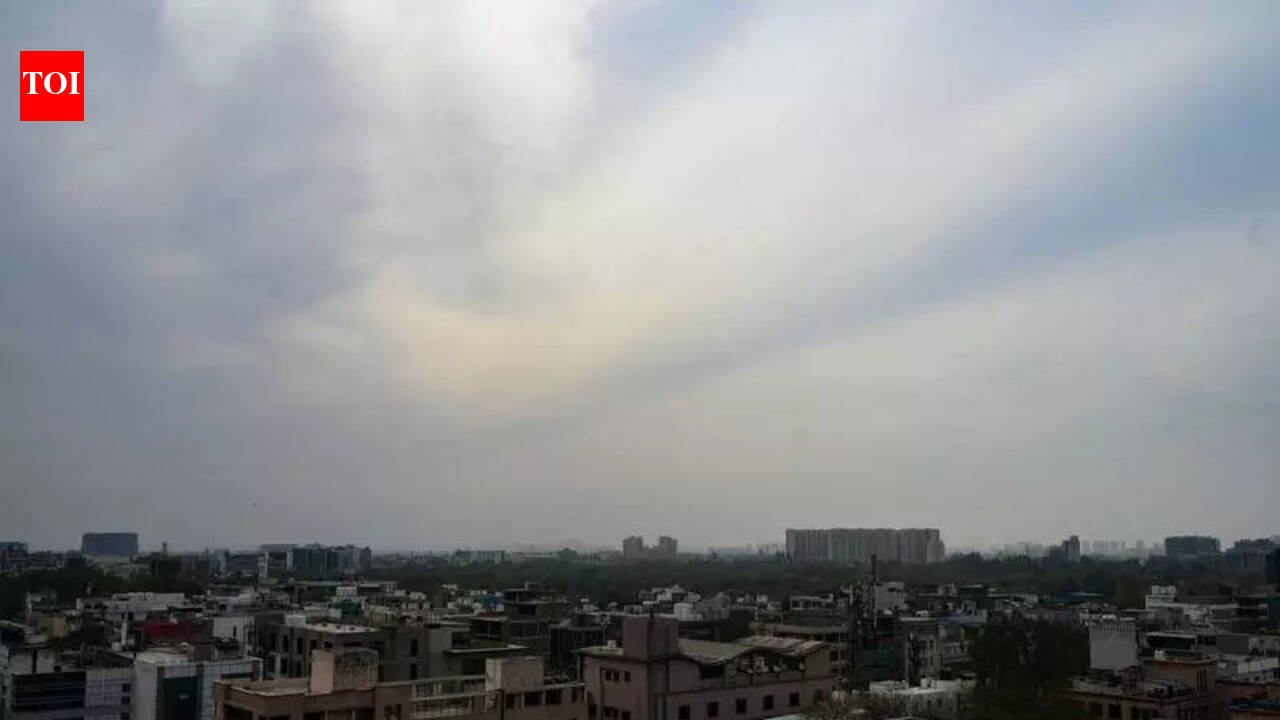
Gurgaon: A fresh western disturbance is likely to affect north-west India from March 14, bringing chances of light rain and thunderstorms in parts of Haryana over the next few days, according to India Meteorological Department (IMD).In its latest state forecast issued by the Chandigarh centre on Wednesday, IMD said light rain is likely at isolated places in the state on March 12 and again between March 14 and March 17. The weather is expected to remain largely dry on March 13 and March 18.According to IMD, the city on Thursday recorded a maximum temperature of 35.8°C. The minimum temperature was 18.1°C at the NorthCap University station.Across Haryana, the average maximum temperature dropped by 3.1°C compared with the previous day but remained around 5°C above normal, indicating warmer-than-usual conditions. The highest temperature in the state was 36.7°C, recorded at Palwal.Minimum temperatures in the state rose by 0.9°C on average and remained around 4.5°C above normal. The lowest minimum temperature recorded in the state was 15.9°C at Mahendragarh.The IMD bulletin said a western disturbance currently persists as a trough in the middle-level tropospheric westerlies at around 5.8km above mean sea level, with its axis roughly along longitude 69°E north of latitude 33°N. Another western disturbance is expected to influence north-west India from March 14.The department has issued a warning for thunderstorms accompanied by lightning and gusty winds of 30 to 40kmph at isolated places in Haryana on March 15, March 16 and March 17.Due to the changing weather conditions, maximum temperatures across the state are likely to fall by around 2 to 3°C over the next 48 hours, after which no significant change is expected.Meanwhile, air quality in the city worsened to the ‘very poor’ category on Thursday, with the air quality index (AQI) touching 301. Among monitoring stations, Vikas Sadan and Sector 51 also recorded ‘very poor’ air at 363 and 337, respectively, while the NISE station at Gwal Pahari recorded ‘poor’ air at 202.The city’s AQI has deteriorated over the past few days. It stood at 257 on March 9, rose to 307 on March 10, was 304 on March 11 and reached 301 on March 12.The rise was largely driven by PM2.5, fine particulate matter that can penetrate deep into the lungs and bloodstream. According to AQI classification, readings between 301 and 400 fall in the ‘very poor’ category and can cause respiratory illness after prolonged exposure. They can also worsen health conditions among vulnerable groups such as children, the elderly and people with lung diseases.On Thursday, Gwal Pahari recorded the highest PM2.5 concentration at 354 µg/m³, followed by Teri Gram (312 µg/m³), Sector 51 (267 µg/m³) and Vikas Sadan (234 µg/m³).PM10 levels were recorded at 321 µg/m³ in Gwal Pahari and 243 µg/m³ in Sector 51. Vikas Sadan does not monitor PM10. Permissible limits are 60 µg/m³ for PM2.5 and 100 µg/m³ for PM10 for a 24-hour average, as per Central Pollution Control Board (CPCB).Experts said the rise in pollution in March, which is typically a cleaner period, indicates a year-round air quality problem. Key sources of pollution include open garbage burning, dust, traffic emissions and construction activity.“We directed the city’s municipal body to monitor traffic congestion hotspots and construction activities, which contribute indirectly to ozone formation,” an official of Haryana State Pollution Control Board said.Gurgaon’s waste management system had been under strain for years. In June 2024, Haryana govt declared a ‘solid waste exigency’ in the city and launched the Solid Waste Environment Exigency Programme (SWEEP). The initiative formed joint teams from the district administration, MCG and GMDA to monitor cleanliness and curb garbage accumulation.
