


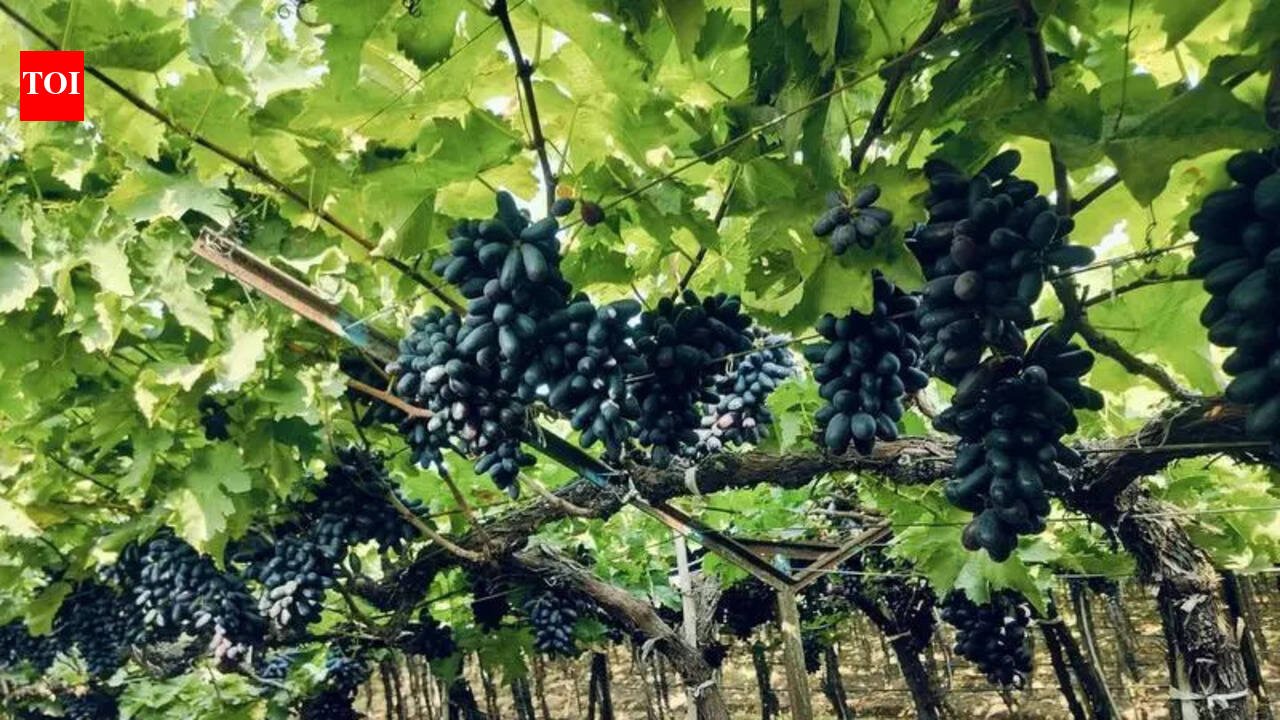
Kolhapur: The Maharashtra Rajya Draksha Bagaytdar Sangh — an association of the grape farmers — has called for a strict law to curb incidents of cheating by bulk purchasers during the harvesting season that begins in Feb and ends in May. Over the last few days, two cases of bulk purchase traders from Andhra Pradesh and Solapur cheating grape farmers have been reported in Sangli district.
The victims collectively lost Rs25 lakh in these cases as the traders did not release the payment. The association has claimed that grape harvesting season witnesses similar cases every year, leading to losses worth crores of rupees to the farmers. It has also blamed the farmers for not taking adequate precautions while entering into an agreement which are mostly oral commitments with the traders. Maruti Chavan, vice-president of Maharashtra Rajya Draksh Sangh, said, “Recently, we held a protest march to the district collector’s office in Sangli, making various demands one of which was a strict law to punish the traders cheating the grape farmers. Right now, the traders who abscond after duping the farmers are booked for cheating and get bail easily. Soon they are ready to cheat other farmers.”He added, “We have also advised the farmers not to let the traders load the trucks before making the advance payment. They should also avoid getting lured by the traders who promise to pay above the market rates.”Grape is a major horticulture cash crop in the state and is cultivated on an average 3.5 lakh acres. Out of the total area, the produce on 1 lakh acres goes for raisin production. Grapes produced on 25,000 to 30,000 acres are exported, while the rest is sold in the big cities of India. The total turnover of the grapes in Maharashtra is around Rs 15,000 crore. Arun Mane, a grape farmer, said, “Most common form of cheating is where the trader earns the trust of the farmer by paying for the initial consignments of the grapes and then promises to pay for the remaining batches at a later date.”He added, “However, no payment is made. Most of the traders come from other states. Since the deal is based on mutual trust, the farmers do not push for authenticating whether the trader is really in any position of paying the money. Sometimes, the trader takes undue advantage of the farmer who is eager to sell his low quality produce at higher prices.”


