


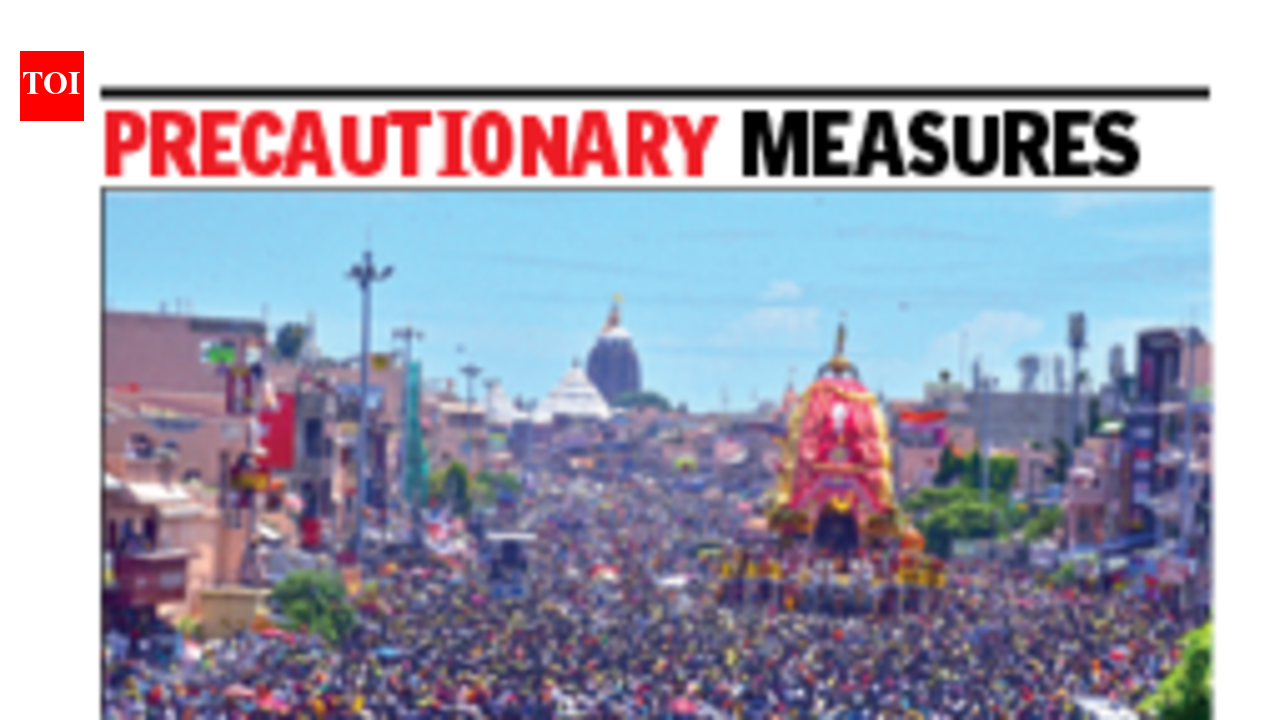
Bhubaneswar: The govt has decided to set a threshold limit on the number of people permitted along the Grand Road in Puri during the upcoming Rath Yatra on July 16 to ensure effective crowd management. A similar cap will be imposed on the inflow of devotees arriving in Puri by trains, buses, and other modes of transport.To oversee this, a committee comprising key stakeholders has been formed. The crowd control plan is being developed as a precautionary measure to prevent incidents like last year’s stampede on the third day of Rath Yatra on June 29, 2025, which claimed the lives of three devotees in front of the chariots outside Gundicha temple.“Following chief secretary Anu Garg’s advice, a committee comprising officials from the district administration, police, transport, temple administration, and municipal authorities has been formed to determine the permissible crowd size, with surveys currently underway,” a senior govt official said.The 2.5-km Grand Road, which connects Jagannath temple to Gundicha temple, varies in width from 35 to 105 metres, averaging 50 metres. Based on this, officials estimate the road can safely accommodate 3.5 to 4 lakh people at a time. However, the stretch often witnessed almost double that number during Rath Yatra’s chariot pulling ceremony that sparked stampede-like situations in the past.“The crowd control plan will follow best practices from previous Rath Yatras and other large-scale gatherings. Food stalls and free distribution points run by NGOs will be relocated to less crowded areas such as Jagannath Ballav parking and other open spaces nearby, ensuring pilgrims continue to have access to food and water. The committee will jointly identify suitable locations for these stalls,” the senior officer said.Authorities also intend to restrict dance and cultural troupes from performing near the chariots during their movement. Only medical teams, fire service personnel, and evacuation volunteers will be permitted in front of the chariots. Trucks, including those previously used for sprinkling water, will not be allowed in the crowd.“Volunteer presence near the chariots will be capped to avoid congestion. Their deployment will be need-based, with a screening committee deciding the number and type required. Volunteers will undergo training and sensitization before being assigned duties, and a standard operating procedure will be prepared to clearly define their responsibilities,” the senior officer said.
