


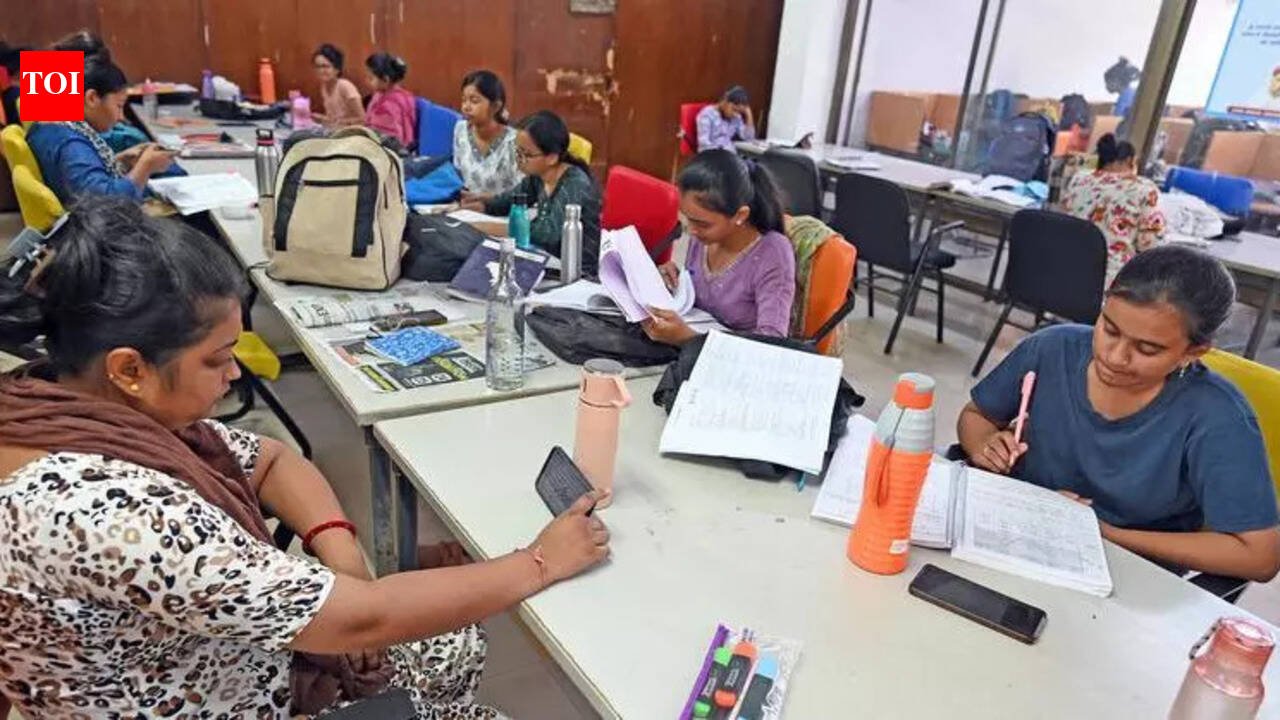
Ahmedabad: The scale of Gujarat’s govt job aspiration is now rewriting both classrooms and public infrastructure. The intensity is now visible at two pressure points—the fiercely competitive entrance test of the Sardar Patel Institute of Public Administration (SPIPA) and a rapid, statewide expansion of public libraries that have turned into mass study-cum-reading centres for competitive exams.SPIPA, the state’s premier civil services training institute, offers just 635 seats across centres, while an estimated 20,000 to 25,000 candidates appear annually for its entrance test. So fierce is the competition to get into SPIPA that aspirants pay for coaching at two private institutes in Ahmedabad that now offer three-month courses—charging around Rs 10,000—exclusively to prepare students for the SPIPA entrance exam, which follows the UPSC preliminary format. Similar coaching institutes have spawned in Gandhinagar, Mehsana, Rajkot, Surat and Vadodara.Meanwhile, across Gujarat, govt libraries—once underutilised—have become vital exam preparation hubs. In-charge Director of State Libraries Pankaj Goswami confesses that his “office is under relentless pressure to build more libraries-cum-reading reading rooms , in not just in talukas, but at village levels too.” Goswami adds, “Most libraries are now study centres operating till late night for competitive exam students.” In the last five years, the libraries department’s budget has increased from around Rs 40 crore to nearly Rs 180 crore. Infrastructure growth has been swift–61 new taluka libraries and seven district libraries were approved in 2024, followed by 71 taluka libraries in 2025 and another 17 cleared in the 2026 budget. New taluka libraries cost between Rs 4 to Rs 6 crore, while district libraries go up to Rs 12 crore. A major focus has been the tribal belt, where new library cum reading rooms are coming up in districts such as Dahod, Narmada, Chhota Udepur and Aravalli—areas that previously lacked structured study spaces. Today, Gujarat has over 200 functional taluka libraries and libraries in all 33 districts, with the state aiming for full taluka coverage.
