


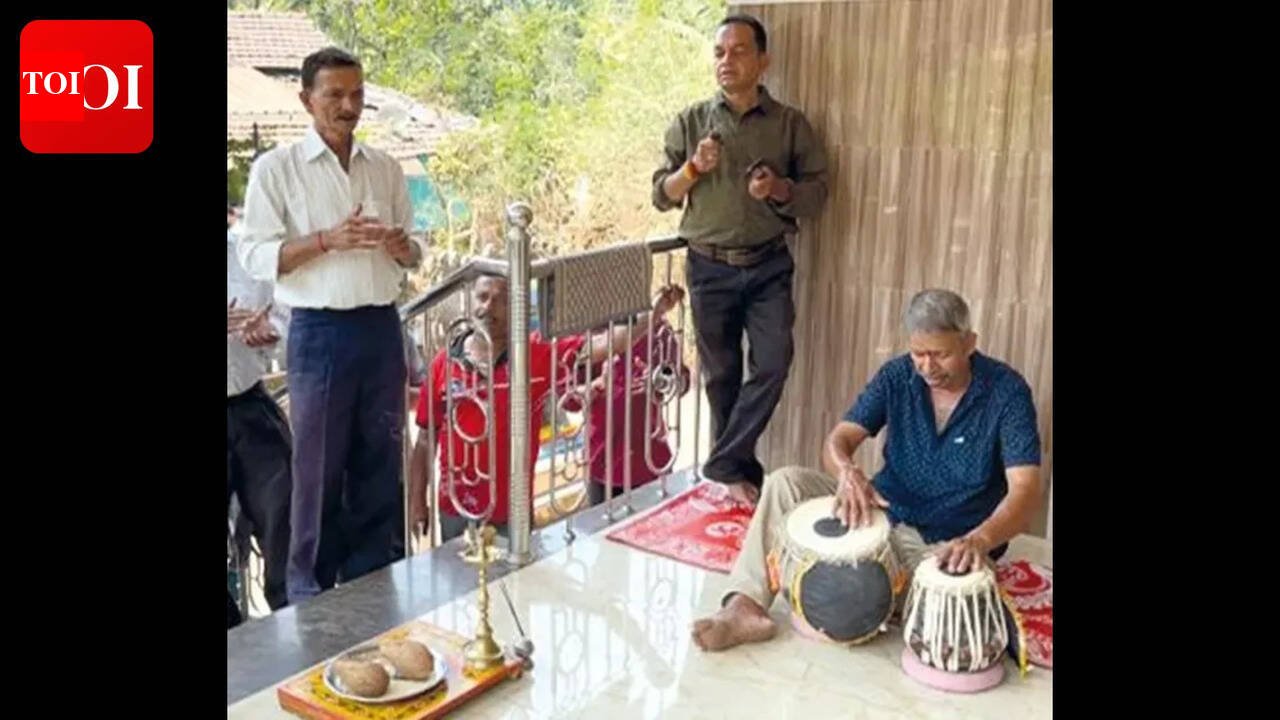
Keri: While lavani has been a popular traditional dance form in Maharashtra graced with a percussion instrument dholki played by female artists in sarees, the Goan lavani revolves around musical hymns decorating the Shigmo festival.Every year, during Shigmo in Poriem, Sankhali and Karapur areas, the folk artistes, on the tune of Pakhawaj (barrel shaped two-headed wooden drum) and Kasale (cymbals), sing the devotional songs that were composed hundred years ago by Gondaji Naik from Vithalapur, Karapur.
Pankaj Mandrekar from Tulshimala, Poriem, speaking to TOI said, “Every year from the third day of the Holi festival, after performing the lavani at Bhumka temple ,we as per tradition, visit houses from Poriem to Sankhali and present it, where we are offered coconut, rice and eatables, that is known as Tali. For the last many years, our forefathers were performing it. Now,we have been performing”.These songs of lavani from Goa, besides praising the presiding deity of Bhumka, Vithal, also describe the brave and heroic deeds of Rane, who fought battle against the Dhawad community residing in the forested area and after killing them treacherously, established their rule in 130 villages of Sattari. Songs are also based on the mythological stories and on the epics of Ramayana and Mahabharata, which emphasises human values and morality.Goddess Bhumka, (Saptashati Bhumka) is considered as the presiding deity of Sankhali town that was connected through the waterway of the river Valvanti to Chorlaghat, Kelghat and Ramghat thereby encouraging trade and commerce. Various communities from Ponda, Pernem, Konkan and other regions settled in Sankhali, who during the Shigmo festival, through the folk performances of lavani, express their gratitude to Bhumka and Vithal
