


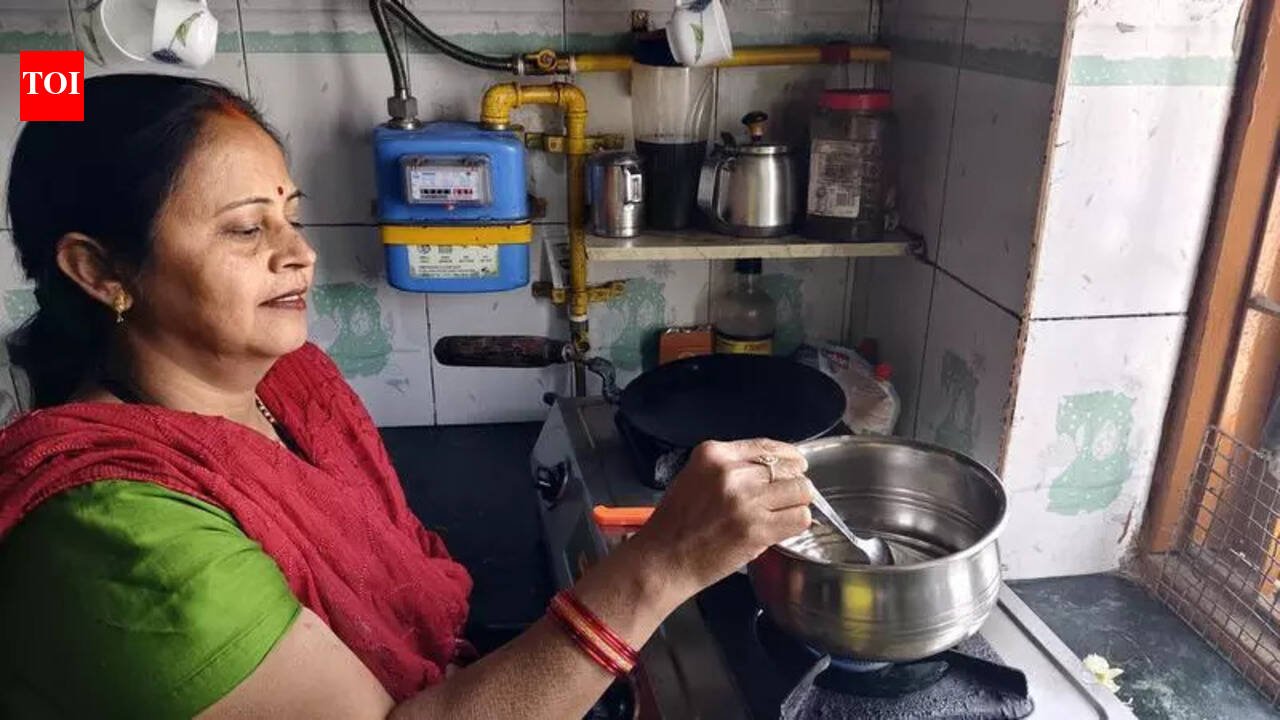
Ranchi: The Centre’s push to fast-track the expansion of piped gas infrastructure across the country amid LPG supply disruption due to the West Asia conflict is slowly reflecting on the ground in Jharkhand, where demand for piped natural gas (PNG) has witnessed a recent uptick.The ministry of petroleum and natural gas recently urged citizens not to resort to panic buying of LPG cylinders. In a related development, the Petroleum and Natural Gas Regulatory Board (PNGRB) directed city gas distribution (CGD) companies to provide PNG connections within five days to schools, colleges, hostels and community kitchens, wherever pipelines exist nearby.PNG was introduced in the state in 2018, but adoption has remained low due to limited awareness and patchy infrastructure. The trend seems to be reversing. From Ranchi to Jamshedpur and even smaller districts like Koderma, both households and commercial establishments are exploring piped gas as a more reliable and cost-effective alternative.“We are seeing a clear rise in enquiries over the past few weeks. PNG offers uninterrupted supply, eliminates cylinder dependency and is safer. People are now actively considering switching to PNG due to recent uncertainties,” said Prashant Singh, state coordinator for PNG operations.Infrastructure & demand alignIn Ranchi, where over 750 km of pipeline has been laid, demand is finally catching up with infrastructure. Operated by GAIL (India) Ltd, the network is supported by district regulating stations at Mecon, Tatisilway, Sarwal and Ashok Nagar, with expansion underway in areas such as Lalpur, Kokar, Namkum and Chutia.Officials said an additional 150 km of pipeline will be laid next year, targeting over 40,000 new household connections. Around 110 new commercial PNG connections were issued in the past. “There is no tension of booking cylinders or waiting for delivery any more. Gas is available anytime. Billing is based on actual usage, which makes it more economical. It also feels much safer compared to LPG cylinders,” said Meenal, a resident of Ashok Nagar.Renu Singh, a resident of Bariatu, has been using PNG for the past two years. “It is very economical and reliable, with no issues of connection loss. For my small family, PNG has made cooking efficient and hassle-free, eliminating the need for LPG cylinders.”The trend is even more pronounced in Jamshedpur, which has emerged as a frontrunner in PNG adoption. The city has touched 9,000 household connections, with around 5,000 active users till Feb. Nearly 600 consumers activated their connections in the first 20 days of March alone. “Enquiries have increased by about 20% compared to the pre-crisis period, and 12 to 14 enquiries are turning into applications daily,” said Gauri Shankar Mishra, general manager, GAIL Jamshedpur. He added that demand is strong in areas such as Kadma, Sonari, Bistupur and Telco. “Monthly expenses are about 30% lower than LPG, and we only pay for what we use,” said Savita Sonthalia, a resident of Sonari.A similar shift, though at a smaller scale, is visible in districts like Koderma. Projects led by Indian Oil Corporation Ltd have established a basic supply network, with gas routed from the city gate station in Chatra to local distribution points. “The logistical backbone is now in place to handle rising demand,” said Dinesh Kumar, junior executive engineer, IOCL. “We are seeing a steady increase in applications as awareness improves.“Benefits of switchThe growing preference for PNG is rooted in a combination of economic, practical and safety advantages. Unlike LPG, it is supplied continuously through underground pipelines, eliminating the need for cylinder storage and refilling, officials said.For commercial users, uninterrupted supply is critical. “You cannot afford to stop operations during peak hours. PNG gives us that reliability,” said a restaurant operator at Main Road in Ranchi.Natural gas is a cleaner fuel compared to LPG, petrol or diesel. “Natural gas significantly reduces particulate emissions and carbon footprint compared to conventional fuels. Expanding PNG and CNG networks is a practical step towards improving urban air quality and addressing climate concerns,” said Nitish Priyadarshi, a geologist at Ranchi University.The CNG network is also expanding steadily across the state. Ranchi currently has around 28 CNG stations, with 10 more planned next year, while Jamshedpur has about 15.
