


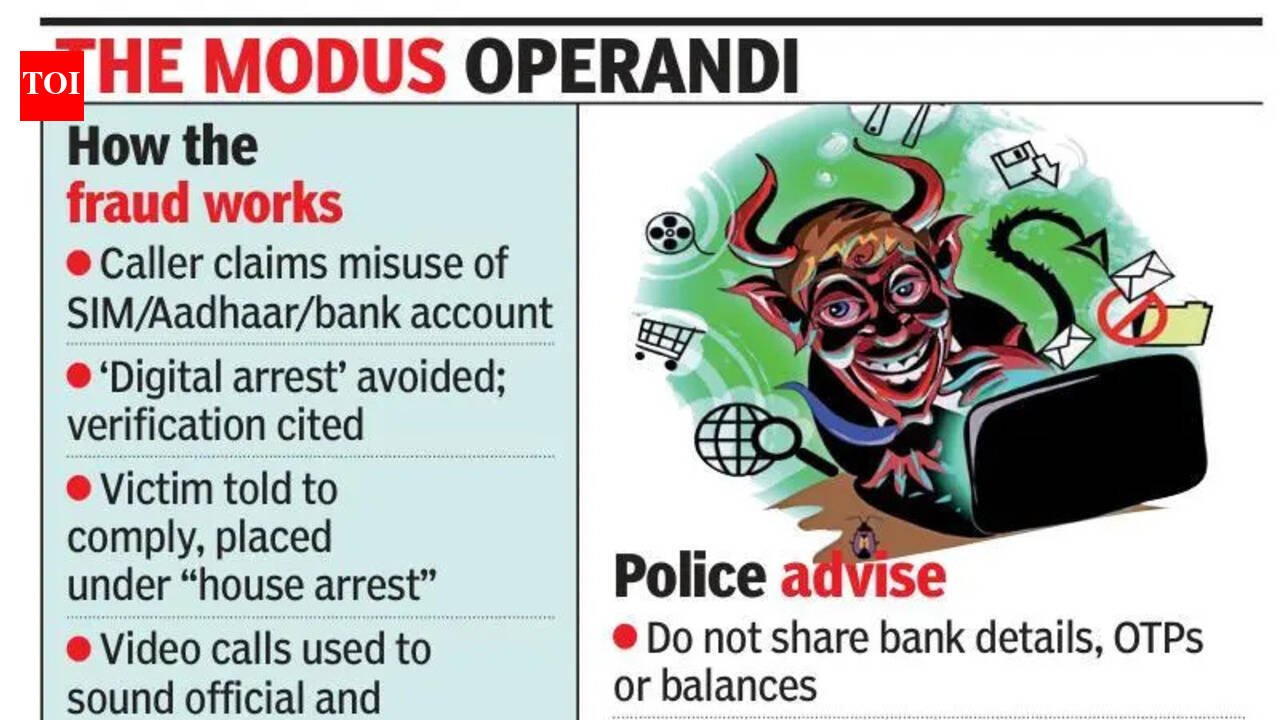
Mysuru: Cyber fraudsters have changed their pitch — dropping the now-familiar “digital arrest” threat and instead posing interactions as a routine “verification process” — a shift that recently cost a retired govt employee in his late 70s nearly Rs 9 lakh in March.After awareness campaigns exposed “digital arrest” scams, cybercrooks began avoiding the term in many cases. They now tell targets that verification is needed or claim the money will be returned after checks. The change in language makes the fraud sound routine and non-threatening, helping them gain trust.Typically, fraudsters contact people and claim their bank account, mobile number, Aadhaar or other identity details are linked to suspicious activity. Instead of directly threatening arrest, they say the person must undergo a verification procedure to clear their name and place them under “house arrest.” Victims are then pressured to share personal details, transfer money or follow instructions over video calls and messaging apps.In his complaint to city police, the senior citizen said callers claimed his SIM card was misused to make indecent calls to women and kept him under house arrest for three days in mid-March. The callers made video calls to obtain details of his bank account balances and, claiming they would verify and return the money, transferred more than Rs 8 lakh from his account.An officer told TOI that while the modus operandi has changed, the motive remains the same — to swindle money from gullible bank customers. Fraudsters are now using the term digital arrest less frequently due to increased awareness. Several people have already suffered financial losses because of this modified scam, the officer said, adding that cybercriminals adapt quickly when one method becomes widely known, making continuous public education essential.Police and law enforcement agencies are being trained to understand these evolving methods so they can identify complaints more quickly, warn citizens effectively, and prevent further losses, the officer said.Cops advised bank customers to remain cautious if anyone claiming to be an official asks for money, confidential details, OTPs or urgent action during a so-called verification or refund process. Verification by genuine authorities does not involve intimidation, secrecy or forced transfers, they said.
