
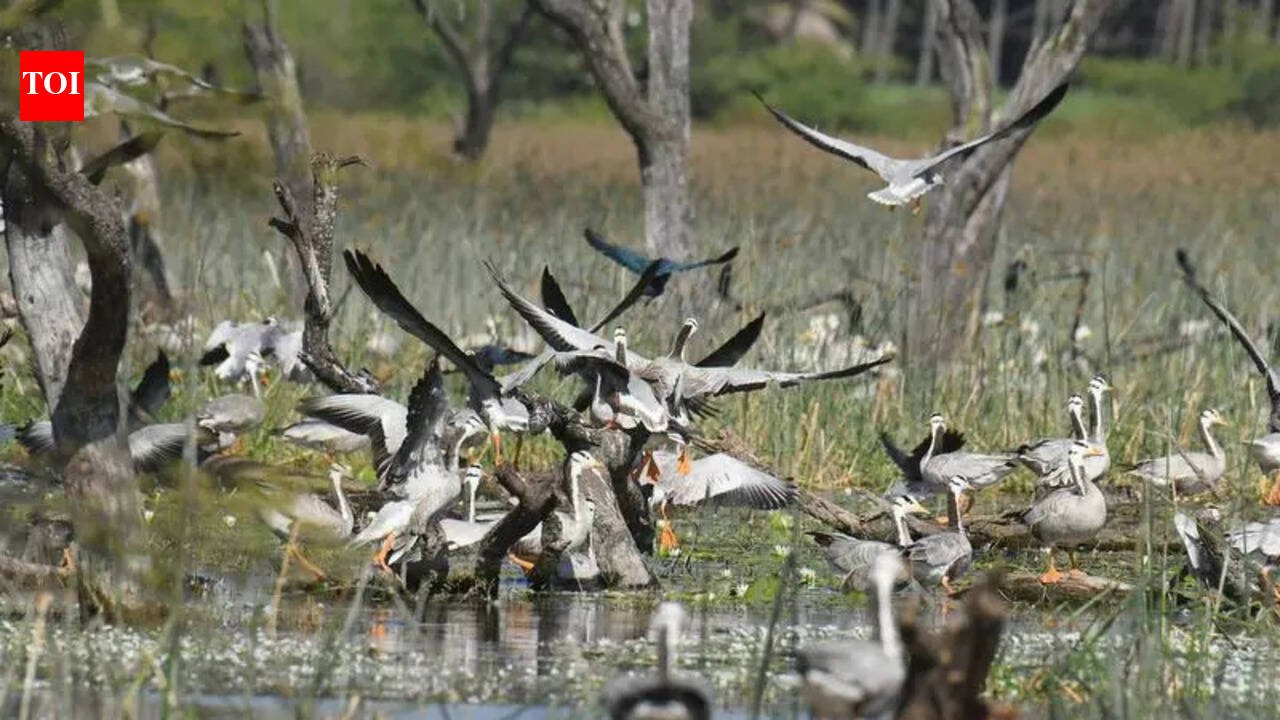
Mysuru: The 3-month ban on fishing, has transformed Hadinaru Lake near Suttur into a thriving haven for migratory birds, most notably the Bar-Headed Goose that journeys thousands of kilometres from Mongolia.Hundreds of these birds, famed for their high-altitude migration across the Himalayas, arrived at the lake, reaffirming its status as a favoured winter roosting site. Located about 25 km from Mysuru city on the Mysuru—Nanjangud border, near the Kabini River in Chikkayyana Chatra Hobli of Nanjangud taluk, the expansive Hadinaru lake once again emerged as a hotspot for birdwatchers and nature enthusiasts. The geese are easily recognised by the distinctive black bars on their heads and their characteristic honking calls, which now echo across the waterbody.
As paddy harvesting nears completion in surrounding villages, the lake offers abundant food, attracting the birds in large numbers. By mid-Jan, when harvesting is fully over, officials and birdwatchers expect the lake to be teeming with bar-headed geese.Among the world’s highest-flying birds, bar-headed geese undertake an extraordinary annual migration of nearly 4,850 km from regions such as Mongolia, Kazakhstan and Russia. During their journey, they fly at altitudes exceeding that of Mount Everest, enduring freezing temperatures and extremely low oxygen levels before reaching wintering grounds in South Asia, including peninsular India.Short winter days and longer nights in the Northern Hemisphere limit food availability, prompting their southward migration.The birds typically arrive in Jan or Feb and remain for nearly 4 months. They rest in the lake during the day and forage in nearby paddy fields at night, feeding mainly on leftover grains. Their droppings enrich the soil, earning them the reputation of being “friends of farmers,” said birdwatcher B Shivakumar.Kiran M, a birdwatcher and resident of Hadinaru village, told TOI that the number of bar-headed geese has increased compared to last year. “It is a very shy and sensitive bird. Even human presence 500 to 600 metres away causes them to fly. Their numbers fluctuate daily, and they also move between neighbouring water bodies such as Kadale Lake and the Kabini backwaters. The fishing ban during this time has really helped attract more birds,” he said.
