


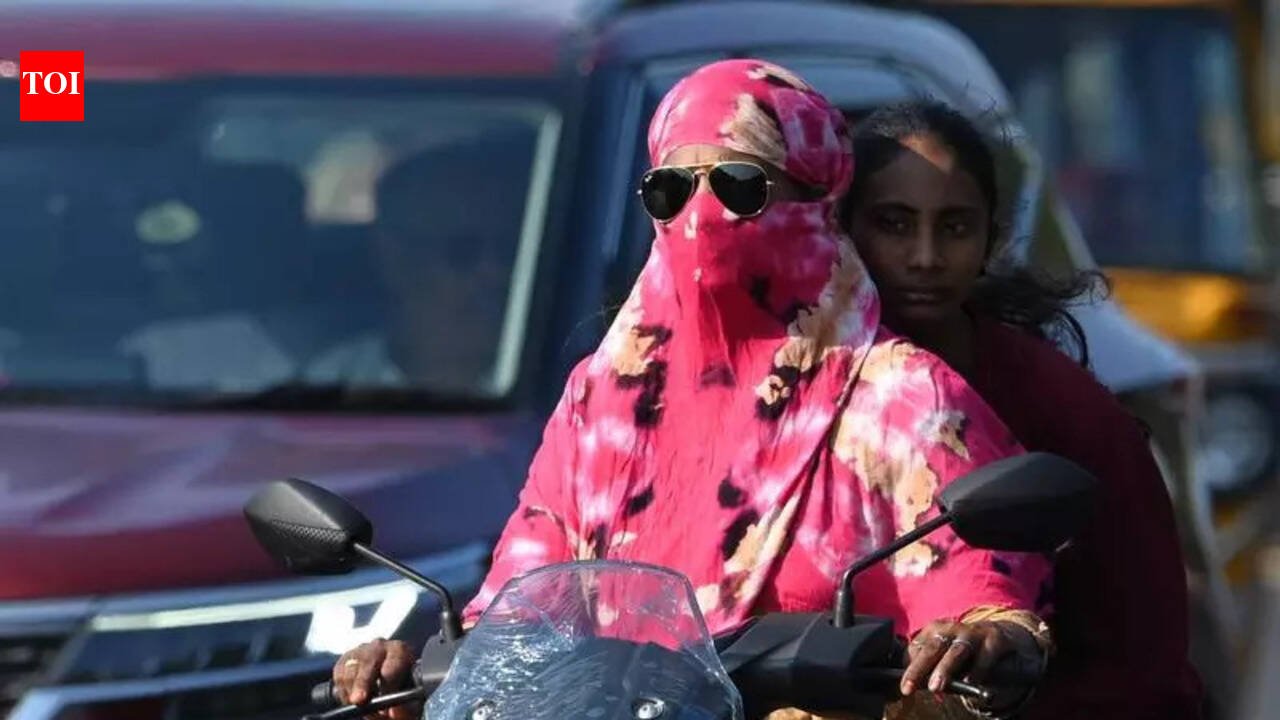
Chennai: At a time when the India Meteorological Department (IMD) has issued a heatwave warning for Chennai, a new survey found that extreme heat was already the most widely experienced climate impact among city residents.The findings came from the Climate Change Perception Study: Chennai 2026, conducted by Climate Trends among 2,000 residents across the city, which showed that heat stress became the dominant climate hazard affecting daily life. “Extreme heat emerges as the most experienced hazard, with 1,594 respondents reporting personal impact,” the report said, adding that the pattern indicates climate impacts are “no longer abstract future threats.”In its forecast for March to May, the IMD warned that Chennai could experience up to six days of heatwave conditions, while adjoining coastal districts may see as many as 15 days.The report found that residents associate climate change primarily with pollution and changing weather rather than global climate science narratives, suggesting people interpret the phenomenon through lived experiences such as worsening air quality, erratic rainfall patterns, and rising temperatures over the years. “People aren’t just aware of climate change; they are living it every day,” said Aarti Khosla, founder and director of Climate Trends. “With 85% of residents seeing this as a personal risk, there is a mandate for the govt to deliver effective solutions.”Besides heatwaves, 70% of respondents reported water shortages, while more than half experienced flooding.The survey found that different parts of Chennai face distinct climate stresses. North Chennai experiences severe heat and water stress, worsened by industrial activity and weak infrastructure. Central Chennai faces heat, water shortages, and periodic power cuts. Coastal east Chennai frequently experiences flooding and power outages, while rapidly expanding south Chennai reports increasing water stress.The report noted that the convergence of heat stress and water scarcity creates compounding vulnerabilities, particularly for outdoor workers and households without reliable piped water supply. Residents showed strong support for climate action. About 75% favour restrictions on polluting vehicles, while 70% support subsidies for electric vehicles even if funds are reallocated from other sectors.However, the survey also highlighted a communication gap, with 56% of respondents saying they did not encounter any climate awareness campaign in the past six months, even though scientists and govt agencies remain the most trusted sources of information.“Five years ago, climate change was integrated into our department, and since then we moved from policy to measurable action. Action is accelerating across mitigation, adaptation, ecosystem restoration, and building biodiversity,” said state forest secretary Supriya Sahu.
