


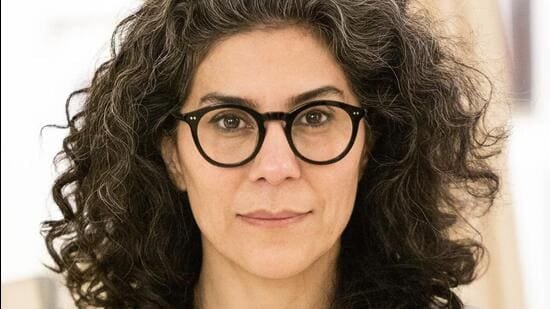
Director-actor Mahnaz Mohammadi, an insuppressible critic of the Iranian government, made headlines in India when, unable to attend the International Film Festival of Kerala in person in 2022, she sent a lock of hair in her place. This was both a snub to the stringent hijab laws in her country and a show of solidarity with the Women, Life, Freedom movement that had roiled the West Asian nation-state at the time.

In February, shortly after the Iranian state massacred thousands of protestors and barely days before the United States of America and Israel launched a targeted attack on Iran, killing its Supreme Leader Ayatollah Khamenei, Mohammadi’s film, Roya, made its debut at the Berlin Film Festival. The dramatic feature film about a political prisoner contending with the effects of solitary confinement draws heavily from Mohammadi’s own experience in Iran’s notorious Evin prison; the filmmaker, who is banned from making films by the state, shot Roya clandestinely.
Currently living in exile in a west European country, Mohammadi speaks to Hindustan Times, reflecting on the war unfolding in Iran and why filmmakers keep cameras rolling in the face of risk. Read edited excerpts.
Amid the intense communication blockade in Iran, have you heard from home? How have you been processing the news of the past few weeks?
The past few weeks have been very heavy. Like many Iranians living outside the country, I wake up each morning with the same question: are my loved ones safe today? I have not been able to speak with my family directly yet. Communication is extremely difficult. But through intermediaries and brief messages I have received word that they are safe, which brings some relief. Still, when you cannot hear the voices of the people you love, every silence feels long. Like many Iranians in exile, I am following every piece of news and waiting for the moment when communication becomes possible again.
Recent weeks in Iran have been marked by domestic political killings, followed by US-Israeli military airstrikes. What could the fallout be for art and culture in the country?
Periods of violence always leave deep marks on a society’s culture. Artists are part of that society, and they carry those experiences in their work. For Iranian artists, the past months have been filled with grief, fear, and uncertainty. But Iranian culture has also shown, again and again, a remarkable resilience.
Art cannot erase violence, but it can bear witness to it. And sometimes, through storytelling, poetry, cinema, and music, people find a way to transform pain into reflection and meaning. I believe Iranian art will continue to evolve from this experience, not untouched by it, but shaped by the courage and imagination of those who continue to create.
In the early days of the war, Ayatollah Khamenei was assassinated. How do you view the development?
After my experience of prison, death no longer feels abstract or distant. In places where people are constantly confronted with violence and suffering, the idea of death becomes painfully familiar. When I heard the news, I found myself thinking about a human life that had been connected to the suffering of so many others. For many years, countless people in Iran have lived through imprisonment, fear, and loss under the system he represented. These are the kinds of pain that sometimes even an observer finds difficult to witness. At the same time, what matters most now is not one individual, but the future of the Iranian people, a future where suffering is no longer produced as part of everyday political life.
Outside Iran, there tend to be more opinions than information. What do you wish people knew about what Iranians are living through?
What people outside Iran should understand is that the situation is not only political, it is deeply human. When communication is restricted, people are not only cut off from information, they are cut off from each other. Families cannot reach their children, friends cannot check on one another, and uncertainty becomes part of daily life.
What the world is witnessing today is part of a much longer struggle for dignity, freedom, and the right to live without fear. What people inside Iran need most is not only attention in moments of crisis, but sustained awareness and solidarity from the international community.
Your films are banned in Iran, but you managed to shoot Roya secretly. Do people secretly manage to watch your films there?
Being banned from working in my own country is painful. When your films cannot be shown there, it creates a deep sense of loss. At the same time, this reality has never completely stopped filmmakers in Iran. Roya itself was made partly in secrecy and without official permission. Many artists continue to find ways to work, even under very difficult conditions.
What keeps me going is the belief that stories still matter. Even when a film cannot be shown openly, it often finds its way to people. In Iran there has always been a strong culture of sharing films privately, through small gatherings, private screenings, or digital circulation. So, while censorship tries to close doors, people often open other ones.
In 2022, you sent a lock of your hair to the International Film Festival of Kerala to protest the Iranian government’s curbs on freedom. In the present moment, what is your hope for the people of Iran, and especially women?
When I cut a lock of my hair and sent it to the International Film Festival of Kerala, it was a symbolic gesture connected to a movement that I was living through in Iran. Even today, women in Iran continue to cut their hair. Sometimes they place those locks of hair in the earth, under the bodies of their loved ones who were killed. It is a quiet act of mourning and resistance, something that no authority and no dictatorship can erase.
For me, that image carries both grief and hope. My hope is that this courage, especially the courage of women, will continue to shape the future of Iran.
