


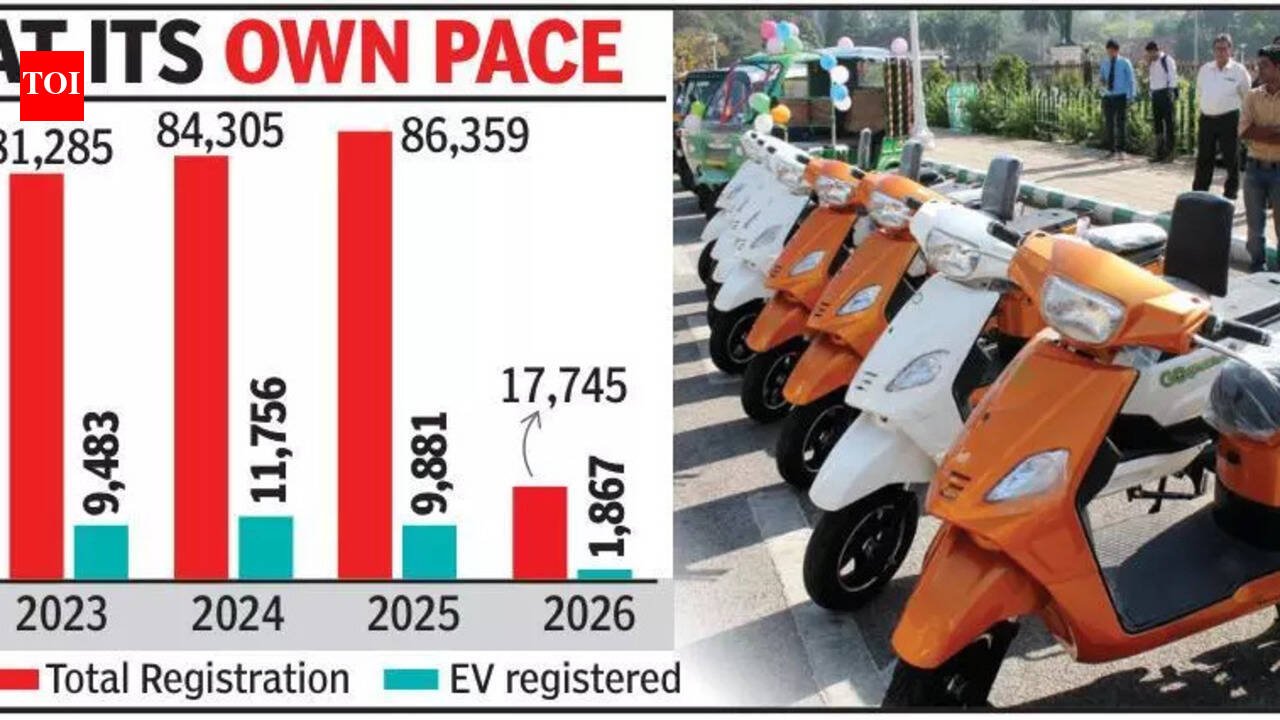
Panaji: On average, 11% of all vehicles sold in Goa over the last four years have been electric vehicles (EVs), regardless of whether govt subsidies were provided.A total of 32,987 EVs have been sold since 2023 in Goa. State govt discontinued subsidies to purchase EVs in 2024, but people in Goa continue to purchase EVs. In 2025, around 9,881 vehicles were purchased, and in 2026, Jan to March 19, 1,867 EVs have been purchased.Goa’s vehicular population rose to 14.5 lakh by Dec 31, 2025, marking an increase of nearly one lakh vehicles from 13.5 lakh recorded in 2024, according to the Economic Survey 2025-26. The figure translates to about 91 vehicles for every 100 residents. The state has a population of 15.8 lakh residents as per the Economic Survey 2025-26. Around 50,000 EVs have been registered in the state during the last 10 years.The Goa Energy Development Agency (GEDA) has moved a fresh proposal to state govt to implement a new modified scheme on the purchase of EVs. A senior govt officer said that most of the people purchase two-wheeler EVs as compared to four-wheelers.State govt has increased the EV infrastructure in the state so that more and more Goans opt for EVs and they should not face any issues related to charging their vehicles. State govt decided on the model for setting up EV charging stations in Goa, with govt bearing 50% of the cost and charging station developers bearing the remaining.Earlier, state govt scheme provided a subsidy of up to Rs 15,000 for two-wheelers and up to Rs 1 lakh for cars.The subsidy is disbursed in a single instalment to the beneficiary on purchase of the EV on producing the required documents.The scheme was aimed at accelerating the pace of EV adoption across segments, especially in the mass category of two-wheelers, public/shared transport vehicles, and goods carriers. It providing subsidies to those who scrapped and de-registered their old internal combustion engine (ICE) vehicles and moved to purchase EVs.When the scheme was launched in Dec 2021, it sought to drive rapid adoption of battery electric vehicles (BEVs), so that the segment accounts for 25% of all new vehicle registrations by 2024, and to bring about improvement in air quality by reducing greenhouse gas emissions, reducing noise levels, and also the use of fossil fuels by bringing down emissions from the transport sector.The scheme also intended to put in place measures to support the creation of jobs in driving, selling, financing, servicing, retrofitting, and charging of EVs.
