
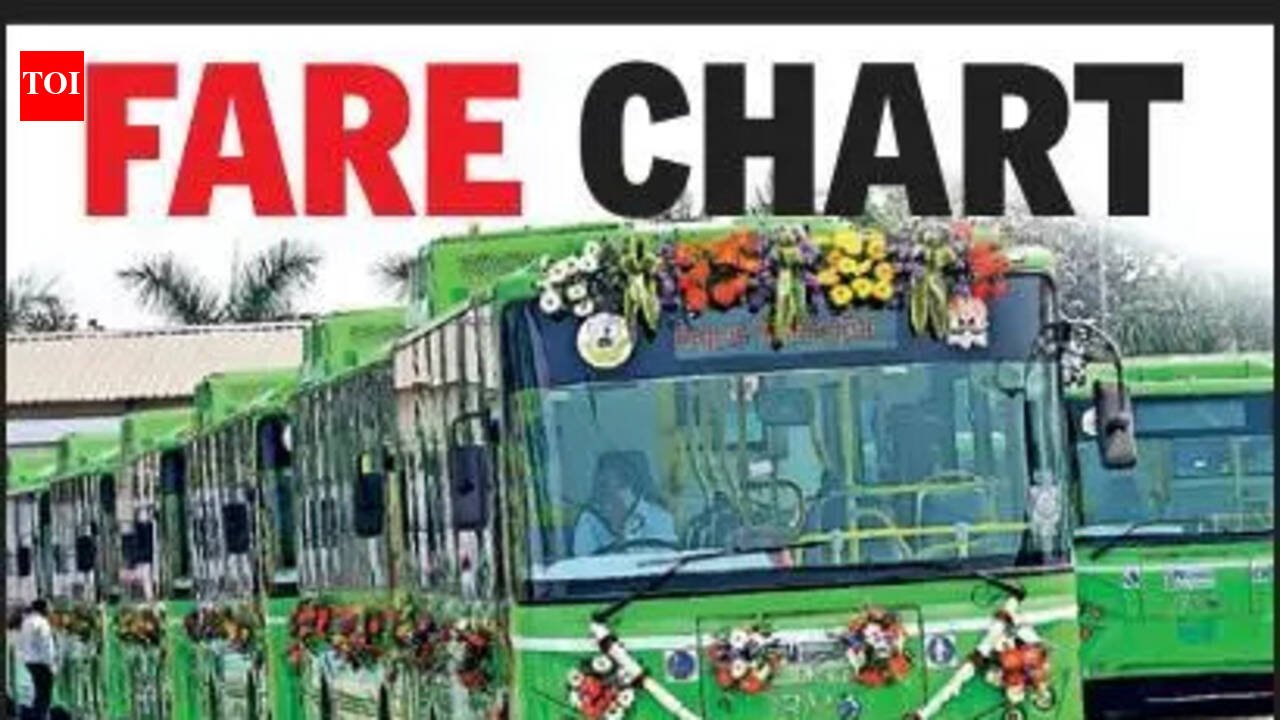
Nagpur: Nagpur’s Aapli Bus service is steadily turning green, ferrying an average of 1.61 lakh passengers daily and earning around Rs28 lakh in revenue across 110 routes. With the civic body aggressively pushing electric mobility, the transition appears environmentally sound. However, a closer look at depot-wise per kilometre (km) rates reveals a more complex financial story — electric buses are cleaner, but not always cheaper.The city bus network operates a fleet of 505 buses, with 480 running daily schedules and covering over 1.10 lakh km per day. Out of 480 buses, 195 are diesel buses (150 midi and 45 mini). Traditionally, diesel buses at Khapri, Patwardhan, and Hingna depots operate at a uniform rate — Rs67.93 per km for midi buses and Rs52.83 per km for mini buses.Electric buses, however, tell a different tale. While some operators deliver cost advantages, others charge significantly higher rates.At Orange Street depot, electric midi buses operated by Hansa Motors run at Rs52.39 per km, undercutting diesel midi rates by over Rs15 per km. Similarly, Wathoda depot’s electric buses operate at Rs54.82 per km, and Olectra’s electric buses (non-AC buses) at Wadi Naka are priced at Rs56.32 per km — all cheaper than diesel midi buses.However, the cost advantage disappears at other depots. Electric buses operated by Eveytrans at Wadi Naka are priced at Rs74.27 per km, nearly Rs6 more than diesel midi rates. At Khapri and Matrushakthi depots, standard electric buses run at Rs70.14 per km, also higher than diesel.The disparity raises a crucial question — if electric mobility is the future, why are rates fluctuating so widely?With more than 83,000 km of daily operations under the midi category alone, even a Rs5 difference per km can translate into lakhs of rupees in monthly expenditure. A Rs 10 variation per km across thousands of kilometres daily can significantly impact the civic body’s financial burden.While electric buses eliminate diesel fuel dependency and cut tailpipe emissions — reducing pollution and long-term health costs — the contractual rates with private operators determine whether the shift translates into real financial savings.Sources indicate that per-km pricing depends on contract structures and risk-sharing models. NMC’s Aapli Bus fleet expansion is backed largely by Centre’s FAME-II scheme, which provides financial support for electric buses, reducing the civic body’s capital burden. Most e-buses operate under the Gross Cost Contract (GCC) model, where private operators procure and maintain buses and are paid per kilometre. Infrastructure such as depots and charging stations is funded through NMC and State Urban Development allocations, supporting the city’s phased shift to electric mobility.However, the absence of uniformity suggests that the electric transition is driven more by policy push than cost optimisation.With daily revenue pegged at Rs 28 lakh against extensive operational payouts to contractors, the sustainability of Aapli Bus hinges on balancing environmental goals with fiscal discipline.Nagpur’s green transition is undeniable. However, unless electric contracts are standardised and costs are rationalised, the promise of cleaner mobility could come at a higher price tag.
