


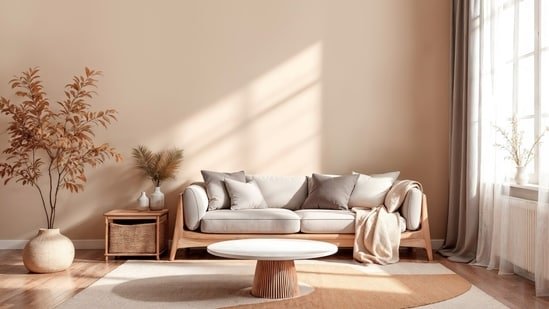
There’s often always a tussle between minimalist and maximalist style, the design philosophies of ‘less is more’ and ‘more is merrier’. While on one hand, you have minimalism, which is all about clutter-free spaces, maximalism makes you celebrate that clutter by making it intentional. Minimalist homes are for those who value functionality, and maximalist homes appeal to those who believe in an extravagant expressiveness.
ALSO READ: Want to make your home feel cosier? 3 easy ways to style rugs to add visual depth
Both, at their heart, are forms of personality expression in their own way, but instead of leaning to extremes, homeowners now are looking to find themselves somewhere in between, a style that includes the best of both worlds.
This is where minimalism enters, offering a balance that captures the essence of both styles. It focuses on the intentional use of fabrics, textures, and layers to strike the sweet spot between minimalism and maximalism.
And sometimes, it is perfectly alright not to fully resonate with either minimalist or maximalist styles. Minimalism can feel too stark and sterile, almost impersonal, like a showroom, an art gallery, where everything looks so put-together and pristine but slightly untouchable, not exuding the ‘home-like feeling.’ Maximalism, on the other hand, focuses on excess, from bright colours to packed decor, which can feel visually overwhelming sometimes.
This is where balance is necessary, such as midimalism which allows spaces to remain organised while also channelling warmth.
HT Lifestyle connected with Smita Joshi, Vice President, Home Textiles and Exports, Nesterra, who revealed what midimalism is and how you can embrace it in your home. How to know if you would like this style? She suggested some indicators, “If you enjoy a home that feels tidy and easy on the eyes, but don’t want to give up colour, pattern or pieces that reflect your personality, you’re probably drawn to midimalism.”
Here are some hacks she shared with us that help to effectively capture the essence of midimalism, striking the right balance between simplicity and personality while allowing your home to feel both visually calm and thoughtfully curated:
1. Let colour work intelligently, not impulsively
- Before selecting upholstery or curtains, look at the room’s existing palette – walls, flooring, wood finishes.
- Use a complementary colour scheme: if walls lean warm (beige, taupe, terracotta), choose upholstery in muted blues or sage to create balance.
- If walls are cool-toned, soften them with warmer fabrics like sand, rust or olive; this prevents fabrics from fighting with the room and creates harmony without feeling flat.
2. Ground big pieces, play with small ones
- Keep sofas, armchairs, drapes and rugs in steady, neutral tones. These anchor the space visually.
- Introduce personality through cushions, throws and accent textiles. This way, the room feels calm at its core but never boring.
4. Layer texture instead of adding objects
- Rather than filling a room with decor, build depth through materials, linen curtains, wool throws, quilted bedding, woven rugs, cane or rattan accents.
- Texture creates richness without increasing visual noise.
5. Let plain space breathe
- Every surface doesn’t need a textile. A clean stretch of sofa fabric or an unadorned section of bedding allows the eye to rest.
- This pause is what makes the patterned or textured elements feel intentional.
6. Think beyond one room
- Midimalism works best when the home feels connected. Repeat tones across spaces through soft furnishings, a cushion colour in the living room can echo in table linen or bedroom throws.
- If bold colour feels intimidating, experiment in smaller spaces like powder rooms using patterned towels or vibrant curtains.
In the end, Smita reiterated that midimalism is all about balance. The key features of this style include neutral foundations, considered colour, and layered textures.
